Bed Bug Warning Signs
8 Signs of a Bed Bug Infestation
Learn how to recognize black fecal spots, dried blood stains, shed skins, eggs, bites and other possible evidence of bed bugs in your home.
40+ Years of Experience • Wayne, Oakland & Macomb Counties
8 Signs of a Bed Bug Infestation — What You're Probably Already Seeing
Southeast Michigan · Free Same-Day Inspections · Wayne, Oakland & Macomb Counties
If you're here, something already caught your attention — a bite, a spot, a bug you weren't sure about. This guide tells you exactly what it means, and how fast it's likely to get worse if you wait.
📞 Call Now — 248-569-8001 Get a Free Inspection →Check What You're Seeing — Right Now
Tap everything that applies. Most people who land on this page already have 2 or more.
The 8 Signs — Earliest to Most Severe
These are listed in the order they typically appear. If you're seeing sign 4 or higher, the infestation has likely already spread beyond one room.
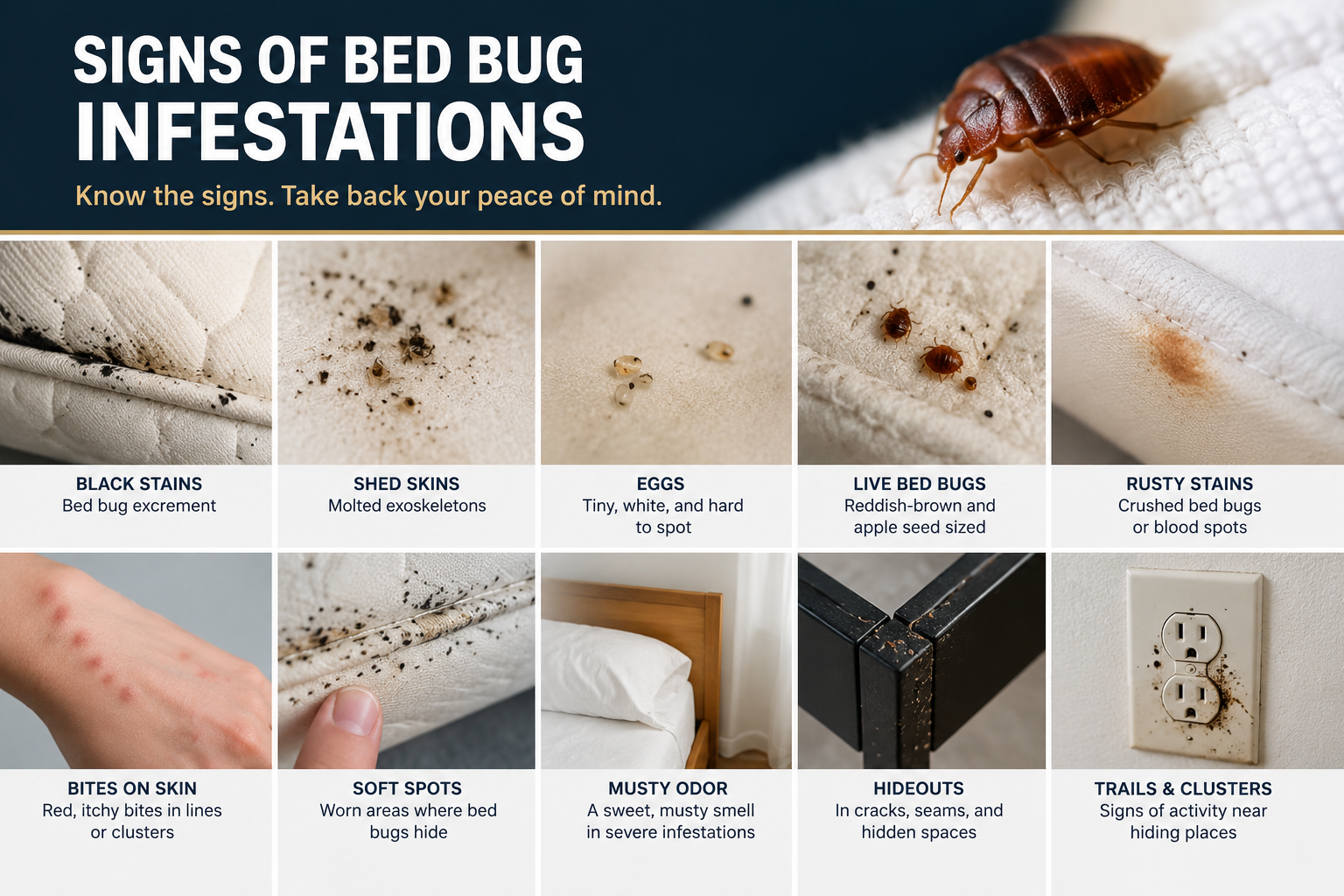
🛏️ Waking Up With Unexplained Bites
Bites appear overnight in clusters of 3 or more, often in a line or zigzag pattern, on arms, neck, shoulders, or legs.
🩸 Small Blood Spots on Sheets
Tiny rust-colored dots on bedding, smaller than a pencil tip — left from crushed bugs or feeding.
⚫ Dark Fecal Spots on Mattress or Furniture
Small black or dark brown marker-dot-sized spots on seams, box spring, or headboard — often bleeding into fabric.
🐚 Shed Skins and Egg Casings
Translucent or yellowish shed skins and tiny white egg casings along seams, crevices, and baseboards.
🐛 Visible Live Bed Bugs
Apple-seed sized, flat, oval, reddish-brown bugs — visible without searching specifically for them.
👥 Visible Nests or Clusters
Bugs gathered in visible clusters along seams, inside box springs, behind headboards, along baseboards.
👃 Sweet, Musty Odor in the Room
A distinctive sweet, musty smell — sometimes described as overripe raspberries — from bed bug pheromones.
🏠 Bites or Signs in Multiple Rooms
Signs appearing in more than one room — especially common in multi-unit housing through shared walls.
What Stage Is Your Infestation?
🟢 Early Stage
Signs 1–3 present
Bites, blood spots, or fecal marks only. Limited to one area. Easiest and least expensive to eliminate.
🟡 Moderate Stage
Signs 4–5 present
Shed skins and live bugs visible. Present 2–4 months. Still effective in one visit with the right approach.
🔴 Severe Stage
Signs 6–8 present
Clusters, odor, or multiple rooms affected. Whole-home risk is high. Professional treatment is the only solution.
Where to Check Right Now
Bed bugs hide in tight, dark spaces close to where you sleep. Grab a flashlight and check these spots.
Mattress Seams
Every seam — top, bottom, sides
Box Spring
Underneath the fabric cover
Furniture Seams
Couches, recliners, all seams
Headboard & Frame
Behind headboard, frame joints
Electrical Outlets
Behind covers near the bed
Baseboards
Where floor meets wall
What We See Most in Southeast Michigan Cities
After 40+ years across Wayne, Oakland, and Macomb Counties, the signs and patterns vary by city and property type.
Detroit
High-density apartments and older housing. Blood spots and fecal marks on shared furniture are the most common signs found.
Livonia
Single-family homes and apartments along Plymouth and Five Mile Roads. Used furniture purchases are the leading cause of new infestations.
Westland
Dense neighborhoods along Wayne and Cherry Hill Roads. Shed skins and egg casings often indicate infestations present for months.
Dearborn
Multi-unit housing and busy corridors. Hotel and short-term rental stays are a leading cause of new infestations.
Southfield
Apartments and commercial properties. Live bugs in recliners and couches often signal spread from bedroom to living areas.
Warren & Sterling Heights
Macomb County's most active markets. Apartments along Van Dyke and Mound Road see frequent unit-to-unit spread.
Common Questions About Bed Bug Signs
No. Bites, blood spots, and fecal marks all confirm an active infestation. Waiting until you see a live bug means the population has already grown significantly — most homeowners never actually see one, since bed bugs are nocturnal and expert hiders.
Bed bug bites typically appear in clusters of 3 or more, in a line or zigzag pattern, overnight, on exposed skin like arms, shoulders, and neck. Mosquito bites are usually isolated and larger; flea bites cluster around ankles and lower legs.
Yes — this is extremely common in Michigan apartment buildings. Bed bugs travel through wall voids, electrical conduits, plumbing gaps, and under door frames, often spreading from a neighboring unit without you ever bringing them home yourself.
Bed bugs can spread from one room to a second room within one week. Left untreated, infestations expand from the bedroom into living room furniture, other bedrooms, and eventually wall voids.
No. Bed bugs have usually already spread beyond the mattress, so you'd lose the furniture and still have the infestation. Hi-Tech saves furniture in virtually every home treated through proper professional treatment.
Treatment ranges from $500–$900 for early-stage single-room cases to $2,000–$4,000 for severe whole-home infestations. Hi-Tech offers free same-day inspections with transparent quotes and no hidden fees.
Seeing Any of These Signs? Don't Wait.
Every day without treatment is another day the infestation spreads. Hi-Tech Pest Control offers free same-day inspections across Southeast Michigan.
📞 Call 248-569-8001 Right Now Or request your free inspection online →Open 7 days · 8:30 AM – 10:00 PM · Same-day appointments · Free inspection · No hidden fees · Michigan's only 6-month warranty
Hi-Tech Pest Control serves all of Southeast Michigan — free same-day inspections in Livonia, Westland, Detroit, Dearborn, Dearborn Heights, Southfield, Warren, Sterling Heights, Pontiac, Royal Oak, Farmington Hills, Canton, Redford, Taylor, Garden City, Madison Heights, Inkster, Wayne, Romulus, and surrounding Wayne, Oakland & Macomb County communities.