Hi-Tech Pest Control Bald-Faced Hornet Nest Removal in Michigan

Hi-Tech Pest Control's Professional Bald-Faced Hornet Nest Removal Services in Michigan

Hi-Tech Pest Control has over 40 years of experience safely removing aggressive bald-faced hornet nests from homes and businesses across Southeast Michigan. We eliminate dangerous nests quickly so you can safely enjoy your property again.
Call Now!
⚠️ Stinging Insect Hazard Alert: Farmington Hills, MI

Bald-Faced Hornets vs. Yellow Jackets: Why DIY Wasp Removal Is a Dangerous Game in Farmington Hills

If you see heavy pest traffic darting in and out of a bush, tree, or ground cover, pause immediately. There is no other pest in Michigan that exhibits that specific, aggressive, in-and-out highway pattern. You are likely staring at a nest of Bald-Faced Hornets or Yellow Jackets—two of the most territorial, smart, and attack-prone insects in North America.

Need Immediate Wasp or Hornet Removal?

Don't risk severe stings. Our trained technicians handle aggressive stinging insects safely.

📞 Call Emergency Pest Control Now

Real Customer Story: Essex Dr in Farmington Hills, MI

We recently received a call from a homeowner on Essex Dr in Farmington Hills. They knew they had a Bald-Faced Hornet nest and initially did what many homeowners do—they shopped around for the cheapest price. However, after calling other local services, they quickly called us back due to technician availability and expertise.

The reality is that most pest technicians are simply not trained or experienced enough to handle active Bald-Faced Hornet nests. Many operators are genuinely afraid of these insects—and for good reason. They know that without the right gear, strategy, and nerve, an attack is almost guaranteed.

In this case, the nest was built unusually low to the ground inside a dense bush, rather than high up in the tree canopy where Bald-Faced Hornets typically nest. A lawn care crew found it the hard way while trimming, positively identified the hazard, and immediately alerted the homeowner. We dispatched an experienced technician, completely dismantled the medium-sized nest, and safely removed the entire colony—including the workers, nest structure, and reproductive queens.

Smart, Territorial, and Armed with a Painful Blow

Honestly, we are lucky these two wasp species don't get any bigger. Both Bald-Faced Hornets and Yellow Jackets are highly intelligent, extremely protective of their domain, and organized in their defense.

They don't attack at random—they attack on trigger. Simply vibrating the ground or crossing directly in front of their flight path as they leave or enter the nest will provoke an immediate swarm. They hit like a trained unit, launching targeted strikes designed specifically to drive you far away from their home.

💥 Speaking From Experience: The Pain Factor

While insect sting guides often rank Yellow Jackets and Bald-Faced Hornets equally in pain, speaking from firsthand experience: the Bald-Faced Hornet is by far the winner.

Getting hit by a Bald-Faced Hornet feels less like an insect sting and more like someone throwing rocks at you at full speed. Both stings are agonizingly painful, and the throbbing, swollen ache can easily linger for up to one full week non-stop.

How to Spot the Mouth of the Nest (Safely)

If you suspect a nest nearby, do not go hacking through bushes or sticking tools into holes. Stand back at a safe distance (at least 15 to 20 feet clear of flight paths) and remain completely still for just 2 minutes. By watching the incoming and outgoing traffic, the wasps will map out the exact entrance for you.

Medical Warning: Respect the Sting

Even if you have never had an allergic reaction to insect stings in the past, venom load changes with multiple stings. Anyone who receives stings from the neck up should exercise extreme caution. Swelling near the face, throat, or neck can cause sudden airway constriction and breathing difficulty.

If stung near the head or neck:

  • Take an antihistamine immediately if safe for you to do so.
  • Monitor breathing closely.
  • Do not hesitate to seek emergency medical care if swelling or shortness of breath begins.

Spotted Hornet Traffic in Your Yard?

Keep your family and lawn crews safe. Contact our Farmington Hills stinging insect specialists today.

Schedule Professional Nest Removal

Serving Farmington Hills & Surrounding Oakland County Areas

We provide specialized, high-risk stinging insect removal across Oakland County. Click your local area below to request service:

Found One Bed Bug, Tore Up the House, and Found Nothing Else? Here is What to Do Next.

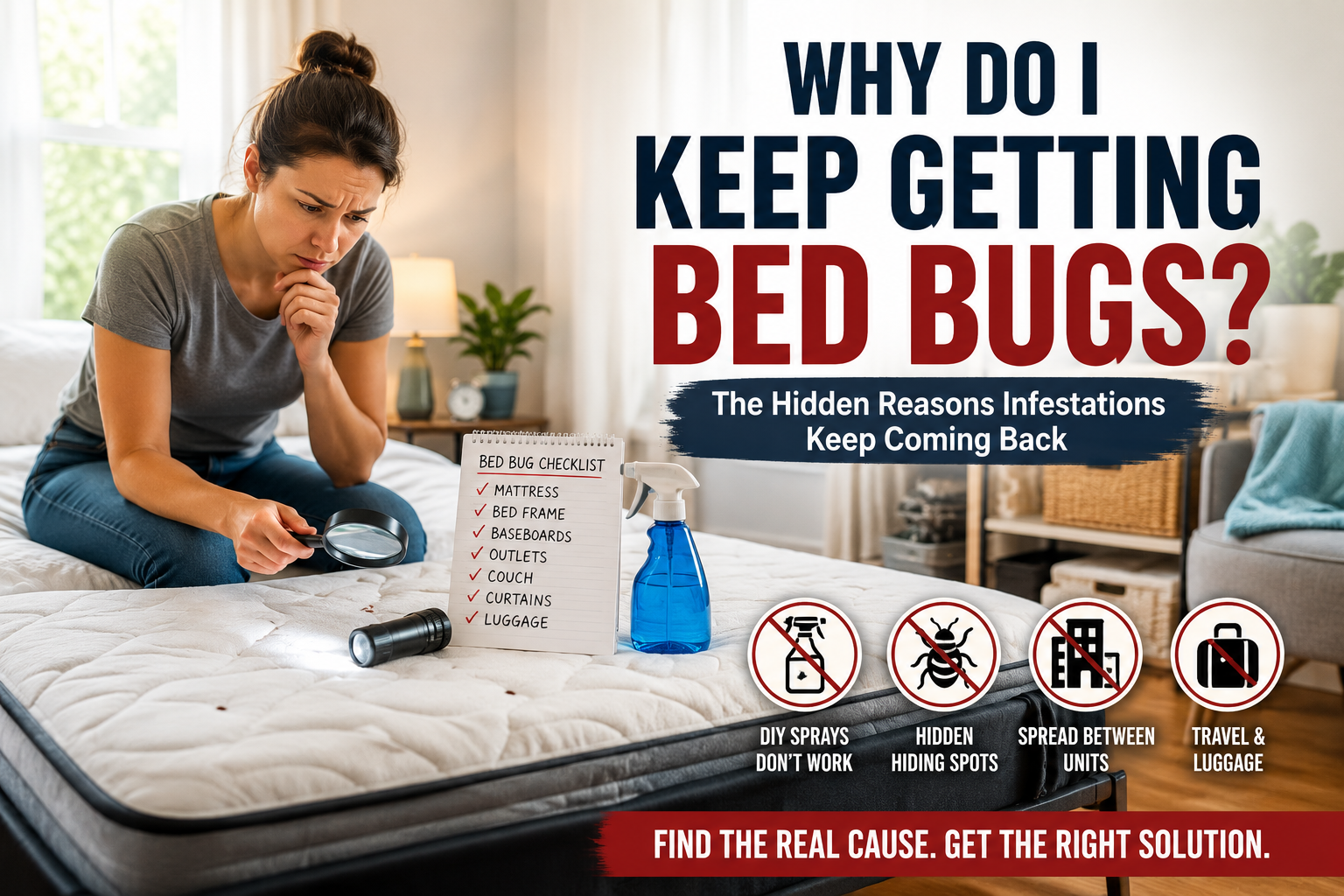
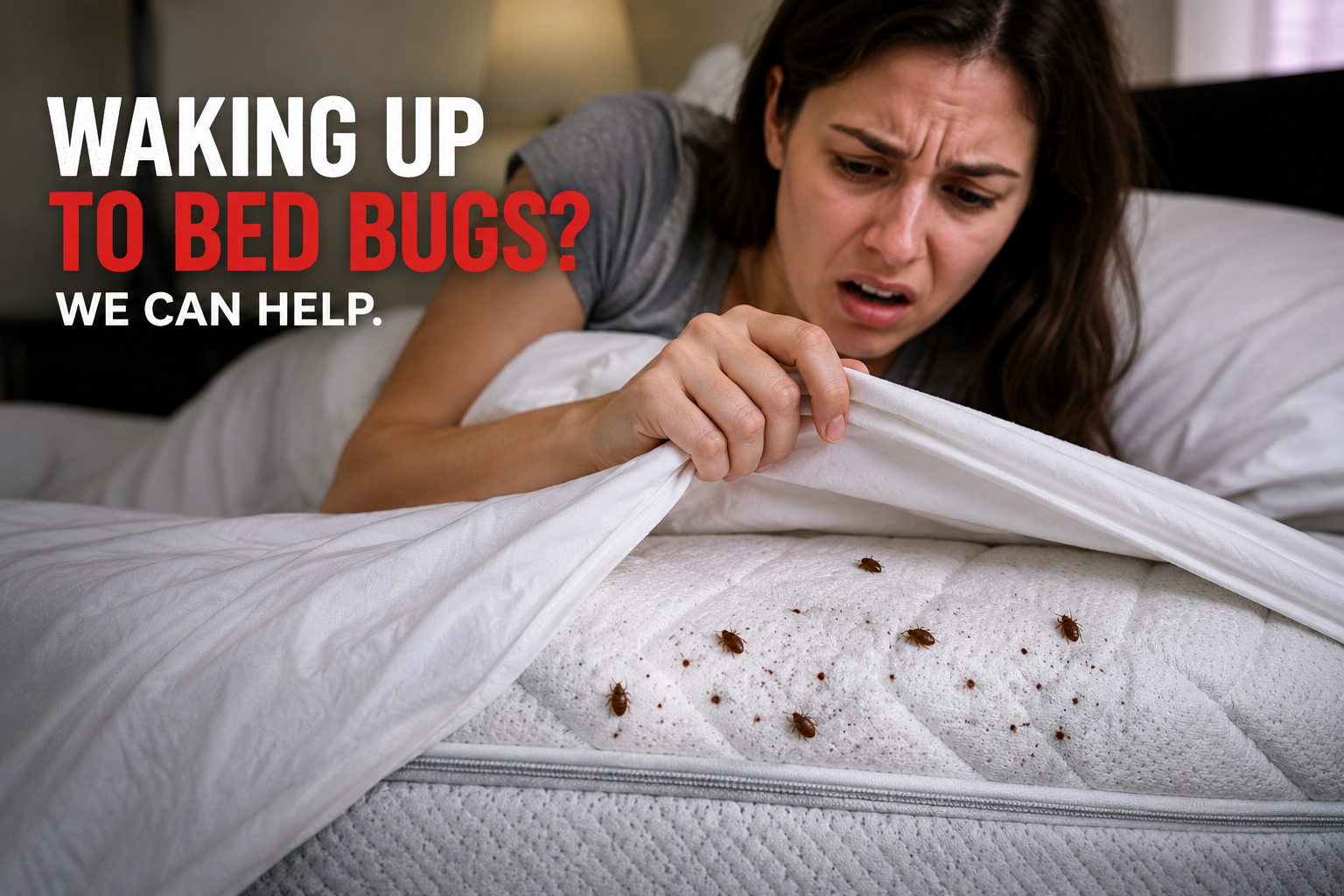
Concerned woman inspecting her mattress in a clean modern bedroom, unsure if she may have bed bugs, checking the bed closely for signs of infestation in a realistic home setting.
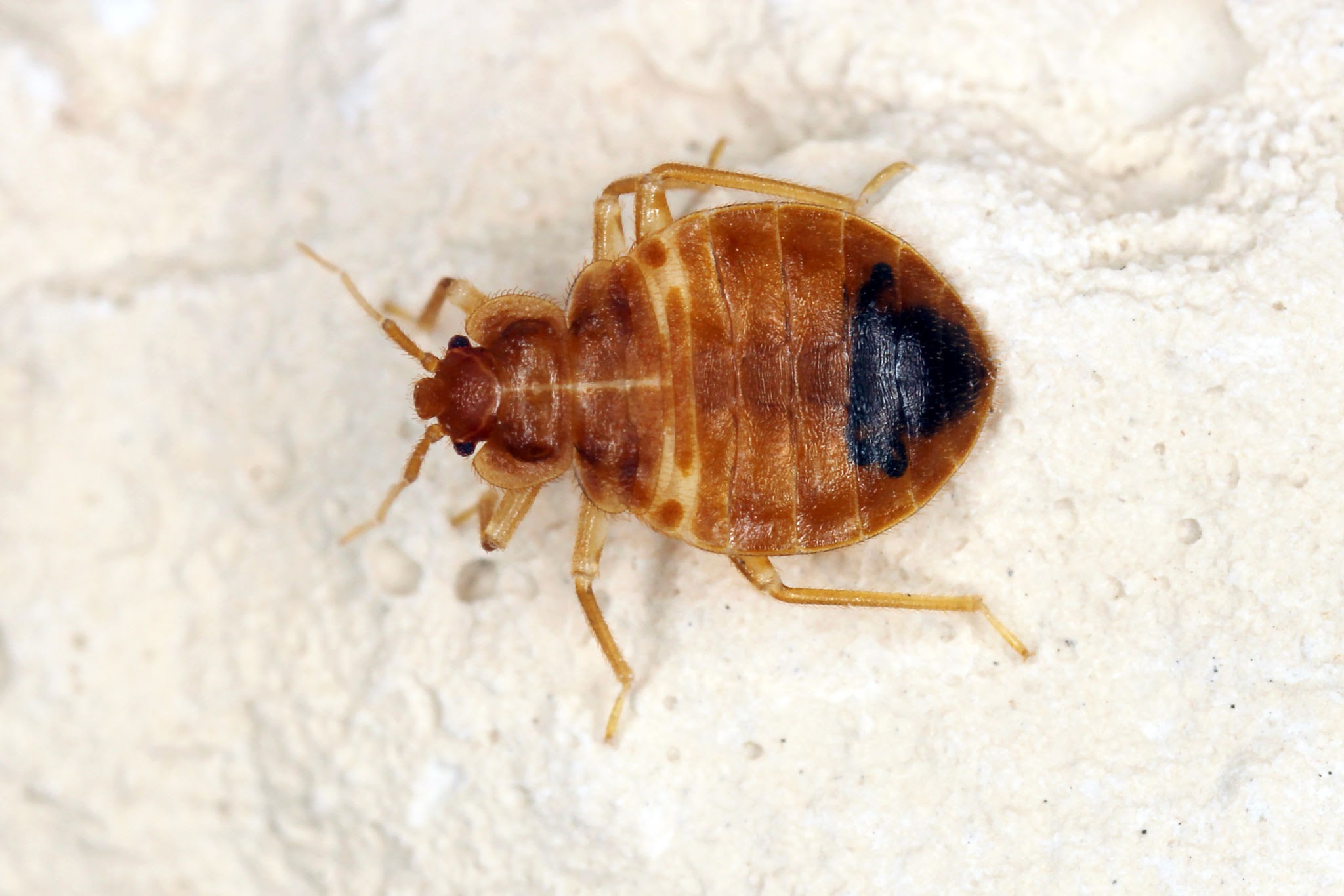
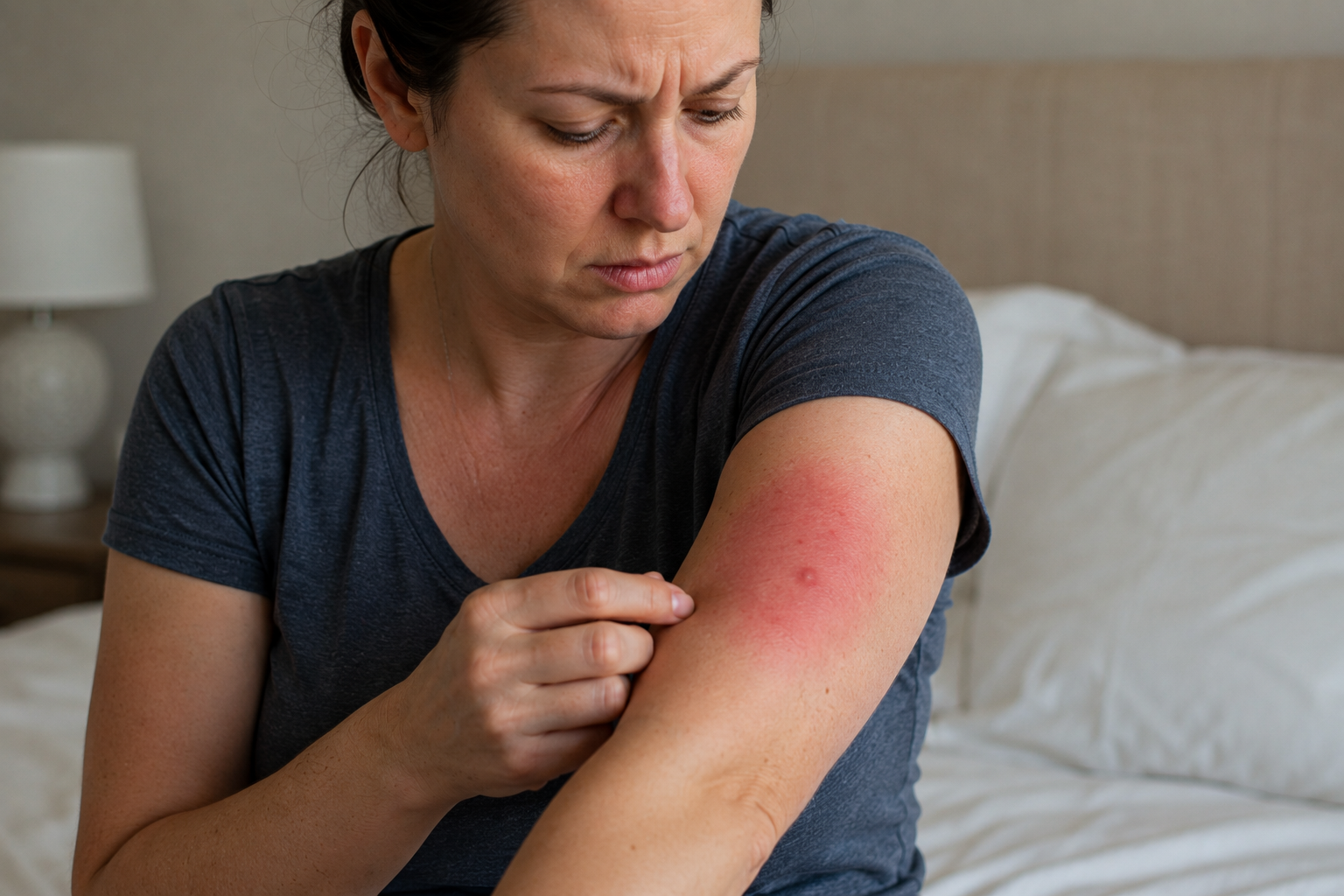
Bed bug identification and what they look like photo image
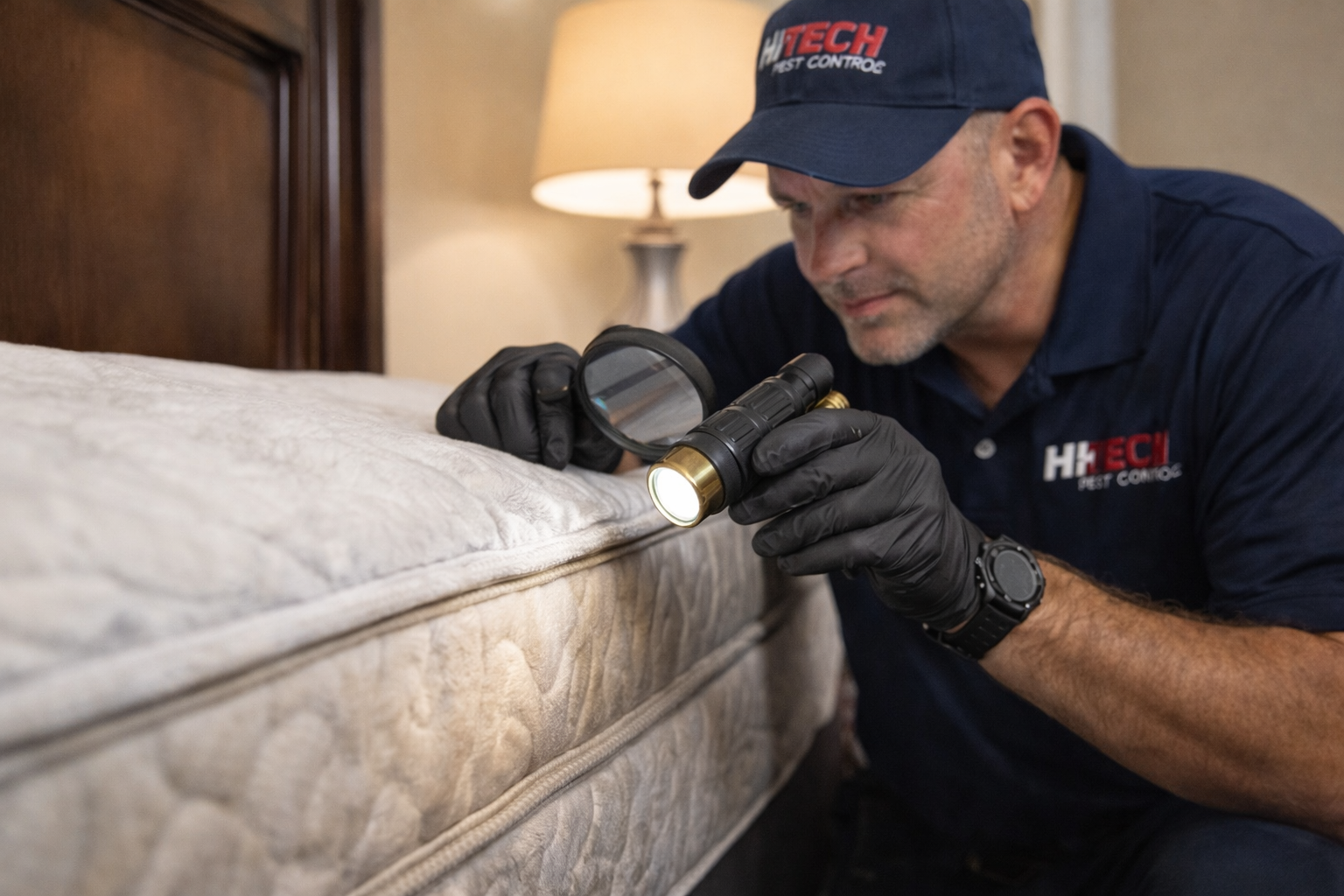
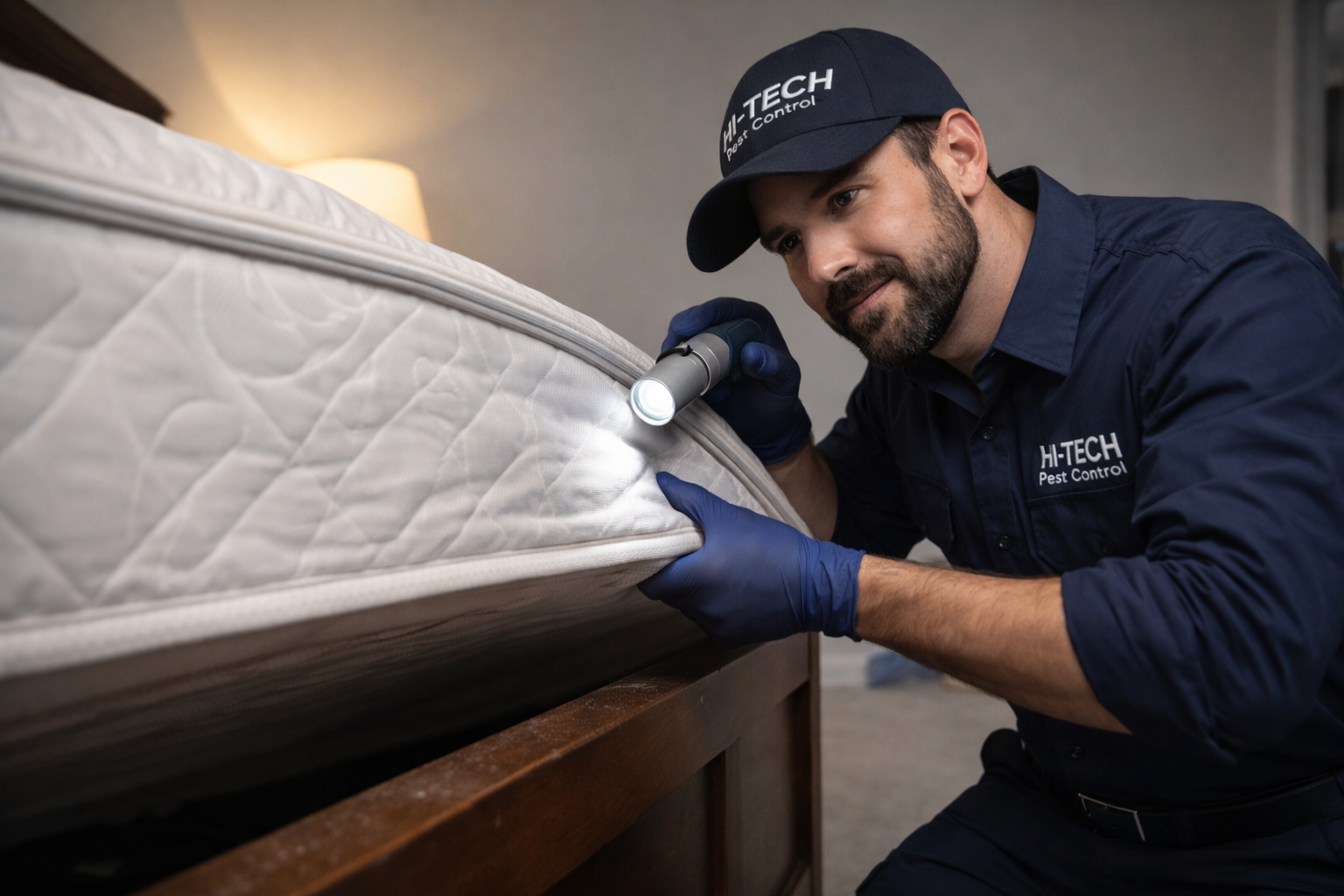
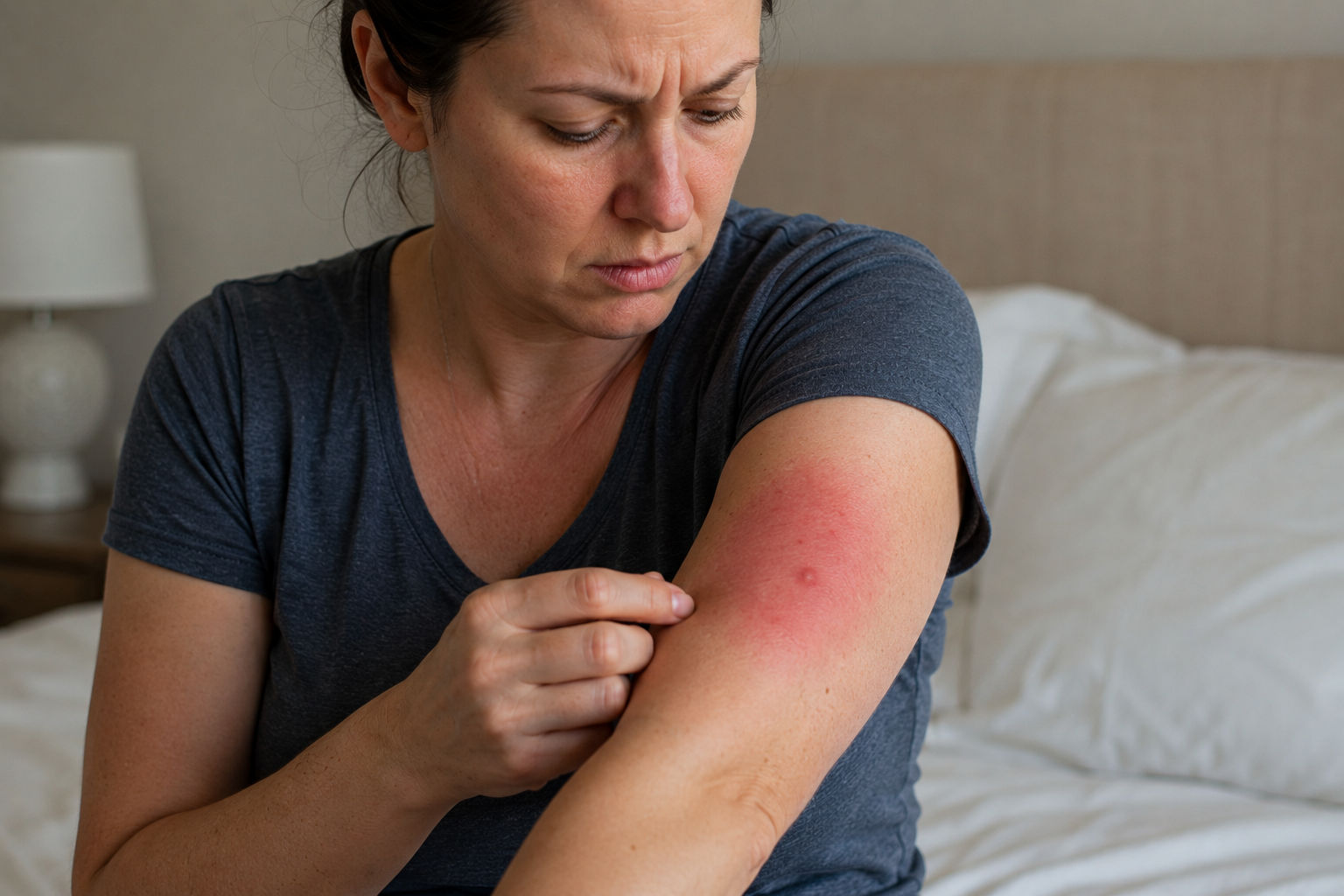
Professional bed bug inspection performed by licensed pest control technician

Found One Bed Bug, Tore Up The Whole House & Found Nothing Else?
What You Need To Do Next

Finding a single bed bug can cause instant panic. But stripping your mattresses and tearing your rooms apart won't solve the issue. Here is the professional truth about what one bug actually means.

100%
Positive Confirmation
100s
Of Hidden Scenarios
$0
Free In-Home Inspections

You’re sitting on your couch or lying in bed when you spot it: a small, reddish-brown insect. You catch it, look up a picture online, and confirm your worst fear—it’s a bed bug.

Within minutes, you’ve stripped the sheets, flipped the mattress, torn apart closets, and emptied your dresser drawers. You spend hours vacuuming and shining a flashlight into every dark corner. The result? Absolutely nothing. You can't find another one.

Option 1: Act On It Immediately (Don't Wait)

If you or an exterminator finds one bed bug, that is a positive identification. If we perform a bed bug inspection and immediately spot a live bug, the search is instantly over.

Unlike other companies that charge heavy fees just to sit there for an hour trying to find a second insect, we stop right there. In the beginning and maturation stages, finding a bed bug is almost next to impossible. They can easily fool even the best and most experienced of certified pest control technicians. We can think of countless situations where we found a live bed bug long after we had initially abandoned a search.

Important Warning: One bed bug sighting means almost 100% of the time that it is time to act. You are past the safety threshold and are about to experience the effects of an unhealthy, rapidly multiplying population of bed bugs.

What a Pest Control Technician's Job Actually Is

Many customers think that a pest control technician's job is to come out and hunt for live bed bugs for hours. It is not. Their real job is to come out, confirm the problem, treat the home or place of business safely, and guarantee the work.

A reputable company must make sure that you actually have them before treating. We will not treat a home just because a homeowner had an allergic skin reaction to something, or because they believe dirt and household debris images are bugs. Treating a home on false alarms or fear leads to repeated callbacks, unnecessary chemical exposure, and major waste. It is highly time-consuming and costly for pest control companies because the majority of people calling for endless inspections just want to know where they are hiding, with no intentions of having the home professionally treated.

Manifestations vs. Positive Identification

Skin markings that look like insect bites are not a positive identification. You can seek a positive ID from a doctor or dermatologist, but you should wait until a physical bug is found before applying heavy treatments.

If you find a live bug, get a clear image of it, bag it, or catch it on a piece of tape for a professional. This allows them to come up with an equitable charge between you and the company before you wind up paying a much higher price later and ruining your home trying to DIY the problem away.

Have Evidence? Don't Let It Multiply.

Call Now: 248-569-8001

Southeast Michigan Yellow Jacket Exterminator | Hi-Tech Pest Control

Yellow jackets entering house siding near a wall opening, indicating a possible hidden nest inside the wall. Hi-Tech Pest Control yellow jacket extermination in Southeast Michigan.
🚨 WARNING: High volume of wall-nest emergencies reported in Metro Detroit. Book immediate dispatch below.

Yellow Jackets in Siding & Drywall: The Hidden Danger in Livonia Homes

If you have noticed yellow jackets constantly buzzing around a tiny gap in your home's exterior vinyl, aluminum, or brick veneer siding here in **Livonia** or the surrounding Metro Detroit area, you aren't looking at a simple outdoor bug problem. You are looking at the entry point to a dangerous, hidden structural infestation.

Homeowners often assume the insects are nesting right behind the hole. Unfortunately, yellow jacket queens navigate deep into wall cavities to build their colonies. The actual nest could be several feet away from the entrance—hidden far up an interior wall or ceiling joist where consumer bug sprays can't possibly reach.

They Mold Their Paper Nests to Fit Your Southeast Michigan Home

Just like the large, grey paper nests yellow jackets build in local bushes or trees, a colony inside a structure builds a paper shelter out of chewed wood pulp. Instead of a round ball, **the nest dynamically expands to conform to the exact shape of your interior wall void.** As the reproductives generate thousands of new workers through the hot summer months, the colony rapidly runs out of space.

⚠️ Do You Hear a "Crumbling Paper" Sound?

When the colony fills the wall cavity, the workers must make room to expand. To do this, they begin actively **chewing away your home's plasterboard and interior drywall**. If you sit quietly in the room, it will sound exactly like someone is rhythmically wrinkling, scratching, or crumbling paper right inside the wall.

The Dangerous "Dark Spot" Illusion

If left untreated, the wasps will chew completely through the structural plasterboard, leaving only the thin layer of interior latex paint untouched. From your living room, this looks like a small, mysterious damp or dark spot on the wall.

Never touch, poke, or press on this dark spot.

Because the physical drywall is entirely gone, the slightest pressure will rupture the paint. If broken, hundreds to thousands of highly aggressive yellow jackets will instantly spill into your room, attacking anyone and anything nearby.

Severe Health and Medical Risks

Yellow jackets are fiercely protective of their queens and will sting aggressively. Unlike honeybees, they do not lose their stingers and can strike a victim multiple times, pumping painful venom with every contact.

Critical Medical Notice for Southeast Michigan Residents: Stings localized from the neck up—including the face, throat, and scalp—carry a drastically elevated medical risk. Neck-up stings can cause rapid localized swelling that threatens respiratory airways, causing severe breathing difficulties or life-threatening anaphylactic shock, even in individuals with no history of bee allergies.

Why Professional Elimination is Required

Attempting to DIY this issue by sealing or caulking the outside siding hole is a critical mistake. If you trap them, their only escape route is forward—forcing them to rapidly chew through your drywall and enter your living space all at once.

Our licensed technicians utilize specialized thermal imaging to map the exact boundaries of the nest inside your walls, applying targeted, professional-grade treatments that completely eradicate the colony safely without damaging your home.

📍 Providing Rapid Response Throughout a 30-Mile Radius of Livonia:
  • Livonia & Plymouth
  • Canton & Northville
  • Novi & Farmington Hills
  • Birmingham & Bloomfield
  • Royal Oak & Troy
  • Ann Arbor & Ypsilanti

Do Bed Bug Foggers Work? Why Foggers & DIY Sprays Fail

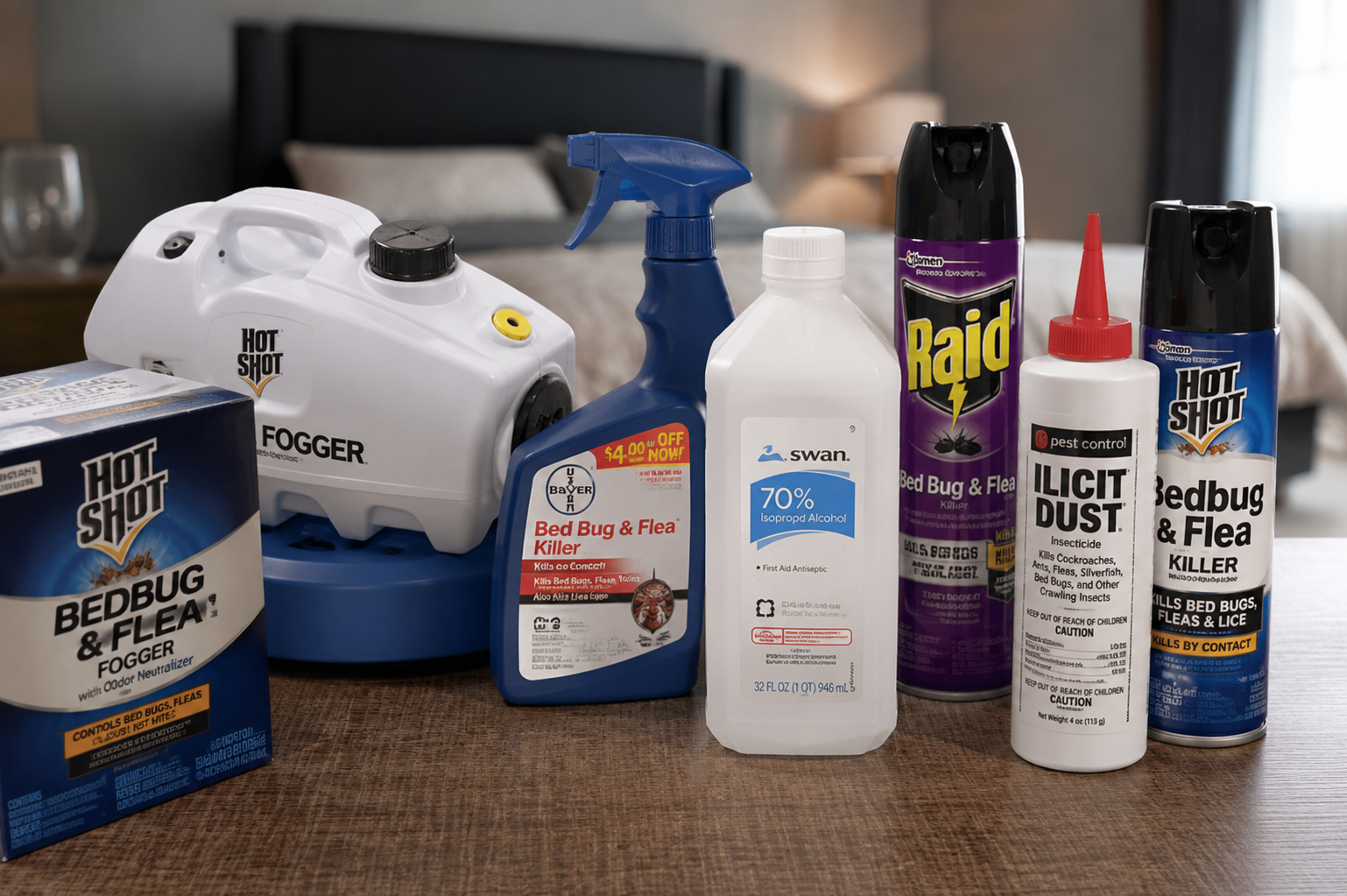
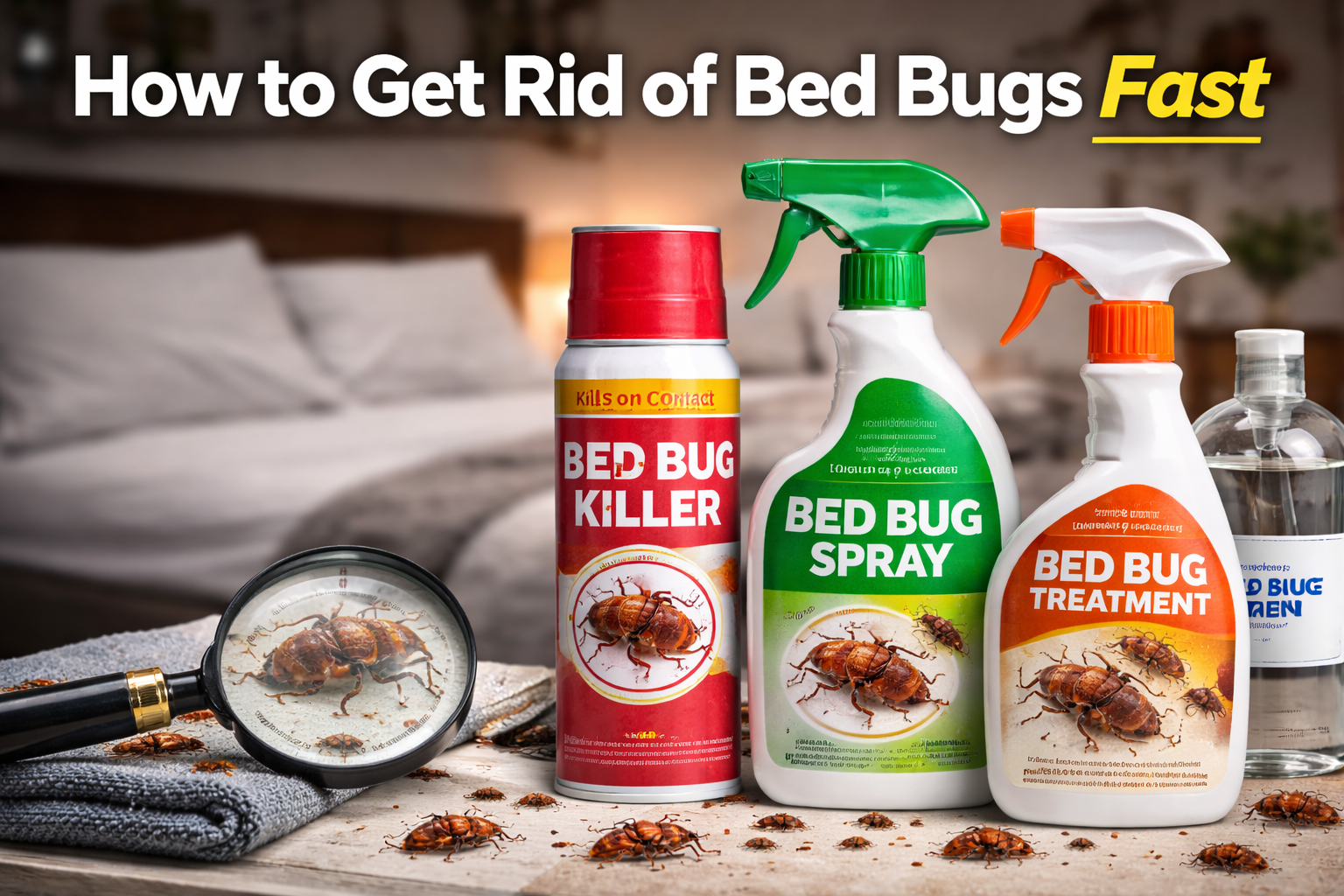
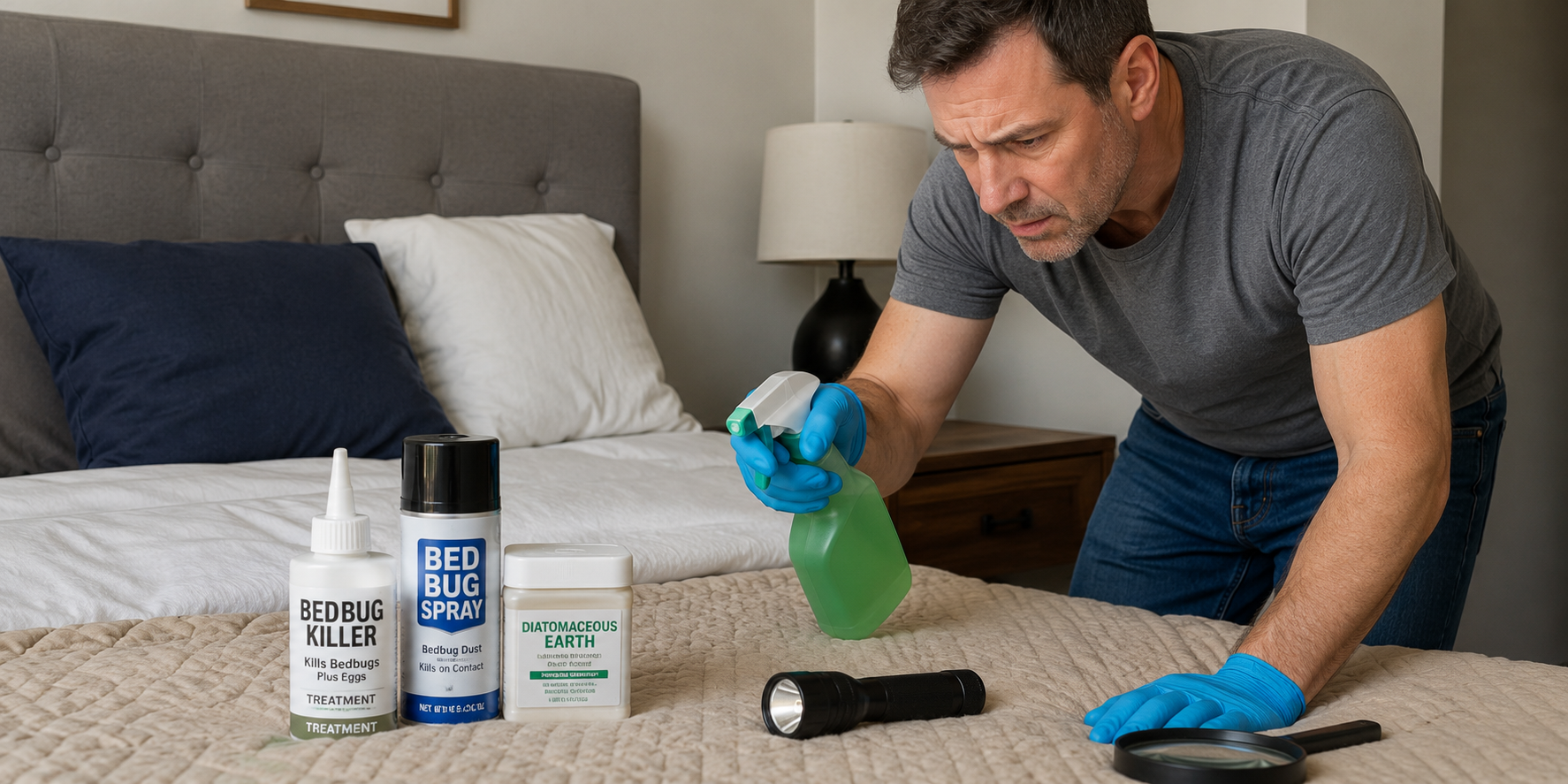
Common DIY bed bug products including foggers, rubbing alcohol, insecticide dusts, aerosol sprays, and over-the-counter treatments often used before professional bed bug extermination.
Same-Day Bed Bug Service Free Inspection One-Visit Elimination Michigan's Only 6-Month Bed Bug Warranty Serving Wayne, Oakland & Macomb Since 1986 5.0 Star Rated

Do Bed Bug Foggers Work? Why Foggers & DIY Sprays Fail

The short version from 40 years in the field: a fogger will kill a fly buzzing around the room. It will not kill the bed bugs living inside your mattress seams, box spring, and wall voids.

The Direct Answer

No — bed bug foggers do not work. There is a reason you will never see a professional exterminator rely on fogging to eliminate an infestation. Foggers release insecticide into the open air, where it drifts, settles, and dissipates. Bed bugs don't live in open air. They live pressed deep inside cracks, seams, screw holes, and fabric folds — exactly where the fog never reaches.

Why Foggers & Bug Bombs Don't Kill Bed Bugs

Nearly every bed bug fogger on the shelf is built the same way, using the same class of active ingredients — pyrethrins, piperonyl butoxide, cyano-based compounds, or cypermethrin. Cypermethrin is one of the longer-lasting active ingredients of the group, and even it falls short when it's delivered as a fog.

The failure isn't really about the chemical. It's about the delivery method. When you set off a fogger, the insecticide becomes airborne and drifts through the open room. It will knock down an exposed insect — a fly in flight, an earwig crossing the floor. But it does not travel underneath, inside, and into the tight cracks and fabric folds where bed bugs actually nest. The bugs simply stay put in their harborage while the fog passes overhead.

Then comes the second problem: once the fog dissipates, there is virtually no residual left behind. A real treatment leaves protection working in the cracks and voids for weeks. A fogger leaves almost nothing. And there's a hidden cost — the disturbance can actually scatter surviving bugs deeper into walls and adjacent rooms, spreading a contained problem into a larger one.

Field note: A fogger's chemical settles on flat, open surfaces facing the ceiling. Bed bugs harbor on the undersides and insides of things — the underside of a slat, the inside of a seam, the back of a headboard against the wall. Gravity and geometry are both working against the fog.

The Other DIY Methods — And Why They Fail Too

Foggers aren't the only thing homeowners reach for before calling a professional. Here's what we see most often, and the honest field verdict on each.

1

Diatomaceous Earth

Doesn't Eliminate

Diatomaceous earth almost always gets applied to surfaces — dusted across furniture and floors — and homeowners routinely use far too much of it. The problem is twofold. First, that excess becomes airborne, and residents end up inhaling it every day, which is the last thing you want in the room where you sleep. Second, a surface dusting does not reach the bed bugs. The desiccant effect only works on direct, sustained contact, and it never reaches all the tucked-away nesting areas where the infestation actually lives.

2

Rubbing Alcohol

Doesn't Eliminate

Alcohol was never engineered to be an insecticide, and it doesn't behave like one. What it mostly does is scare bed bugs and scatter them — you'll drive them out of one harborage and send them running onto walls, curtains, and into new hiding spots. You may kill a few on direct contact, but you spread the rest. It's also a genuine fire hazard to spray around a bedroom. Net effect: the infestation relocates instead of ending.

3

Essential Oils

Doesn't Eliminate

Essential oils are genuinely disturbing to bed bugs — but "disturbing" is not "eliminating." Like alcohol, they mostly chase the bugs around. They can do a decent job of temporarily keeping bed bugs off of you and slowing the feeding, which is why people think they're working. But slowing the bite is not stopping the infestation. The colony keeps reproducing in the walls and the bed frame, and essential oils will not eradicate it.

4

Foggers / Bug Bombs

Doesn't Eliminate

Covered in full above — the delivery method can't reach the harborage, there's no residual once it clears, and the disturbance can push survivors deeper into walls and neighboring rooms. Of all the DIY options, this is the one most likely to make the problem bigger.

DIY vs. Professional Treatment: The Honest Comparison

Factor DIY Foggers & Sprays Professional Treatment
Reaches cracks, seams & voids No — treats open air only Yes — targeted to harborage
Residual protection after Virtually none Weeks of active protection
Effect on surviving bugs Scatters them deeper / wider Eliminates at the source
Reaches eggs & all life stages No Yes
Warranty / guarantee None 6-month warranty (bed bugs)
Time to results Weeks of trial & error, often worse One-visit elimination
The pattern to notice: every DIY method fails for the same underlying reason. Bed bugs don't live out in the open where sprays and fogs land. They live in the tightest, most protected spaces in the room. Any method that only treats surfaces is treating the wrong 5% of your bedroom.
1986Serving SE Michigan Since
1Visit Elimination
6Month Warranty
5Star Rated

Stop Wasting Money on Products That Don't Work

Every week you spend fogging and spraying is a week the infestation keeps growing. Get a free inspection and one-visit elimination from the team that's handled Southeast Michigan bed bugs since 1986.

Call 248-569-8001
Same-day service • 7 days a week, 8:30 AM–10 PM • Free inspection

Frequently Asked Questions

Will a bug bomb or fogger kill bed bugs at all?
It may kill a small number of bed bugs that happen to be fully exposed on an open surface when it goes off. But it does not reach the ones inside mattress seams, box springs, cracks, and wall voids — which is where the vast majority live. Because the fog leaves virtually no residual and can scatter survivors deeper into the structure, foggers routinely leave the core infestation intact.
Why do professional exterminators never use foggers?
Because the delivery method is wrong for the pest. Professionals target the actual harborage — the cracks, seams, and voids where bed bugs nest — with treatments that leave lasting residual protection. Fogging just puts chemical into open air that bed bugs aren't occupying. You won't find a reputable pro relying on a fogger to eliminate an infestation.
Does diatomaceous earth work on bed bugs?
Not as a standalone fix. It only kills on direct, prolonged contact, and homeowners typically apply it to open surfaces — where the bugs aren't — while using so much of it that it becomes airborne and gets inhaled daily. It never reaches all the hidden nesting areas, so the infestation continues.
Can rubbing alcohol or essential oils get rid of bed bugs?
No. Both mostly disturb and scatter bed bugs rather than eliminate them. Alcohol drives them onto walls and curtains (and is a fire risk indoors); essential oils can temporarily keep bugs off you and slow feeding, which fools people into thinking they're working. Neither stops the colony from reproducing, so neither eradicates the infestation.
What actually gets rid of bed bugs?
A professional treatment that targets the harborage directly, reaches all life stages including eggs, and leaves residual protection behind. At Hi-Tech Pest Control we offer same-day service, a free inspection, one-visit elimination, and Michigan's only 6-month bed bug warranty. Call 248-569-8001.

First Signs of Bed Bugs: Bites, Not Stains | Hi-Tech Pest Control

Bed bug exterminator inspection and treatment
Bed Bug Evidence Guide

The first physical evidence of bed bugs isn't a stain, a shed skin, or a black spot near an outlet. It's a bite — and it's the one piece of evidence almost everyone ignores.

After 40 years of bed bug inspections across Metro Detroit, we see the same pattern in home after home. By the time most families call us, they've spent months chasing the wrong evidence — the fecal spots, stains, and blood smears the internet tells them to hunt for. Here's the problem: those are late-stage signs. The real first sign showed up on their skin months earlier, and it was dismissed as a mosquito, a spider, or "just a rash."

This guide walks you through the actual evidence timeline — what shows up first, what shows up last, and what each stage means for your home.

The Real Bed Bug Evidence Timeline

Physical evidence doesn't appear all at once. It arrives in a predictable order, and understanding that order tells you how far along an infestation really is.

  • 1
    Months 1–2 — The Bites Everyone Ignores

    Bites are the first physical evidence — and the most ignored. Unlike other insect bites, bed bug bites carry a disturbing, persistent itch that sets them apart from a mosquito or flea bite. They typically start on the upper body and exposed skin — arms, shoulders, neck, face — the areas closest to a feeding bug while you sleep. Most people blame the dog, the yard, or laundry detergent and move on.

  • 2
    Months 2–3 — The Doctor Visit That Settles Nothing

    When the bites keep coming, many people see a doctor or dermatologist — and here's what most don't realize: bed bug bites can't be positively identified by looking at them. Bite reactions vary too much from person to person. If the bites don't get identified in 2 to 3 months, the evidence that finally settles it usually isn't medical at all. It's a sighting.

  • 3
    Months 3–4 — The First Sighting

    Around the 3-to-4-month mark, most homeowners see their first bed bug — and in most cases they immediately know exactly what it is. It happens at night: an oval-shaped, reddish-brown bug, caught while it was feeding or escaping across your pillow or bedclothes, where it's highly visible against the fabric. That single sighting is your first positive identification — not a stain, not a spot, not a trap.

  • 4
    Month 4 and Beyond — Spots, Stains & Smears (Late Stage)

    The fecal spots, stains, and blood smears everyone treats as "first signs" are actually the final stage of evidence — they appear after the population has been feeding and reproducing for months. If you're finding evidence around electrical outlets or floor moldings, the infestation has spread well beyond the bed, it's past the reproduction stage, and you're likely carrying bed bugs to other locations — work, cars, family members' homes.

If you're seeing spots and stains, you're not catching it early — you're catching it late. At that stage, every day matters. Same-day service is available.

What the Internet Gets Backwards

Search "signs of bed bugs" and nearly every article leads with fecal spotting, shed skins, and eggs. That advice isn't wrong about what the evidence is — it's wrong about when it appears.

Don't start your search here

  • Fecal spots & stains — final-stage evidence, months into an infestation
  • Blood smears on sheets — a sign of an established, feeding population
  • Shed skins & eggs — proof of reproduction cycles already completed
  • Outlets & floor moldings — if they're there, they've spread far from the bed

Start your search here

  • Bites with a disturbing itch, unlike any other insect bite
  • Upper body and exposed skin — arms, shoulders, neck, face
  • The obvious places near you — mattress seams, pillow area, headboard, box spring, the couch or recliner where someone sleeps
  • Night checks of pillows and bedclothes, where a feeding bug is highly visible

Bed bugs stay close to their food source: you. When you're trying to identify them, look in the obvious places nearby where they can feed on humans — not in the carpet, and not across the room. Curious where they go once established? Read our full guide on where bed bugs hide.

Why Most Bed Bug Traps Fail (And the $2 Fix That Works Better)

Trapping bed bugs is difficult when you don't know where they are — and the honest truth from four decades in the field is that trapping usually doesn't work. Most consumer traps simply aren't engineered around how bed bugs actually behave.

Trap Type Verdict Why
CO₂ (carbon dioxide) traps ✖ Ineffective In real-world use, they fail to outcompete the biggest CO₂ source in the room — the sleeping human a few feet away.
Moats / bed leg interceptors ✖ Ineffective They're built on a false premise. Bed bugs don't live in the carpet like fleas, and they don't roam the floors. The bugs are already on or near the bed — they aren't crossing the room to climb a bed leg.
Two-sided tape (the kind from the school-supply aisle) ✔ Your best bet Cheap, simple, and placed where the bugs actually travel — directly between them and their host.

How to place two-sided tape correctly

1

Identify the host. Place tape near the person who gets the most bites and gives off the most body heat — that's who the bugs are traveling to.

2

Cut off the routes. Apply strips between you and the bed bugs — along the mattress edge, headboard paths, and bedding routes they'd cross to feed.

3

Check it nightly. A bug on the tape is a positive identification — the confirmation traps, doctors, and stain-hunting couldn't give you.

One important note: tape confirms bed bugs — it doesn't eliminate them. If you catch one, you have a breeding population nearby, and DIY treatment at that point almost always spreads them further into walls and furniture. That's the moment to call 248-569-8001 for a free inspection.

0
Years Fighting Bed Bugs
0
Visit to Eliminate
0
Month Warranty — Michigan's Only
0
Star Rating

Bed Bug Evidence: Quick Answers

Bites. They're the first physical evidence and the most commonly ignored. Bed bug bites have a disturbing itch unlike other insect bites and usually start on the upper body and exposed skin. Fecal spots, stains, and blood smears come months later — they're final-stage evidence, not first signs.

Usually not with certainty — bite reactions look too similar to other insect bites and skin conditions to be diagnostic on their own. In most homes, the first positive identification is a sighting, which typically happens 2 to 4 months after the bites begin.

Oval-shaped and reddish-brown, most often spotted at night while it's feeding or escaping across your pillow or bedclothes, where it's highly visible. Most homeowners recognize it instantly.

In our field experience, no. CO₂ traps can't compete with the sleeping human nearby, and interceptors assume bed bugs live on the floor and climb bed legs — they don't. Bed bugs don't live in carpet like fleas. Inexpensive two-sided tape, placed between the bugs and the person getting bitten most, is more likely to confirm them.

That's late-stage evidence. It means the population is past the reproduction stage, has spread beyond the bed, and you may be carrying bed bugs to other locations. At this point, professional one-visit treatment is the fastest way to stop it. Same-day service is available — call 248-569-8001.

Stop Guessing. Get a Positive Identification Today.

Whether you're at the "mystery bites" stage or finding stains at the outlets, Hi-Tech Pest Control eliminates bed bugs in one visit — backed by Michigan's only 6-month bed bug warranty. Free inspection. Same-day service across Metro Detroit.

📞 248-569-8001
5.0★ Rated • Serving Wayne, Oakland & Macomb Counties Since 1986

Bed Bug Extermination Near You

Hi-Tech Pest Control provides one-visit bed bug elimination throughout Southeast Michigan:

Bed Bugs Don’t Mean You’re Dirty | Myth Busted

Worried homeowner inspecting mattress for recurring bed bugs in bright modern bedroom while using DIY spray products and searching for hidden bed bug infestation areas.

One of the biggest reasons bed bug infestations get worse before they get better isn't the bugs themselves — it's shame. People wait days, sometimes weeks, before calling for help because they're embarrassed, worried about what neighbors or family will think, or convinced that having bed bugs says something about how clean they are.

It doesn't. And the sooner that myth gets put to rest, the sooner people stop hiding the problem and start solving it.

Where This Myth Even Comes From

Bed bugs got unfairly lumped in with pests like cockroaches and rodents, which genuinely are associated with food, garbage, and sanitation issues. But bed bugs aren't drawn to dirt, clutter, or mess at all — they're drawn to something every single human home has: warmth, carbon dioxide, and blood.

That single distinction is the whole story. A bed bug doesn't care if your home is spotless or chaotic. It cares whether a person sleeps there.

Myth vs. Fact

❌ MYTH

Bed bugs are a sign of a dirty home or poor housekeeping.

✅ FACT

Bed bugs infest five-star hotels, luxury homes, and spotless apartments just as often as anywhere else. Cleanliness has nothing to do with it.

❌ MYTH

Only low-income housing gets bed bugs.

✅ FACT

Bed bugs travel via luggage, used furniture, and visiting guests — they show up in every income bracket and every type of housing.

❌ MYTH

If I have bed bugs, it means I did something wrong.

✅ FACT

Bed bugs are introduced from the outside — through travel, secondhand items, or proximity to other infested units. It's an introduction problem, not a hygiene problem.

Why the Shame Makes the Problem Worse

This is the part that matters most for actually solving an infestation: shame causes delay, and delay is the one thing that consistently makes bed bug problems harder and more expensive to fix.

"A bed bug population roughly doubles every two weeks without treatment. Every week spent hesitating to call out of embarrassment is a week the infestation keeps growing."
  • People avoid telling roommates or family, which means the infestation spreads to shared spaces before anyone realizes it
  • Renters avoid telling landlords, delaying treatment that often legally needs to happen anyway
  • Homeowners avoid having guests or contractors over, which can mean putting off other needed home maintenance
  • Business owners, especially in hospitality, sometimes try to handle it quietly themselves rather than calling a professional — which usually extends the problem rather than solving it

What Actually Helps

The single most useful mindset shift is this: a bed bug infestation is a logistics problem, not a character flaw. The people who solve it fastest are the ones who treat it like any other home maintenance issue — a pipe that's leaking, a roof that needs repair — and call for help right away instead of trying to manage it silently.

Reputable pest control companies see this constantly, across every type of home and every part of town. There's no judgment on the other end of that phone call — just a team that's seen this exact situation many times before and knows how to fix it.

The Bottom Line

Bed bugs don't know your zip code, your income, or how often you vacuum. They only care about finding a warm place to feed. The fastest way to get rid of them — and get your peace of mind back — is to treat the situation like the practical problem it is, not something to hide.

Hi-Tech Pest Control treats every call with complete discretion and zero judgment — same-day inspections, one-visit elimination, and Michigan's only 6-month warranty, no matter where you live.

📞 Call 248-569-8001

Do Bed Bugs Hide in Wood and Carpet? Why Most People Search the Wrong Spots First

Bed bug bite Detroit Michigan
🛑 Stop guessing where they're hiding One-visit elimination — every hiding spot, every life stage Michigan's ONLY 6-month bed bug warranty 📞 248-569-8001 Free same-day inspection — no hidden fees Serving Wayne, Oakland & Macomb Counties 40+ years finding what others miss 🛑 Stop guessing where they're hiding One-visit elimination — every hiding spot, every life stage Michigan's ONLY 6-month bed bug warranty 📞 248-569-8001 Free same-day inspection — no hidden fees Serving Wayne, Oakland & Macomb Counties 40+ years finding what others miss
Bed Bug Behavior · Southeast Michigan

Do Bed Bugs Hide in Wood and Carpet? Why Most People Search the Wrong Spots First

Bed bugs don't actually want to live in your carpet or your hardwood floor — but if you keep fighting them the wrong way, that's exactly where they'll end up. Here's how they really behave, and why the search habits of most homeowners make the problem worse.

0
Years in Southeast Michigan
0
Visit to Eliminate
0
Metro Detroit Ranking
0
Michigan's Only Warranty

If you've been bitten for more than a few nights, you've probably already started searching — flipping the mattress, checking the sheets, maybe pulling the bed away from the wall. That instinct makes sense. It's also usually the wrong place to look first, and it's the reason so many Southeast Michigan homeowners go weeks without finding what's actually feeding on them.

⚠️ Already finding evidence on walls, moldings, or carpet edges? That's not an early sign — it usually means the infestation has been established for months. Same-day inspections are available throughout Southeast Michigan. Call 248-569-8001.

Why People Look in the Wrong Places First

Bed bug sufferers almost always start their search in tertiary areas — spots that feel logical but aren't where the colony actually lives day to day. People check the top of the mattress, the visible sheets, sometimes the carpet itself, before ever getting to the handful of spots that actually matter. By the time most people find real evidence, the infestation has already had weeks — sometimes months — to settle in.

The reason this happens is simple: bed bugs aren't designed to be found easily, and the places they actually prefer aren't the places most people think to check first.

How Bed Bugs Actually Feed and Rest

Bed bugs feed, then retreat to rest nearby — they don't wander far from a meal. What they're looking for when they rest is very specific: a spot where something is touching both the front and the back of their body at the same time. Folds in fabric, the joints in a wood frame, the piping or rope-stitching on upholstery, the seam where a leather or vinyl headboard meets its frame — anywhere a bed bug's flat body can be pressed from both sides at once.

This is the same basic harborage preference you'd recognize from German cockroaches: tight, enclosed, pressure-on-both-sides spaces feel safe to the insect. It's not about wood, fabric, or any one material specifically — it's about geometry. A bed bug doesn't care what the surface is made of. It cares whether the gap fits its body.

🛏️ Mattress and box spring seams
🪵 Wood bed frame joints and screw holes
🧵 Fabric folds and piping/rope stitching
🛋️ Leather or vinyl headboard seams

When Feeding Turns Into Nesting

Bed bugs don't start laying eggs right away. After roughly five or six feeding cycles, egg-laying begins in earnest — and that's the point where a few wandering bugs becomes an actual colony. Once egg-laying starts, bed bugs begin forming real nests, most often underneath the box spring or inside the structure of the mattress itself, where the eggs and the next generation of nymphs are protected.

5–6

Feedings before a bed bug typically begins laying eggs in earnest — the point where a handful of bugs starts becoming an established colony underneath the box spring or mattress.

The Spray Mistake That Pushes Them Deeper

Here's where most infestations actually get harder to solve. Once the bites start and people are suffering, the instinct is to reach for something — rubbing alcohol, a general-use insecticide from the hardware store — even without a positive identification of what's actually causing the bites. The problem isn't the impulse to act. The problem is what that spray actually does.

Bed bugs don't stay and die when they're sprayed with most general-use products. They sense it and move — deeper into the frame, deeper into the headboard, deeper into the mattress itself. What started as a contained problem in one accessible spot becomes a problem spread across several inaccessible ones.

To be clear — we're not saying don't spray. Just like washing your bedding, spraying something to create a barrier between you and the bugs will slow down feeding, and that matters while you're arranging treatment. The mistake isn't the spray itself. It's expecting the spray to solve a problem it's only capable of slowing down — and not realizing it's also driving the colony deeper into the structure.

So Do Bed Bugs Actually Hide in Wood and Carpet?

Not by preference. Bed bugs have no natural reason to live in carpet fibers the way fleas do, and they have no particular attraction to wood as a material the way termites or carpenter ants do. Left alone, bed bugs don't choose carpet or bare wood floors as a home.

But here's the catch: most beds are made of wood, and you sleep on that bed every night. Bed bugs nest in the wood frame not because they prefer wood, but because the wood is structurally part of the thing they need to be near — you. The material is incidental. The proximity to a reliable food source is the entire reason.

And if an infestation is continually disturbed — sprayed, fought, never fully treated — that's exactly when bed bugs start showing up in places they wouldn't choose under normal circumstances: floors, floor moldings, ceiling moldings, walls, electrical outlets, actual carpet fibers, nightstands, dressers. They'll nest on or in essentially anything if it keeps them close to a human host. Wood and carpet aren't the preferred habitat — they're the fallback habitat once the easier option keeps getting interrupted.

If You're Seeing Nests or Black Spots on Walls, You're Already Past "Early"

If you can visibly see nests, or you're finding black fecal spotting on walls, moldings, or outlet covers — understand what that actually means. You are not catching this early. You are a million miles past the point where this is a minor, easily-handled issue. Realistically, if it's spread this far, you already knew on some level that something was wrong for months, possibly longer, before you started looking seriously.

That's not said to make anyone feel bad about it — it's said because it changes what the right next step looks like. At this stage, a single store-bought product or a partial DIY effort isn't going to catch up to where the infestation actually is.

The Laundry Mistake Almost Nobody Thinks About

Of everything covered here, this might be the single biggest mistake people make once they realize they have a problem: not washing bed clothes and pillowcases immediately. Bed bugs are living in those textiles constantly — and the average person washes their bed clothes only about once every three months. During an active infestation, that's an enormous window of uninterrupted opportunity.

✅ Do This

  • Wash bed clothes, pillowcases, and sheets far more often than every 3 months — every few days during an active problem
  • Use hot water and a full high-heat dry cycle
  • Treat a spray as a way to slow feeding, not as the solution
  • Get a professional positive identification before deciding on treatment

❌ Don't Do This

  • Wait the "usual" 3 months between washing bed linens
  • Assume a spray without identification will solve the actual problem
  • Expect bed bugs to stay put after being sprayed — they relocate deeper instead
  • Ignore black spotting on walls or moldings as "probably nothing"

Early Action vs. Letting It Spread

The difference between calling early and continuing to fight it alone isn't just comfort — it's the difference between a one-room job and a whole-structure job.

FactorCall at First SignsKeep Fighting It Yourself
Where They're FoundMattress & box spring seams onlyWalls, moldings, outlets, carpet, furniture
Treatment ScopeOne room, one visitWhole-structure, multiple areas
Colony StagePre-egg-laying or early nestingEstablished nests, multiple generations
Cost TrendLower, containedHigher, spread across more areas
Warranty FitBacked by 6-month warrantyStill eligible — but more to treat

One Visit. Every Hiding Spot — Wood, Frame, or Floor.

Hi-Tech Pest Control has been finding bed bugs in Southeast Michigan homes since 1986 — including the ones that have already spread past the mattress into frames, moldings, and floors. One visit, every life stage, backed by Michigan's only 6-month warranty.

Open 7 days · 8:30 AM – 10 PM · Free inspection · No hidden fees · Wayne, Oakland & Macomb Counties

Frequently Asked Questions

Not by preference. Bed bugs don't have the same relationship to carpet fiber that fleas do. They'll only end up living in carpet — typically along edges, moldings, or baseboards — if an infestation has been disturbed repeatedly without full treatment and has been forced to spread beyond the bed.

Yes, frequently — but not because they're drawn to wood as a material. They nest in wood bed frames because the frame is structurally part of where you sleep, and the joints, screw holes, and seams in wood furniture provide exactly the tight, two-sided contact space bed bugs prefer to rest in.

General-use sprays and alcohol typically don't kill bed bugs outright when applied without a full professional treatment — they irritate the bugs and cause them to relocate deeper into frames, headboards, walls, and adjacent areas. This is one of the most common reasons a contained infestation becomes a whole-home problem.

Visible nests or black fecal spotting on walls, moldings, electrical outlets, or carpet edges are signs of an established, advanced infestation — not an early-stage one. At that point, professional treatment that addresses the whole structure is necessary, not a single-room or single-product approach.

Far more often than the average household's roughly every-three-months schedule. During a suspected or active infestation, bed clothes and pillowcases should be washed in hot water with a full high-heat dry cycle every few days to reduce the population living in the fabric.

Not necessarily. A spray can slow down feeding similarly to how frequent laundering helps — it creates a temporary barrier. The mistake is relying on spray alone as the solution, since it tends to push bed bugs deeper into furniture and structure rather than eliminating them.

Hi-Tech Pest Control provides free same-day bed bug inspections throughout Wayne, Oakland, and Macomb Counties, with one-visit elimination and Michigan's only 6-month warranty. Call 248-569-8001 or request an inspection online.

Same-Day Bed Bug Service in Southeast Michigan

Wayne Pest Control, Bed bugs, Wasps, Ants
☎ SAME-DAY BED BUG SERVICE — CALL 248-569-8001 ✔ ONE-VISIT 100% ERADICATION ✔ MICHIGAN'S ONLY 6-MONTH WARRANTY ✔ DOCUMENTATION PROVIDED FOR WORK & SCHOOL ☎ SAME-DAY BED BUG SERVICE — CALL 248-569-8001 ✔ ONE-VISIT 100% ERADICATION ✔ MICHIGAN'S ONLY 6-MONTH WARRANTY ✔ DOCUMENTATION PROVIDED FOR WORK & SCHOOL

Same-Day Bed Bug Service in Southeast Michigan

Failed by another company? Scared and can't wait? Told by a school or employer you need proof of treatment before you can return? Hi-Tech Pest Control can be at your door today with complete, one-visit eradication — and the documentation to back it up.

Open 7 days a week · 8:30 AM – 10:00 PM · Wayne, Oakland & Macomb Counties

Today's same-day service window closes in --:--:--

Same-Day Service Is Built for Three Kinds of Urgent Situations

If any of this sounds like you, same-day service isn't a luxury — it's exactly what you need.

⚠️

You Already Paid Someone Else — and They Failed You

You hired a company, sat through a treatment, paid the bill — and the bed bugs came back, or never really left. Some companies disappear after that. We don't. Same-day service means we can get a second set of eyes on the infestation today and start a real, complete treatment instead of another partial one.

See how one-visit elimination works →
😟

You're Scared, Uncomfortable, and Can't Wait a Week

Bed bugs don't just bite — they take over your sense of safety in your own home. The longer you wait for an appointment, the worse the infestation and the stress get. Same-day service means you're not lying awake another night wondering when help is coming.

Confirm the signs you're seeing →
🏢

A School or Employer Told You to Get Treated Before You Return

If a workplace or school has flagged a possible bed bug exposure, you're often given a short window to resolve it and prove it before you're allowed back. Same-day service gets the treatment scheduled fast — and we provide the documentation you need to satisfy HR, administration, or property management.

See what documentation we provide →
0
Serving SE Michigan Since
0
Average Rating (16 Reviews)
#3
Ranked in Metro Detroit
6-Mo
Warranty — Michigan's Only One

How Same-Day Service Works

From your call to a bed-bug-free home, here's exactly what happens.

1

You Call or Request Online

Call 248-569-8001 or submit a same-day request. Tell us what's going on — including any prior treatments that failed or any notice from a school or employer.

2

Free Inspection, Same Day

We confirm the infestation, identify entry points and hot spots, and explain exactly what one-visit treatment will involve — no guesswork.

3

Complete One-Visit Treatment

We treat the entire infestation in a single visit — not a partial spot-treatment that leaves survivors to rebuild the colony.

4

Warranty + Documentation

You receive Michigan's only 6-month bed bug warranty, plus a service record you can submit to a workplace, school, landlord, or property manager.

Need Proof of Treatment for Work or School?

We know you're not just dealing with bed bugs — you're dealing with a deadline.

📄

What We Provide for Substantiation

If your workplace, school, landlord, or HR department requires proof of professional bed bug treatment before you can return, we provide documentation to support your case, including:

  • A dated service record confirming inspection and treatment
  • Written confirmation of the treatment method used
  • Details of Michigan's only 6-month warranty backing the work
  • A direct contact number (248-569-8001) for HR or administration to verify service if needed

Same-Day Service vs. Waiting for a "Next Available" Appointment

Factor Hi-Tech Same-Day Service Typical "Next Available" Booking
Time to Treatment Same Day Days to Weeks
Treatment Approach Complete One-Visit Elimination Often Multi-Visit / Partial
Warranty 6 Months (Michigan's Only One) Limited or None
Documentation for Work/School Provided Not Always Available
Experience Since 1986 Varies

Same-Day Bed Bug Service — FAQs

Can you really come the same day I call?

In most cases, yes. Same-day availability depends on call volume and your location within Wayne, Oakland, or Macomb County, but same-day response is exactly what this service is built around. Call 248-569-8001 as early in the day as possible to maximize same-day availability.

I already paid another company and the bed bugs came back. Can you still help?

Yes — this is one of the most common reasons people call us for same-day service. We'll inspect to find out why the prior treatment didn't hold, and provide a complete one-visit treatment backed by our 6-month warranty.

What documentation can you give me for my employer or school?

We provide a dated service record confirming the inspection and treatment, details of the treatment method, and warranty information. If your HR department or school administration needs to verify the service directly, they can call us at 248-569-8001.

Does same-day service cost more than a regular appointment?

Same-day service is about getting you treated fast, not charging a rush fee for panic. Call 248-569-8001 and we'll walk through pricing for your specific situation during your free inspection.

Is one visit really enough to eliminate bed bugs completely?

Our treatment approach is built around complete, one-visit elimination rather than a partial spot-treatment that requires repeat visits. That's also why we're able to back the work with Michigan's only 6-month bed bug warranty.

What areas do you serve for same-day appointments?

We serve Wayne, Oakland, and Macomb Counties from our Livonia location. Call 248-569-8001 to confirm same-day availability for your specific city.

Don't Spend Another Night Waiting

Whether you were let down by another company, you're scared and uncomfortable right now, or you're on a deadline to return to work or school — same-day help is one call away.

📞 248-569-8001
Request Same-Day Service Online →

Open 7 days a week · 8:30 AM – 10:00 PM · Serving Wayne, Oakland & Macomb Counties since 1986

Bed Bug Bites & Skin Infections | Physical Effects

what a bed bug reaction looks like

A bed bug bite looks small. The toll it can take on your body, especially over a multi-week infestation, often isn't. What starts as a few itchy welts can escalate into broken sleep, raw skin, secondary infections, and in some cases, allergic reactions that need medical attention.

Here's what's actually happening to your body during an infestation — and where the line is between "annoying but manageable" and "time to see a doctor."

What a Bed Bug Bite Actually Does

Bed bugs feed by piercing the skin and injecting a mild anesthetic and an anticoagulant so they can feed undetected — which is exactly why most people don't feel the bite happen. The reaction shows up later, once your immune system responds to the proteins left behind.

  • Small, red, often itchy welts — frequently appearing in a line or cluster, since bed bugs tend to feed multiple times in one area during a single feeding session
  • A delayed reaction — bites often don't become visible or itchy for anywhere from a few hours to a few days after the actual bite
  • Swelling that can range from barely noticeable to significant, depending on individual sensitivity
  • Some people show no visible reaction at all, even with an active infestation, which is part of why bites alone aren't a reliable way to confirm or rule out bed bugs

When Itching Becomes a Bigger Problem

The itching itself isn't usually dangerous. What it leads to can be. Repeated scratching breaks the skin, and broken skin is an open door for bacteria.

"Most bed bug-related medical visits aren't for the bites themselves — they're for what happens after days of scratching broken, irritated skin."
  • Secondary skin infections from bacteria entering scratched, broken skin — sometimes requiring antibiotics
  • Excoriation — skin damage from repeated scratching that can leave marks or scarring long after the bugs are gone
  • Sleep disruption from the itching itself, which compounds the exhaustion that already comes with an infestation

Allergic Reactions: When to Take It Seriously

Most bed bug bites are uncomfortable but not medically urgent. A smaller number of people, however, have a more significant allergic response — and a very small number can have a severe reaction that needs immediate care.

Seek medical attention if you experience: widespread hives or swelling beyond the bite area, difficulty breathing, dizziness, or any signs of a severe allergic reaction. While rare, these symptoms warrant urgent care or an emergency room visit — don't wait it out.

For more common reactions — significant localized swelling, blistering, or bites that seem to be getting worse rather than better after several days — a visit to your regular doctor or a dermatologist is a reasonable next step, especially if over-the-counter treatments like hydrocortisone cream or antihistamines aren't providing relief.

Why "Just Wait It Out" Doesn't Work

Because bites and irritation already exist by the time most people realize they have an infestation, there's a temptation to focus entirely on the symptoms — creams, antihistamines, cool compresses — without addressing the source. The problem is that as long as bed bugs remain active in the home, new bites keep happening, which means the skin never really gets a chance to heal.

Treating the symptoms without eliminating the infestation is a bit like bailing water out of a boat with a hole in it. It helps in the moment, but it doesn't solve the actual problem — and meanwhile, the population in your home continues to grow, which means more bites, not fewer, the longer it goes untreated.

The Bottom Line

The physical discomfort of bed bugs is real, and it's not something you have to just push through indefinitely. Most bites and irritation resolve fully once the infestation itself is eliminated and your skin has time to heal. The sooner the source is dealt with, the sooner your body gets a chance to recover.

Hi-Tech Pest Control provides same-day inspections and one-visit elimination throughout Metro Detroit, so the bites stop and your skin can finally start healing — backed by Michigan's only 6-month warranty.

📞 Call 248-569-8001

This article is for general informational purposes and isn't a substitute for medical advice. If you're experiencing a severe reaction or are unsure about a skin condition, please consult a healthcare provider.

Why DIY Bed Bug Treatments Fail | Hi-Tech Pest

Bed bug do it yourself methods

A trip to the hardware store, a few cans of spray, and a weekend of effort. It feels like a reasonable first move — and for almost every other household pest, it might even work. Bed bugs are different. They're widely considered one of the hardest pests to eliminate without professional help, and understanding why can save you weeks of frustration and money spent on products that simply weren't built for this job.

Why Bed Bugs Are Uniquely Hard to Eliminate

Most DIY pest control products are designed around how insects like ants or roaches behave — creatures that travel in trails, nest in visible colonies, and can be intercepted with bait or surface spray. Bed bugs don't play by those rules.

  • They hide in places spray can't reach. Mattress seams, box spring frames, baseboards, electrical outlets, wall voids, and even inside furniture joints — bed bugs flatten their bodies to fit into spaces a fraction of an inch wide.
  • Their eggs are resistant to most surface treatments. A spray that kills an adult bed bug on contact often does nothing to the eggs tucked into a crevice nearby, which means the infestation can fully restart in 1–2 weeks even after what looked like a successful treatment.
  • They scatter when disturbed. Spraying one area often pushes bed bugs deeper into the home or into neighboring rooms, rather than eliminating them — turning a one-room problem into a multi-room one.
  • Pesticide resistance is a real and growing issue. Bed bug populations in many parts of the country, including Michigan, have developed resistance to several common over-the-counter active ingredients, making store-bought sprays even less reliable than they used to be.

The DIY Cycle Most People Get Stuck In

"Bed bug populations double roughly every two weeks. A DIY attempt that buys you a temporary lull, followed by a rebound two weeks later, can end up costing more time and money than calling a professional from the start."

This is the trap: a DIY treatment often does kill some bugs, which creates the impression that it worked. Then, a week or two later, bites and sightings return — except now the survivors have had time to reproduce, and the population may be even more spread out across the home than before.

❌ Why DIY Often Fails

  • Surface spray doesn't reach eggs hidden in cracks and seams
  • Disturbed bugs scatter into new areas of the home
  • Store-bought products face growing pesticide resistance
  • No way to verify the infestation is fully gone
  • Repeated attempts add up in cost without solving the root problem

✅ Why Professional Treatment Works

  • Full inspection identifies every harborage site, not just visible ones
  • Treatment targets all life stages — eggs, nymphs, and adults
  • Commercial-grade methods unaffected by common consumer-grade resistance
  • One visit is designed to fully resolve the infestation
  • A warranty provides a real safety net if anything is missed

What About "Natural" or Home Remedies?

Diatomaceous earth, essential oils, steam cleaning, and extreme heat or cold all come up frequently in online advice. Some of these have a kernel of legitimate science behind them — heat above a certain threshold, for instance, can kill bed bugs — but applying them effectively and consistently across an entire home, including every hidden harborage point, is far harder to execute than it sounds. Inconsistent application is exactly what allows pockets of bugs and eggs to survive and rebuild the population.

The Real Cost Comparison

It's worth being honest about the math here. A round of store-bought sprays, foggers, and mattress encasements can easily run $100–$300 — and that's before factoring in a second or third attempt when the first doesn't fully work. By the time many households call a professional, they've already spent close to what a single professional treatment would have cost, except now with a more established infestation to deal with.

The Bottom Line

Bed bugs aren't unbeatable — they're just genuinely difficult to eliminate with consumer-grade tools, by design and by biology. A professional treatment that targets every life stage in every hiding spot, in a single visit, is almost always faster, more reliable, and ultimately less expensive than a string of DIY attempts that don't fully solve the problem.

Hi-Tech Pest Control has eliminated bed bug infestations throughout Metro Detroit since 1986 — one visit, every hiding spot, backed by Michigan's only 6-month warranty.

📞 Call 248-569-8001

What “6-Month Warranty” Actually Means

Hi-Tech Pest Control technician performing a professional bed bug treatment on a mattress in a clean bedroom with bold text reading Complete Bed Bug Removal and 100% Guaranteed, featuring expert bed bug extermination services and contact information.

Most pest control warranties are written by lawyers to protect the company, not the customer. Here's exactly what happens if you see a bed bug after we treat your home — no fine print, no surprise fees.

What "6-Month Warranty" Actually Means

A lot of companies put the word "guarantee" on their website and leave it there — vague, unmeasured, and easy to wriggle out of if a customer calls back. We'd rather tell you exactly what you're getting before you ever need to use it.

If you see bed bug activity within 6 months of your treatment, we come back out and re-treat the affected areas. No new service fee. No "well, technically that's a different infestation" conversation. That's the whole policy.

Why this matters more than the price you're quoted: The cheapest treatment on paper can end up being the most expensive one in practice, if it doesn't include a real guarantee. A $250 treatment that fails and isn't covered means you're paying for a second treatment out of pocket — often from a different company, because you've lost trust in the first one.

How Our Re-Treatment Process Actually Works

1
You notice activity. A bite, a live bug, a shed skin — anything that makes you think they're back.
2
You call us. 248-569-8001. If it's within 6 months of your original treatment date, you're covered — we don't ask you to dig up a receipt or prove anything beyond that.
3
We schedule the re-treatment. Same priority as a new customer call — this isn't a "we'll squeeze you in eventually" situation.
4
We treat the affected areas again. No additional charge for labor or product on the areas covered by the original treatment.

How This Compares to Other Guarantees You'll See

What to Look For Common Industry Approach Hi-Tech Pest Control
Coverage window Often 30 days or unspecified 6 months
Re-treatment cost Frequently "discounted," not free No charge for covered areas
What counts as "the same problem" Sometimes disputed at time of call If it's within the window, it's covered
Family-owned accountability Varies by company Serving SE Michigan since 1986

We're not naming names here — every company structures its guarantee differently, and you should ask any exterminator you're considering exactly what their warranty covers, for how long, and whether re-treatment is actually free or just "discounted." Those details matter a lot more than the sticker price of the first visit.

Why We Can Afford to Offer This

Honestly — because we don't expect to need to use it very often. When a treatment is done thoroughly the first time, callbacks are rare. The warranty isn't a marketing gimmick bolted onto a weak process; it's a reflection of how confident we are in the process itself.

That said, bed bugs are resilient, and no treatment method in the industry — heat, chemical, or otherwise — claims 100% success on the first visit in every single case. The honest answer is that re-treatments do happen sometimes, and when they do, you shouldn't be the one paying for it twice.

The Bottom Line

Before you hire anyone for bed bug treatment, ask them three questions: How long does your warranty last? Is re-treatment actually free, or just discounted? And what exactly do I need to do to use it? If the answers are vague, that's worth knowing before you sign anything — not after you see a bug in week three.

Hi-Tech Pest Control backs every bed bug treatment with a 6-month warranty and free re-treatment on covered areas — no fine print, no second invoice. Serving Wayne, Oakland, and Macomb Counties since 1986.

📞 Call 248-569-8001

Why Bed Bugs Wreck Your Sleep (And Your Sanity)

Finding bed bugs in beds
# Why Bed Bugs Wreck Your Sleep (And Your Sanity) If you've ever lain awake at 2 AM, straining to hear or feel the faintest movement on your skin, you already know that bed bugs do more than bite. They get into your head — and once they're there, it can feel impossible to get a full night's rest again, even after the bugs themselves are gone. This isn't a character flaw or an overreaction. It's a well-documented psychological response, and understanding it is the first step toward actually getting your sleep — and your peace of mind — back. ## It's Not "Just Bugs." It's a Threat to the One Place You're Supposed to Feel Safe Your bedroom is supposed to be the safest room in your house. It's where you're most vulnerable — asleep, unaware, unable to react. When bed bugs invade that space, they don't just bite you physically; they compromise your sense of safety in your own home. That's why so many people who deal with bed bugs describe symptoms that sound a lot like they're describing a threat, not a pest: - Lying awake scanning the mattress, sheets, and walls before allowing themselves to fall asleep - Waking at the slightest itch or sensation, even long after treatment is complete - Feeling phantom crawling or biting sensations on the skin (a documented phenomenon sometimes called "delusory parasitosis" when it persists, though most cases are a normal stress response rather than anything clinical) - Avoiding the bedroom entirely — sleeping on a couch, in a chair, or even in a car - A racing mind the moment the lights go off, replaying every place the bugs might be hiding None of this means something is wrong with you. It means your nervous system is doing exactly what it's designed to do: stay alert to a perceived threat in your environment. The problem is that this hypervigilance, while protective in the short term, is exhausting — and it doesn't always turn off right away, even once the infestation is fully eliminated. ## The Sleep-Anxiety Loop Bed bugs create a uniquely difficult cycle. Lack of sleep increases anxiety. Increased anxiety makes it harder to fall asleep. Harder sleep means more nighttime hours spent hyperaware of every sensation — which, again, fuels the anxiety. Add to that the physical reality of itchy bites disrupting sleep directly, and you've got a situation where the bugs are working against your rest from two directions at once: psychologically and physically. This is part of why people often report that the hardest part of a bed bug infestation isn't actually the bites — it's the exhaustion that builds over days or weeks of fragmented, anxious sleep. ## Why This Lingers Even After Treatment One of the most frustrating parts of this experience is that the anxiety frequently outlasts the infestation. You can have a completely successful, professional treatment — bugs gone, problem solved — and still find yourself checking the mattress seams every night out of habit. This happens because your brain learned, over however many nights you dealt with this, that the bedroom equals danger. Unlearning that takes a little time, even after the actual threat is removed. Some things that tend to help: - **Getting confirmation the problem is actually resolved.** This is one of the most overlooked parts of recovery — uncertainty fuels anxiety far more than a confirmed "all clear" does. A follow-up inspection or simply trusting the warranty behind your treatment can provide real psychological relief, not just physical reassurance. - **Washing and treating bedding even after professional treatment**, so the smell and feel of "before" doesn't linger and trigger anxiety. - **Giving yourself permission to feel relieved.** It sounds simple, but many people keep bracing for the problem to come back even when it hasn't. That bracing is exhausting on its own. - **Talking to a doctor or therapist if the anxiety or insomnia persists for more than a few weeks after treatment.** This isn't an overreaction — sleep disruption and anxiety following an infestation are recognized stress responses, and there's no shame in getting support if they're not easing up on their own. ## The Bottom Line If bed bugs have hijacked your sleep, you're not imagining it and you're not alone — this is one of the most common, least talked-about parts of dealing with an infestation. The good news is that once the infestation is genuinely, completely resolved, most people do find their sleep returning to normal over time. The fastest path back to a normal night's sleep is making sure the problem is actually gone the first time — not patched over with a treatment that lets bugs come back in a few weeks and restart the whole cycle. --- *If bed bugs are keeping you up at night, Hi-Tech Pest Control provides same-day inspections and one-visit elimination throughout Metro Detroit, backed by Michigan's only 6-month warranty — so you can stop bracing for round two and actually get some rest. Call 248-569-8001.*

Bed Bugs in Bloomfield Hills Michigan — Luxury Homes at Risk | Hi-Tech Pest Control

Bloomfield Hills bed bug treatment service banner featuring a smiling Hi-Tech Pest Control technician standing beside a service van near the Bloomfield Hills sign, promoting expert bed bug extermination and long-term protection in Bloomfield Hills, Michigan with the phone number 248-569-8001.
Bed Bugs in Bloomfield Hills Michigan — Why Luxury Homes Are Not Immune | Hi-Tech Pest Control
🏡 🛡️

Bed Bug Education · Bloomfield Hills Michigan · Oakland County

Bed Bugs in Bloomfield Hills Michigan — Why Luxury Homes Are Not Immune

Hi-Tech Pest Control · Oakland County Bed Bug Specialists Since 1986

🏡 Luxury Home Specialist ✓ Antique Furniture Safe ⚡ Same-Day Response 🛡️ Michigan's Only 6-Month Warranty

There is a persistent and costly misconception among Bloomfield Hills homeowners: that bed bugs are a problem for budget hotels and urban apartments — not for a $2 million estate on Long Lake Road or a pristine colonial in Quarton Lake.

Bed bugs are the great equalizer. They travel in designer luggage from five-star resorts. They hide in antique French provincial furniture purchased at prestigious estate sales. They arrive with overnight guests flying in from Manhattan, Chicago, and international destinations. The quality of your home has nothing whatsoever to do with your risk of infestation.

What does make Bloomfield Hills unique — and what this post is specifically about — is how the factors that define life in Bloomfield Hills create introduction pathways that are genuinely different from those in other Oakland County communities. And why treating bed bugs in a Bloomfield Hills home requires a specialist who understands those differences.

The Detroit metro area ranked #3 in the nation for bed bug activity in 2025. Bloomfield Hills — within Oakland County and adjacent to Pontiac, West Bloomfield, and Birmingham — sits squarely within one of the most active bed bug markets in the United States. Free same-day inspections throughout all Bloomfield Hills zip codes: 48301, 48302, 48303, 48304. Call 248-569-8001.

#3Detroit Metro National Ranking 2025
40+Years Oakland County Experience
1Visit to Eliminate
6moMichigan's Only Warranty

Why Bloomfield Hills Homeowners Face Unique Bed Bug Risks

Every community has its own bed bug introduction pathways — the specific behaviors, property types, and lifestyle factors that create consistent infestation risk. Bloomfield Hills has a set of pathways that are genuinely distinct from those in working-class Wayne County communities or dense Oakland County apartment markets.

Understanding these pathways isn't just academic. It directly informs what you need to do to protect your home — and what to look for when you return from travel or bring in new furniture.

✈️

Luxury Travel

Five-star hotels, private resorts, and premium airlines all have documented bed bug incidents. Bloomfield Hills' frequent domestic and international travelers face consistent hotel-origin introduction risk year-round.

🏛️

Estate Sales and Antiques

Bloomfield Hills and surrounding Oakland County communities host some of Southeast Michigan's most active estate sales. Antique furniture, vintage upholstered pieces, and estate sale items are top introduction sources.

🛫

Out-of-Town Guests

Overnight guests from New York, Chicago, Los Angeles, and international destinations bring introduction risk through infested luggage — even in your home's most pristine guest suite.

🏢

Condos and HOA Communities

Bloomfield Hills' luxury condo and townhome communities create adjacent-unit spread risk through shared walls and utility connections — one affected unit can spread to neighbors quickly.

🛍️

Online and Secondhand Purchases

Even premium secondhand furniture from high-end resellers and private estate sellers can harbor active infestations invisible to anyone without professional inspection tools.

🏨

Hotel Corridor Proximity

The Woodward Avenue and Telegraph Road hotel corridors adjacent to Bloomfield Hills are consistent bed bug introduction sources — guests staying nearby bring exposure risk into residential areas.

The Travel Problem — Why Five-Star Hotels Are Not Safe

This is the most important thing Bloomfield Hills homeowners need to understand about bed bugs: hotel star ratings have no meaningful relationship with bed bug activity. Some of the most documented bed bug incidents in the past decade have occurred at luxury properties — Ritz-Carlton locations, W Hotels, Four Seasons properties, and boutique luxury resorts across the United States and internationally.

The reason is simple. Bed bugs travel with guests — and luxury hotels have affluent, mobile guest populations who themselves travel frequently and come from high-activity markets. A guest who checked out of an infested room two cities ago carried bugs into their luggage. The next guest in that room — you — picks them up without any awareness that anything happened.

Bloomfield Hills residents are among Southeast Michigan's most frequent domestic and international travelers, with easy access to Detroit Metro Airport via I-75 and M-59. Every trip creates introduction risk. Every hotel stay — regardless of price point — is a potential source.

Hotel bed bug protocol for Bloomfield Hills travelers: When you arrive at any hotel, pull the bedding back from the mattress corners and check the seams with a flashlight before unpacking. Keep luggage on the luggage rack away from walls and floors. When you return home, leave luggage in the garage or mudroom for 24 hours and inspect before bringing items into sleeping areas.

Just returned from travel and noticing bites?

Don't wait. Same-day free inspections throughout all Bloomfield Hills zip codes — 7 days a week, 8:30 AM to 10 PM.

📞 Call 248-569-8001 Schedule Free Inspection

48301 · 48302 · 48303 · 48304 · Same-day response available

The Estate Sale Problem — Bloomfield Hills' Most Overlooked Bed Bug Source

Bloomfield Hills and the surrounding Oakland County communities — Birmingham, West Bloomfield, Farmington Hills — are home to some of the most active and prestigious estate sale markets in Southeast Michigan. Multi-day estate sales in historic Bloomfield Hills properties routinely attract buyers from across the region, offering antique furniture, vintage upholstered pieces, original art, and estate-quality home furnishings.

These items are also among the most consistent sources of bed bug introduction into Bloomfield Hills homes year after year.

An antique French provincial bed frame that spent fifty years in an estate — beautiful, valuable, and completely intact — can harbor an active bed bug population inside every joint, seam, and structural gap. An upholstered sofa from a 1950s estate looks pristine from ten feet away and is completely infested from the perspective of a professional inspection.

The challenge is that even experienced estate sale buyers and professional antique dealers cannot reliably identify a bed bug infestation through visual inspection. The eggs — which are what restart infestations after surface treatments — are 1mm in size, translucent, and virtually invisible to the naked eye. The only reliable approach is professional inspection before any estate sale purchase enters your home.

Estate Sale Purchases — What to Do Before They Enter Your Home

  • Request a professional inspection before any upholstered furniture, mattress, or vintage bed frame enters your home
  • Hard furniture with no upholstery — dressers, tables, bookshelves — can be inspected and wiped down yourself before entry
  • Upholstered items — sofas, chairs, ottomans, headboards — require professional inspection regardless of apparent condition
  • If inspection isn't possible, keep the item in a sealed garage for 7 days before bringing into the home and inspect before entry
  • Never bring a mattress or box spring from an estate sale or secondhand source directly into a bedroom

The Critical Reason Heat Treatment Is Wrong for Bloomfield Hills Homes

If you've researched bed bug treatment options, you've likely encountered companies aggressively marketing heat treatment as the premium, most effective solution. In a typical home with standard construction and modern furnishings, heat treatment has a reasonable track record. In a Bloomfield Hills estate filled with antique furniture, fine cabinetry, original artwork, luxury electronics, and high-end bedding — heat treatment is a serious and often irreversible risk.

Heat treatment works by raising the entire home's temperature to 120–140°F for several hours. At these temperatures, the chemistry of wood, adhesives, fabrics, and electronics changes in ways that cannot be undone.

What heat treatment can permanently damage in a Bloomfield Hills home: Antique wood furniture warps, cracks, and loses structural integrity at sustained high temperatures. Original cabinetry adhesives — particularly in pre-WWII pieces — fail completely. Vintage upholstery fabric shrinks and distorts. Fine art and paintings are irreversibly damaged by temperature and humidity swings. Prescription medications are destroyed. High-end electronics — including home theater systems, smart home infrastructure, and audio equipment — can be permanently damaged. Candles, wax-based items, and luxury cosmetics melt. And original hardwood floors in older homes can cup and warp.

Hi-Tech Pest Control does not use heat treatment. Our professional-grade chemical approach eliminates bed bugs at all life stages — eggs, nymphs, and adults — without exposing your antique furniture, fine art, luxury electronics, or high-value furnishings to temperature extremes. We have saved furniture in virtually every Bloomfield Hills home we have treated. Nothing needs to be discarded. Nothing is damaged.

🪑

Antique furniture — warps and cracks

🖼️

Fine art and paintings — irreversible damage

💻

Electronics — permanent failure

💊

Medications — destroyed above 104°F

🪵

Hardwood floors — cup and warp

🧴

Luxury cosmetics and candles — melt

Protecting Your Bloomfield Hills Home's Antique Furniture?

Hi-Tech eliminates bed bugs safely — no heat, no damage, no disposal. Furniture saved on every job we complete in Bloomfield Hills.

📞 Call 248-569-8001 — Free Same-Day Inspection

Bloomfield Hills Neighborhoods and Where Bed Bugs Are Most Common

Bloomfield Hills' geography creates neighborhood-specific patterns worth understanding if you live in the city or are evaluating a property purchase.

Quarton Lake Estates and South Bloomfield Hills (48301)

The oldest and most established residential areas in the city — large estate homes with antique furnishings, mature landscaping, and an active local estate sale market. The combination of older homes, frequent estate sale activity, and high travel frequency among residents makes this one of Bloomfield Hills' most consistent bed bug introduction corridors.

Woodward Avenue and Long Lake Road Corridors (48302, 48304)

Luxury single-family homes, newer construction estates, and condominium communities along Woodward Avenue from Square Lake Road south. Hotel proximity along Woodward creates elevated travel-origin risk. Condo communities in this corridor face adjacent-unit spread risk that single-family properties don't.

Bloomfield Township Border Areas (48302, 48304)

Properties along the Bloomfield Hills / Bloomfield Township border — served by Hi-Tech from our Livonia base approximately 20–25 minutes away. Hi-Tech serves both incorporated Bloomfield Hills and unincorporated Bloomfield Township throughout all four zip codes.

Signs of Bed Bugs in Your Bloomfield Hills Home

Early detection is critical in any home — but particularly in a Bloomfield Hills estate where an infestation that spreads through multiple bedrooms and guest suites before detection becomes exponentially more complex to eliminate.

  • Unexplained bites in clusters or lines — appearing overnight on arms, shoulders, and legs. Frequently dismissed as mosquito bites or allergic reactions, particularly after travel.
  • Small blood spots on premium bedding — rust-colored spots on high-thread-count sheets or luxury pillow covers from bugs crushed during sleep.
  • Dark staining along mattress seams — bed bug excrement leaves permanent dark spots on luxury mattress fabric. Check every seam on every mattress in every guest room.
  • Shed skins near furniture legs and baseboards — bed bugs shed their exoskeleton five times before adulthood. Finding shed skins is a reliable indicator of active infestation.
  • Live bugs in furniture joints or upholstery seams — adult bed bugs are roughly the size and color of an apple seed, flat and reddish-brown.
  • A faint sweet or musty odor in guest rooms — heavy infestations can produce a distinctive scent from the bugs' scent glands. In a rarely-used guest room this can be subtle and easy to attribute to other causes.

Guest room protocol: Before any guest stay — and immediately after — strip guest room mattresses and inspect every seam with a flashlight. Check the box spring edges and bed frame joints. This ten-minute inspection can catch an introduction before it spreads to the primary bedroom. Call 248-569-8001 immediately if you find anything suspicious.

Why Hi-Tech Pest Control Is the Right Choice for Bloomfield Hills

Bloomfield Hills homeowners need a bed bug specialist who understands the unique demands of high-value residential properties — not a national chain sending a different technician on every visit with a standard protocol designed for apartments.

Hi-Tech Pest Control has served Bloomfield Hills and all of Oakland County since 1986. Over 40 years we have treated estates along Long Lake Road, condominiums on Woodward Avenue, and every property type throughout the city's four zip codes. We understand antique furniture. We understand high-value electronics. We understand discretion. And we understand that the correct approach for a Bloomfield Hills home is fundamentally different from the correct approach for a Pontiac apartment.

Our professional-grade chemical approach eliminates bed bugs at all life stages in one complete visit — protecting every piece of antique furniture, fine art, and luxury furnishing in your home. Michigan's only 6-month warranty is included on every job. And our free same-day inspections mean you're never waiting days to find out what you're dealing with.

Why Bloomfield Hills Homeowners Choose Hi-Tech

  • 40+ years serving Bloomfield Hills and Oakland County since 1986
  • No heat treatment — antique furniture, fine art, and electronics fully protected
  • One-visit elimination — bites stop the same night of treatment
  • Furniture saved in virtually every Bloomfield Hills home we treat
  • Michigan's only 6-month bed bug warranty on every job
  • Free same-day inspections throughout all four Bloomfield Hills zip codes
  • Discreet service — unmarked vehicles available on request
  • Open 7 days a week 8:30 AM to 10 PM

Frequently Asked Questions — Bed Bugs in Bloomfield Hills Michigan

Who is the best bed bug exterminator in Bloomfield Hills Michigan?

Hi-Tech Pest Control is Bloomfield Hills' most experienced bed bug specialist — serving all Bloomfield Hills zip codes (48301, 48302, 48303, 48304) since 1986. With 40+ years of experience in Oakland County's high-value residential properties, safe treatment for antique and luxury furniture, Michigan's only 6-month warranty, and free same-day inspections, Hi-Tech consistently outperforms Orkin, Terminix, and local competitors. Call 248-569-8001 for a free same-day inspection.

Can bed bugs come from a five-star hotel?

Absolutely — and this is one of the most important misconceptions to correct. Bed bug incidents are documented at luxury hotels, boutique resorts, and premium properties worldwide. Hotel star ratings have no meaningful relationship with bed bug risk. The guest population at high-end hotels — affluent, mobile, and frequently traveling from high-activity markets — actually creates elevated introduction risk compared to budget properties. Every hotel stay creates potential exposure regardless of price point.

Is heat treatment safe for antique furniture in my Bloomfield Hills home?

No — and this is the most important reason Bloomfield Hills homeowners should avoid heat treatment companies. Sustained temperatures of 120–140°F can warp antique wood, fail original adhesives in vintage furniture, permanently damage fine art, destroy electronics, and cause irreversible harm to high-value furnishings. Hi-Tech's professional chemical approach eliminates bed bugs completely without any heat exposure — protecting your antique furniture, cabinetry, and luxury possessions on every job.

How quickly can Hi-Tech respond to a call in Bloomfield Hills?

Same day. Bloomfield Hills is approximately 20–25 minutes from Hi-Tech Pest Control's Livonia base. We answer 7 days a week from 8:30 AM to 10:00 PM and can typically reach Bloomfield Hills addresses within hours of your call. Same-day service available throughout zip codes 48301, 48302, 48303, and 48304.

How much does bed bug treatment cost in Bloomfield Hills?

Bed bug treatment in Bloomfield Hills ranges from $500–$900 for early-stage single-room infestations to $2,000–$4,000 for severe whole-estate cases. Hi-Tech provides free same-day inspections with transparent written quotes throughout all Bloomfield Hills zip codes. Every treatment includes Michigan's only 6-month warranty at no additional charge. The cost of one correct treatment is almost always significantly less than heat treatment alternatives that risk permanent damage to antique and luxury furnishings.

Free Same-Day Bed Bug Inspection — Bloomfield Hills Michigan

Whether you've just returned from travel, purchased estate sale furniture, or noticed unexplained bites in a guest room — Hi-Tech is ready today throughout all Bloomfield Hills zip codes.

✓ Free Same-Day Inspection ⚡ One-Visit Elimination 🛡️ Michigan's Only 6-Month Warranty 🪑 Antique Furniture Safe ✓ 40+ Years Oakland County

Open 7 days · 8:30 AM – 10:00 PM · Serving zip codes 48301, 48302, 48303, 48304

Bed Bugs in Waterford Michigan — Lake Community Risks | Hi-Tech Pest Control

Waterford Michigan lakefront home and cottage community with a bed bug inspection in progress, highlighting what homeowners, vacation rental hosts, and cottage owners need to know about preventing and identifying bed bug infestations in waterfront properties throughout Waterford and surrounding areas.
Bed Bugs in Waterford Michigan — What Lake Community Homeowners Need to Know | Hi-Tech Pest Control

Bed Bug Education · Waterford Township Michigan · Oakland County

Bed Bugs in Waterford Michigan — What Lake Community Homeowners, Cottage Owners, and Vacation Rental Hosts Need to Know

Hi-Tech Pest Control · Oakland County Bed Bug Specialists Since 1986

Waterford Township is unlike any other Oakland County community when it comes to bed bug risk. With more than 30 lakes within its borders, hundreds of seasonal cottages, a growing short-term vacation rental market, and dense residential subdivisions along M-59 and Dixie Highway — Waterford has bed bug introduction pathways that simply don't exist in most Southeast Michigan communities.

If you own a lake cottage in Waterford, host guests on Airbnb or VRBO, rent out a seasonal property, or live in one of Waterford's established subdivisions — this post is written specifically for you. Because the bed bug risks facing Waterford homeowners are genuinely different from those in other Oakland County cities, and the solutions need to match those risks.

The Detroit metro area ranked #3 in the nation for bed bug activity in 2025. Waterford Township — with its seasonal properties, vacation rentals, and constant visitor traffic — faces year-round bed bug pressure. Free same-day inspections available throughout all Waterford zip codes: 48327, 48328, 48329, 48330. Call 248-569-8001 now.

The Waterford Bed Bug Problem Nobody Talks About — Seasonal Properties

Most bed bug education focuses on hotels and urban apartments. In Waterford, the most overlooked introduction source is one that's completely unique to lake communities — the seasonal property transition.

When a Waterford lake cottage is closed for the winter and reopened in May or June, any bed bugs that were introduced during the prior season have had months of uninterrupted time to reproduce inside the property. The cottage was dark, undisturbed, and perfectly suited for a dormant bed bug population to wait out the cold season inside mattresses, upholstered furniture, and structural harborage areas.

The property reopens. Family members arrive for the first weekend of the season. Within days — sometimes within the first night — bites begin. By the time the homeowner realizes what's happening, the population that spent the winter in the cottage walls has already re-established itself in the sleeping areas.

This seasonal introduction pattern repeats itself in Waterford lake communities every spring. And it's almost entirely preventable with a professional inspection before the first occupancy of the season.

Opening your Waterford cottage this season? Get a free inspection first.
📞 Call 248-569-8001

Waterford's Four Unique Bed Bug Introduction Pathways

1. Seasonal Cottage Transitions

As described above — any Waterford cottage or seasonal property that was occupied last year and closed over winter carries introduction risk at reopening. This is especially true for properties where guests stayed overnight, where used furniture was brought in, or where the prior season ended with unexplained bites that were dismissed as mosquitoes. A professional inspection before the first overnight stay of the season is the most cost-effective bed bug prevention measure available to Waterford cottage owners.

2. Short-Term Vacation Rental Guest Traffic

Waterford's lakefront communities host a significant and growing number of short-term vacation rentals — Airbnb, VRBO, and privately managed properties that welcome guests from across Michigan, Ohio, Indiana, and beyond. Every new guest brings potential introduction risk from their own travel history. A guest who stayed in an infested Chicago hotel last week, or visited an infested home before driving to your Waterford rental, can introduce bed bugs through their luggage without any awareness that they're doing so.

Short-term rental properties are among the highest bed bug introduction risk property types in any market — and the financial consequences of an infestation mid-season are severe. Lost bookings, negative reviews, and platform penalties can cost far more than a professional inspection and treatment.

3. Visitor and Guest Traffic from High-Activity Markets

Waterford's lakes attract summer visitors from Detroit, Chicago, Cleveland, and other high-activity bed bug markets throughout the warm season. Weekend guests, extended family stays, and overnight visitors from major metro areas are a consistent introduction source for Waterford lake properties. Even a single overnight guest with infested luggage can introduce an infestation that takes hold before anyone realizes what happened.

4. Estate Sales and Secondhand Furniture

The Waterford and Pontiac corridor has an active estate sale and secondhand furniture market. Vintage upholstered sofas, antique bed frames, secondhand mattresses, and estate sale furniture purchased for lake cottages or rental properties are among the most consistent bed bug introduction sources in Waterford year-round. Even furniture that appears clean and comes from a trustworthy seller can harbor an active infestation invisible to anyone without professional inspection tools.

🌸

Spring

Cottage reopening risk — bugs dormant all winter now active

☀️

Summer

Peak guest traffic — highest introduction risk of the year

🍂

Fall

End-of-season furniture purchases — estate sales most active

❄️

Winter

Bugs dormant in closed properties — waiting for spring

What Waterford Vacation Rental Owners Need to Know

If you host short-term rentals on Waterford's lakes, bed bugs are a business risk — not just a personal inconvenience. Here's what you need to have in place:

Inspection protocol between guest stays. A visual inspection of mattress seams, box spring edges, and bed frame joints takes about ten minutes per bedroom and catches active infestations before they spread. Train yourself on what to look for — dark staining on mattress seams, shed skins near furniture legs, and live bugs in furniture joints are the key indicators.

Know the signs early. A guest report of bed bug bites is not always accurate — bites from mosquitoes, spider mites, and allergic reactions are frequently misidentified as bed bug bites. But any guest complaint involving bites warrants a professional inspection before the next booking. Ignoring a complaint and continuing to host is the single fastest way to turn a small problem into a catastrophic one.

Have a same-day response plan. When an infestation is confirmed in a Waterford vacation rental mid-season, the window to respond before losing multiple bookings is short. Hi-Tech Pest Control provides same-day response to Waterford vacation rental properties throughout all four zip codes — and our one-visit elimination protocol means your property can be back in service within 24 hours of treatment.

Waterford vacation rental owners: Airbnb and VRBO both have policies allowing guests to request refunds and leave negative reviews for pest-related complaints. A single confirmed bed bug incident that goes unaddressed can result in listing suspension. Hi-Tech provides electronic documentation after every treatment — the paper trail you need for platform disputes and insurance claims.

Waterford Vacation Rental or Lake Cottage Owner?

Same-day inspections and one-visit elimination available throughout all Waterford Township zip codes. Electronic documentation provided for rental platform records.

Open 7 days · 8:30 AM – 10:00 PM · Same-day response · Free inspection · No hidden fees

Bed Bugs in Waterford's Year-Round Residential Subdivisions

Not all of Waterford's bed bug risk is tied to lake properties and seasonal rentals. Waterford Township also contains large established residential subdivisions throughout the M-59 and Dixie Highway corridors — year-round communities with their own consistent bed bug pressure.

Waterford's subdivision residents face the same introduction sources as any Southeast Michigan community — hotel travel, secondhand furniture, and visitor traffic from high-activity markets. The density of apartment complexes along Highland Road and the active rental market throughout central Waterford add building-to-building and unit-to-unit spread risk on top of the standard introduction pathways.

In Waterford's multi-unit apartment communities — of which there are many along M-59 — bed bugs can spread between adjacent units through shared wall voids and plumbing chases. A single affected unit in a Waterford apartment complex that goes untreated can become a building-wide problem within weeks as the population spreads to adjacent units on either side.

Signs of Bed Bugs in Your Waterford Property

Whether you're in a lake cottage, a vacation rental, or a year-round subdivision home — these are the signs to watch for:

  • Unexplained bites in clusters or lines — appearing overnight on arms, shoulders, neck, and legs. Frequently mistaken for mosquito bites, especially in a lake cottage environment where mosquito bites are expected.
  • Blood spots on sheets or pillowcases — small rust-colored spots from bugs being crushed during sleep.
  • Dark staining along mattress seams — bed bug excrement leaves permanent dark spots on fabric. Check every seam on every mattress in your cottage or rental.
  • Shed skins near furniture legs and baseboards — bed bugs shed their exoskeleton five times before adulthood. Finding shed skins is a reliable sign of an active or recent infestation.
  • Live bugs in furniture joints or behind outlet covers — adult bed bugs are roughly the size and shape of an apple seed, flat and reddish-brown.
  • A sweet or musty odor in sleeping areas — heavy infestations can produce a distinctive scent from the bugs' scent glands. In a lake cottage this can be subtle and easy to attribute to the property's seasonal smell.

Lake cottage tip: When opening your Waterford cottage for the season, strip every mattress and inspect the seams before making beds. Check the box spring edges and bed frame joints. Check the upholstered sofa seams in the living area. This ten-minute inspection can catch a winter infestation before the first overnight guest is bitten.

Why Hi-Tech Pest Control Is the Right Choice for Waterford Properties

Waterford's combination of seasonal properties, vacation rentals, and year-round residences requires a pest control specialist who understands every property type — not a company that routes every call to a standard residential protocol.

Hi-Tech Pest Control has served Waterford Township and all of Oakland County since 1986. Over 40 years we have treated lake cottages at the start and end of season, responded same-day to vacation rental emergencies mid-booking season, coordinated building-wide assessment for Waterford apartment complexes, and eliminated bed bugs from every type of residential and commercial property in the township's four zip codes.

Our one-visit elimination approach means your Waterford property — whether it's a family cottage on Cass Lake or a rental property on Elizabeth Lake Road — is treated completely and correctly in a single visit. Michigan's only 6-month warranty covers every job. And our free same-day inspections mean you're never waiting days to find out what you're dealing with.

Why Waterford Property Owners Choose Hi-Tech

  • 40+ years serving Waterford Township and Oakland County
  • Lake cottage and seasonal property specialist — not just standard residential
  • Vacation rental emergency response — same-day, one-visit elimination
  • Electronic documentation for rental platform and insurance records
  • Michigan's only 6-month bed bug warranty on every job
  • Free same-day inspections throughout all four Waterford zip codes
  • Building-wide assessment for Waterford apartment communities
  • Open 7 days a week 8:30 AM to 10 PM — including weekends and holidays

Frequently Asked Questions — Bed Bugs in Waterford Michigan

Can bed bugs survive in a closed Waterford cottage over winter?

Yes — and this is the most important thing Waterford lake property owners need to understand. Bed bugs can survive for months without feeding, going into a dormant-like state in cold temperatures inside mattresses, furniture, and wall voids. A cottage infested at the end of last season will still have an active population at reopening in the spring. Hi-Tech recommends a professional inspection before the first overnight occupancy of any seasonal property closed for more than 60 days.

How fast can you respond to a bed bug call in Waterford Township?

Same day. Waterford Township is approximately 30 minutes from Hi-Tech Pest Control's Livonia base via I-696 and M-59. We answer 7 days a week from 8:30 AM to 10:00 PM and can typically reach most Waterford addresses within hours of your call. Same-day service available throughout zip codes 48327, 48328, 48329, and 48330.

Do bed bugs spread between units in Waterford apartment complexes?

Yes. In Waterford's apartment communities along M-59 and Dixie Highway, bed bugs travel through shared wall voids and plumbing chases between adjacent units. A single affected unit can spread to neighboring units within days if only the original unit is treated. Hi-Tech provides building-wide assessment for all Waterford multi-unit properties to identify all affected units and stop the spread before it becomes a building-wide problem.

What should I do if a vacation rental guest reports bed bug bites?

Call Hi-Tech immediately — 248-569-8001. Do not dismiss the complaint, do not rebook the property before an inspection, and do not attempt DIY treatment. Same-day professional inspection will confirm whether bed bugs are present. If they are, our one-visit elimination treatment and electronic documentation will protect you with the rental platform and get your property back in service as quickly as possible.

How much does bed bug treatment cost in Waterford Michigan?

Bed bug treatment in Waterford ranges from $500–$900 for early-stage single-room infestations to $2,000–$4,000 for severe whole-property cases. Hi-Tech provides free same-day inspections with transparent written quotes throughout all Waterford zip codes. Every treatment includes Michigan's only 6-month warranty at no additional charge. Call 248-569-8001 for a free same-day inspection.

Stop Bed Bugs in Your Waterford Property — Free Same-Day Inspection

Whether you own a lake cottage on Cass Lake, a vacation rental on Elizabeth Lake Road, or a year-round home in a Waterford Township subdivision — Hi-Tech is ready today.

✓ Free Same-Day Inspection ⚡ One-Visit Elimination 🛡️ Michigan's Only 6-Month Warranty ✓ 40+ Years Oakland County

Open 7 days · 8:30 AM – 10:00 PM · Serving all Waterford zip codes: 48327, 48328, 48329, 48330

Bed Bugs in Southgate Michigan — Downriver Homes | Hi-Tech Pest Control

Southgate homeowner attempting to eliminate bed bugs using over-the-counter sprays, dusts, and general-use products while inspecting a bed with a flashlight in a bedroom, illustrating common do-it-yourself bed bug treatment methods that often fail to eliminate an infestation completely.
Bed Bugs in Southgate Michigan — Why Downriver Homes Are Harder to Treat Than You Think | Hi-Tech Pest Control

Bed Bug Education · Southgate Michigan · Downriver Wayne County

Bed Bugs in Southgate Michigan — Why Downriver Homes Are Harder to Treat Than You Think

Hi-Tech Pest Control · Wayne County Bed Bug Specialists Since 1986

If you live in Southgate and you've already tried to deal with bed bugs — whether through a national chain, a local exterminator, or something you bought at the hardware store — and the problem came back, you're not alone. And it's probably not your fault.

Southgate is a Downriver Wayne County city built almost entirely during the postwar housing boom of the late 1940s and 1950s. The bungalows, ranch homes, and Cape Cods that line Southgate's blocks were built quickly, built densely, and built to last. Seventy years later, that construction creates bed bug hiding conditions that most pest control companies are simply not equipped to handle.

This is the thing nobody tells Southgate homeowners when they call a national chain or buy a fogger at the hardware store: the treatment that works in a newer home built with drywall and slab construction often fails completely in Southgate's older postwar homes. And when treatment fails, the infestation doesn't just stay the same — it gets worse.

The Detroit metro area ranked #3 in the nation for bed bug activity in 2025. Southgate — located in Southern Wayne County and bordered by Taylor, Allen Park, Lincoln Park, and Riverview — is an active bed bug market year-round. If you're seeing bites, call 248-569-8001 for a free same-day inspection throughout Southgate zip code 48195.

What Makes Southgate's Postwar Homes Different

To understand why bed bug treatments fail so often in Southgate, you need to understand what makes these homes structurally different from the newer construction that most pest control protocols are designed for.

Southgate's postwar bungalows and ranch homes were built with framing construction that has settled and shifted over seven decades. Original hardwood floors have developed gaps at every seam. Baseboards — installed in the 1940s and 1950s — have accumulated gaps at the floor line through decades of expansion and contraction. Original door casings and window trim carry layer upon layer of paint that fills and then reopens crevices with every season.

And then there are the crawl spaces.

A significant number of Southgate's postwar ranch homes and bungalows were built with crawl spaces rather than full basements — a construction approach extremely common in Southern Wayne County during this era. These crawl spaces create a hidden zone directly beneath the living space that standard pest control treatments never reach. Bed bugs that establish themselves in a Southgate crawl space can repopulate the living area above within days of a surface treatment — making it appear that the treatment failed when in reality it never addressed the real harborage area at all.

Where Bed Bugs Hide in Southgate's Postwar Homes

  • Crawl spaces and subfloor voids beneath living areas
  • Original hardwood floor gaps and subfloor seams
  • Baseboard gaps at the floor line — accumulated over 70+ years
  • Original door casing and window trim crevices
  • Wall voids in original framing construction
  • Mattress seams, box springs, and bed frames
  • Upholstered furniture seams and cushion voids
  • Electrical outlet boxes in older plaster or drywall walls
  • Attached garage entry points and shared utility connections

The Three Reasons Bed Bug Treatments Fail in Southgate

1. Surface Treatments That Miss the Crawl Space

The most common treatment approach — surface spray applied to visible areas including mattress seams, baseboards, and furniture — has a reasonable success rate in homes where bed bugs are confined to the living space. In a Southgate ranch home with a crawl space, it almost always fails.

Bed bugs treated with surface spray retreat from the treated areas into the crawl space below. The resident notices fewer bites for a week or two as the surviving population regroups. Then the crawl space population — which was never treated and never threatened — migrates back upward through floor gaps and utility penetrations. The infestation restarts from exactly the same population that was there before treatment, now potentially more dispersed throughout the structure.

Hi-Tech Pest Control includes crawl space assessment in every Southgate inspection. If bugs are present below the living space, that area is treated as part of the complete elimination — not skipped because it requires extra work.

2. DIY Foggers That Make Things Worse

Bug bombs and foggers are one of the worst things a Southgate homeowner can use for a bed bug infestation — and they're one of the most commonly tried solutions before calling a professional.

Foggers work by dispersing a pesticide mist throughout a room. Bed bugs, unlike flying insects, don't absorb this mist — they retreat from it. A fogger in a Southgate bungalow drives bed bugs deeper into wall voids, floor gaps, and crawl space areas where the fog never penetrates. The result is a more dispersed infestation that is significantly harder to treat than it was before the fogger was used.

If you've already used a fogger in your Southgate home, tell your exterminator. It's important information that changes the inspection approach.

3. Treating One Unit When Spread Has Already Happened

Southgate's tight lot spacing — homes built within feet of each other on narrow postwar lots — creates a proximity risk that doesn't exist in lower-density communities. While bed bugs don't travel through open air between homes, shared utility connections, attached garages, and structural contact points common in postwar construction can create pathways between adjacent properties.

More commonly, spread between Southgate homes happens through resident interaction — a visitor from a neighboring infested home, secondhand furniture exchanged between neighbors, or shared laundry facilities in multi-unit properties. Treating one home while an adjacent infestation goes unaddressed creates conditions for rapid re-introduction.

Getting Bites in Your Southgate Home?

Free same-day inspections throughout Southgate zip code 48195 — 7 days a week, 8:30 AM to 10 PM. We specialize in Downriver postwar residential construction.

📞 Call 248-569-8001 Schedule Free Inspection

How Bed Bugs Get Into Southgate Homes

Understanding introduction pathways matters because re-introduction after treatment is one of the most common reasons infestations return. If the source isn't identified, the same pathway that brought bugs in the first time will bring them back again.

Hotel Travel via I-75

Southgate sits directly on the I-75 corridor with easy access to Detroit Metro Airport. Hotel-origin bed bug infestations — where bugs hitchhike home in luggage from hotel rooms — are the single most consistent introduction source in Southgate year-round. This happens at every hotel price point. Five-star hotels, budget motels, and extended-stay properties all have documented bed bug incidents every year.

Downriver Secondhand Furniture Market

The Downriver communities — Southgate, Taylor, Allen Park, Lincoln Park, Riverview, Wyandotte — have an active secondhand furniture market through estate sales, Facebook Marketplace, and neighborhood resale. Upholstered sofas, mattresses, bed frames, and vintage furniture purchased from private sellers in these communities are among the top three introduction sources for new bed bug cases in Southgate homes every year. Even clean-looking furniture from a trustworthy-seeming seller can harbor an active infestation invisible to the naked eye.

Visitors from Neighboring Downriver Cities

Southgate borders Taylor to the west — one of Southern Wayne County's most active bed bug markets — and Allen Park and Lincoln Park to the north. Frequent social interaction between residents of these neighboring Downriver communities creates consistent re-introduction risk. A friend or family member visiting from an infested Taylor or Lincoln Park home can introduce bugs through infested luggage or clothing in a single visit.

Rental Property Turnover

Southgate has seen growing rental activity as longtime homeowner families age out and properties transition to rental use. Tenant turnover in Southgate's converted rental homes creates consistent introduction risk — move-in furniture, prior tenant infestations left unaddressed, and secondhand purchases by new tenants are all active introduction pathways in the city's expanding rental segment.

Signs of Bed Bugs in Your Southgate Home

In Southgate's postwar homes — where bugs can spread quickly from the living space into crawl spaces and wall voids — catching an infestation early is especially important. Early treatment in one room costs a fraction of what whole-home treatment costs after bugs have spread throughout the structure.

  • Unexplained bites in clusters or lines — typically on arms, shoulders, neck, and legs. Bites often appear overnight and are frequently mistaken for mosquito bites or allergic reactions.
  • Small blood spots on sheets or pillowcases — from bugs being crushed during sleep.
  • Dark rusty staining along mattress seams or baseboards — bed bug excrement that leaves permanent dark spots on fabric and painted surfaces.
  • Shed skins near furniture legs and baseboards — bed bugs shed their exoskeleton five times before reaching adulthood.
  • Live bugs in furniture seams or behind outlet covers — adult bed bugs are roughly the size and color of an apple seed.
  • A faint sweet or musty odor in the bedroom — heavy infestations can produce a distinctive scent from the bugs' scent glands.

Don't wait if you're seeing bites. In Southgate's postwar homes with crawl spaces and abundant structural harborage, a bedroom infestation can spread to wall voids and subfloor areas within two to three weeks. Early treatment is dramatically less costly than treatment after the infestation has spread. Call 248-569-8001 for a free same-day inspection.

What Actually Works for Bed Bug Elimination in Southgate

Effective bed bug treatment in Southgate's postwar housing stock requires three things that most companies don't provide together: a complete inspection that includes crawl spaces and structural harborage areas, a treatment approach that reaches every hiding spot in older construction, and a warranty that means the job isn't done until it's actually done.

Hi-Tech Pest Control has treated Southgate and Southern Wayne County homes for over 40 years. We have been treating Downriver postwar construction since before most of our competitors existed. We know where bugs hide in these homes — not just the obvious spots, but the crawl space voids, the original baseboard gaps, the hardwood floor seams, and the structural pathways that accumulate in homes over seven decades of settling.

Our professional-grade chemical approach reaches every harborage area in your Southgate home — eliminating all life stages including eggs hidden deep in structural voids where no surface spray will ever reach. We do it in one complete visit. And Michigan's only 6-month warranty means if anything survives, we come back at no charge.

Why Southgate Homeowners Choose Hi-Tech

  • 40+ years treating Downriver Wayne County postwar construction
  • Crawl space assessment and treatment included on every job
  • One-visit elimination — bites stop the same night of treatment
  • All life stages eliminated including eggs in structural voids
  • Michigan's only 6-month bed bug warranty on every job
  • Free same-day inspections — no charge ever
  • Furniture saved in virtually every Southgate home we treat

Southgate Renters — What You Need to Know

If you're renting in Southgate and have discovered bed bugs, Michigan law generally requires landlords to maintain rental properties free of pest infestations. If you've reported the problem to your landlord and they haven't responded, you have options.

Hi-Tech Pest Control provides free inspections for Southgate renters regardless of landlord authorization. We provide written documentation of our findings — a professional inspection report you can present to your landlord or property management company as formal notice. This documentation creates an important paper trail if the situation escalates to a legal dispute.

If you're in a multi-unit property and believe bugs are spreading from an adjacent unit, mention this when you call. We'll assess the full situation and provide documentation covering the building-wide picture — not just your individual unit.

Frequently Asked Questions — Bed Bugs in Southgate Michigan

Why did my bed bug treatment fail in my Southgate home?

The most common reasons treatments fail in Southgate's postwar homes are incomplete coverage of crawl space areas, surface-only treatments that miss bugs inside original baseboard gaps and hardwood floor voids, and DIY foggers that scatter bugs deeper into the structure rather than eliminating them. If you've had a failed treatment, call Hi-Tech — we find and treat the areas other companies miss, and our 6-month warranty means you're covered if anything survives our treatment.

Do you treat crawl spaces in Southgate homes?

Yes — and this is one of the most important differentiators for Hi-Tech in Southgate specifically. Many pest control companies skip crawl space assessment entirely. In Southgate's ranch homes and bungalows, that's often where the bugs that restart the infestation are hiding. Our complete inspection includes crawl space evaluation on every Southgate job where applicable.

How much does bed bug treatment cost in Southgate Michigan?

Bed bug treatment in Southgate ranges from $500–$900 for early-stage single-room infestations to $2,000–$4,000 for severe whole-home cases including crawl space treatment. Hi-Tech provides free same-day inspections with written quotes throughout Southgate 48195. Every treatment includes Michigan's only 6-month warranty at no additional charge.

How fast do bed bugs spread in a Southgate bungalow?

In Southgate's postwar homes with crawl spaces and abundant structural harborage, bed bugs can spread from a primary bedroom infestation to adjacent rooms and subfloor areas within two to three weeks. The interconnected structural voids in these older homes allow faster spread than in newer construction. Early treatment — before bugs establish themselves in crawl spaces and wall voids throughout the home — is critical to keeping elimination costs manageable.

Can I use a bug bomb or fogger for bed bugs in my Southgate home?

No — and this is especially important in Southgate's older homes. Foggers drive bed bugs deeper into crawl spaces, wall voids, and structural harborage areas where they survive untouched and then repopulate the living space. Using a fogger before professional treatment makes the job significantly harder and more expensive. If you've already used a fogger, tell your exterminator — it changes the inspection approach.

Free Same-Day Bed Bug Inspection in Southgate Michigan

Hi-Tech Pest Control serves Southgate zip code 48195 — 7 days a week, 8:30 AM to 10 PM. One-visit elimination. Crawl space specialist. Michigan's only 6-month warranty.

📞 Call 248-569-8001 Schedule Free Inspection

Bed Bugs in Berkley Michigan — Older Homes at Risk | Hi-Tech Pest Control

Berkley bed bugs in older homes header image featuring a Hi-Tech Pest Control technician inspecting a bedroom in a historic Berkley home, highlighting hidden bed bug risks in older houses and expert local treatment services with the phone number 248-569-8001.
Bed Bugs in Berkley Michigan — What Homeowners Need to Know About Older Homes | Hi-Tech Pest Control

Bed Bug Education · Berkley Michigan

Bed Bugs in Berkley Michigan — What Homeowners Need to Know About Older Homes

Hi-Tech Pest Control · Oakland County Bed Bug Specialists Since 1986

If you own or rent a home in Berkley, Michigan, and you're dealing with bed bugs, there's something important your pest control company may not be telling you — and it has everything to do with the house you live in.

Berkley is one of the most densely built cities in Oakland County. Nearly every home in the city was constructed before 1960. Bungalows. Cape Cods. Brick colonials. Homes built with plaster and lath walls, original hardwood floors, and decades of accumulated structural gaps that standard bed bug treatments are not designed to reach.

This matters enormously when it comes to bed bug elimination — and it's the reason so many Berkley homeowners call Hi-Tech Pest Control after a treatment from another company has already failed.

The Detroit metro area ranked #3 in the nation for bed bug activity in 2025. Berkley — sitting squarely within Oakland County and bordered by Royal Oak, Ferndale, and Huntington Woods — is an active bed bug market year-round. If you're seeing bites or signs of activity, call 248-569-8001 for a free same-day inspection.

Why Berkley's Older Homes Are a Bed Bug's Best Friend

Bed bugs are extraordinarily good at hiding. In a newer home built with standard drywall construction, the hiding places are predictable — mattress seams, box springs, bed frames, baseboards. A well-trained technician following a standard protocol has a reasonable chance of finding and eliminating them.

In a Berkley bungalow or Cape Cod built in 1942, the situation is completely different.

Original plaster and lath construction creates wall cavities that are substantially larger and more interconnected than the stud bays found in modern drywall homes. The lath strips themselves — thin horizontal boards nailed across the studs before plaster was applied — create a hidden layer behind the plaster surface where bed bugs can live entirely undisturbed for months. A surface spray treatment hits the plaster. It never reaches what's behind it.

Original hardwood subfloors add another layer of complexity. The tongue-and-groove joints that give these floors their beauty and durability also create gaps at every seam — gaps that widen slightly as the wood expands and contracts over decades. Bed bugs exploit these gaps readily, moving between the floor surface and the subfloor void below.

Add decades of settling, original baseboards with accumulated gaps at the floor line, vintage built-in cabinetry, and original window casings with paint-filled crevices, and you have a home that offers bed bugs an almost unlimited number of harborage areas that a standard pest control visit will never fully address.

Where Bed Bugs Hide in Berkley's Older Homes

  • Inside plaster and lath wall cavities — behind the plaster surface
  • Hardwood subfloor gaps and tongue-and-groove seams
  • Original baseboard gaps at the floor line
  • Vintage built-in cabinetry and original shelving voids
  • Window casing crevices and original door trim gaps
  • Mattress seams, box springs, and bed frames (standard hiding spots)
  • Upholstered furniture seams and cushion voids
  • Electrical outlet boxes in older plaster walls

The Three Most Common Reasons Bed Bug Treatments Fail in Berkley

1. Surface-Only Spray Treatments

The most common treatment approach used by national chains and many local companies is a surface spray — a product applied to visible surfaces including mattress seams, baseboards, and furniture. In a newer home this approach catches a significant portion of the infestation. In a Berkley home with plaster walls and original hardwood floors, it misses the majority of the bugs hiding inside the structure itself.

Bed bugs treated with surface sprays that don't penetrate their harborage areas simply retreat deeper into wall voids and floor gaps. The resident notices fewer bites for a week or two — and then the population rebounds from the untreated eggs and hidden adults that survived the treatment.

2. Heat Treatments That Damage Original Materials

Heat treatment is heavily marketed as the premium bed bug solution. The concept is straightforward — raise the entire home's temperature to 120–140°F and kill every bed bug and egg in the structure. In a typical newer home, heat treatment has a reasonable track record.

In a Berkley home with original plaster walls and hardwood floors, heat treatment carries serious risks that most companies don't discuss upfront.

Heat treatment risks in Berkley's older homes: Temperatures of 120–140°F can crack original plaster walls, warp original hardwood floors, damage vintage trim and built-in woodwork, delaminate original cabinetry joints, destroy antique furniture adhesives, and cause permanent structural damage in homes that were built to last 100 years — and largely have. Many Berkley homeowners who choose heat treatment face repair costs that exceed the cost of the treatment itself.

3. Single-Unit Treatment in Upper/Lower Flat Conversions

A significant number of Berkley's older single-family homes were converted to upper/lower flat configurations at some point in their history — a housing type that is extremely common throughout Southeast Michigan's pre-war residential cities.

In these converted flats, original plaster walls create interconnected cavities between the upper and lower units. Bed bugs move freely through these shared wall voids — meaning a treatment of only one unit almost always fails within weeks as the untreated population in the adjacent unit repopulates the treated space.

Any bed bug treatment in a Berkley upper/lower flat should include a professional assessment of both units, regardless of which unit the complaint originates from.

Getting Bites in Your Berkley Home?

Same-day free inspections throughout Berkley zip code 48072 — 7 days a week, 8:30 AM to 10 PM. We specialize in older Oakland County residential construction.

📞 Call 248-569-8001 Schedule Free Inspection

How Bed Bugs Get Into Berkley Homes

Understanding how bed bugs enter your home is just as important as understanding how to eliminate them — because re-introduction after treatment is one of the most common reasons infestations return.

Hotel Travel

Hotel travel is the leading cause of new bed bug infestations in Berkley homes. Bed bugs are expert hitchhikers — they travel in luggage, on clothing, and in personal items from hotel rooms. This happens at every hotel price point. Five-star resorts, budget motels, extended-stay properties, and Airbnb rentals all have documented bed bug incidents. If you've traveled recently and are now experiencing bites, hotel-origin introduction is the most likely explanation.

Secondhand and Vintage Furniture

Berkley's proximity to Royal Oak's active antique and vintage market, combined with the widespread availability of secondhand furniture through Facebook Marketplace and Craigslist, makes furniture purchase one of the top three introduction sources for new bed bug cases in the city. Upholstered sofas, vintage bed frames, antique dressers, and secondhand mattresses are all high-risk items — even when they appear clean and come from a reputable-seeming seller.

Neighbors and Adjacent Units

Berkley's tight lot spacing and the prevalence of upper/lower flat conversions mean that neighbor-to-neighbor bed bug spread is a consistent introduction pathway in the city. If a neighbor — or the tenant above or below you — has an untreated infestation, bed bugs can migrate through shared wall voids into your unit without any action on your part.

Guests and Visitors

Overnight guests traveling from cities with high bed bug activity — Detroit, Chicago, New York, or any major destination city — can introduce an infestation through infested luggage or personal items. This is true even when your guest is staying in your home's cleanest and most well-maintained guest room.

What Actually Works for Bed Bug Elimination in Berkley's Older Homes

Effective bed bug treatment in Berkley's pre-1960 housing stock requires a specialist who understands the specific structural challenges these homes present — not a technician following a standard route designed for newer construction.

The approach needs to go beyond surface treatment to address the harborage areas inside plaster walls, hardwood floor voids, and structural gaps that are unique to older residential construction. It needs to eliminate all life stages — not just the visible adults and nymphs, but the eggs hidden deep inside wall cavities where no surface spray will ever reach.

And it needs to do this without damaging the original materials that make Berkley's housing stock worth living in — the hardwood floors, the plaster walls, the vintage trim and built-in cabinetry that newer construction simply doesn't replicate.

Hi-Tech Pest Control has treated Oakland County's older residential homes for over 40 years. Our professional-grade chemical approach is specifically suited to Berkley's construction — penetrating the structural harborage areas that standard treatments miss, eliminating every life stage, and protecting the original materials and finishes in your home.

Why Berkley Homeowners Choose Hi-Tech

  • 40+ years treating older Oakland County residential construction
  • One-visit elimination — bites stop the same night of treatment
  • No heat — original hardwood floors and plaster walls fully protected
  • Treatment reaches inside plaster walls and hardwood floor voids
  • Michigan's only 6-month bed bug warranty on every job
  • Free same-day inspections — no charge ever
  • Upper/lower flat assessment available — stops adjacent-unit spread

Signs of Bed Bugs in Your Berkley Home

Early detection significantly reduces the cost and complexity of elimination. In Berkley's older homes — where bed bugs can establish themselves inside wall voids quickly — catching an infestation early is especially valuable.

Common signs to watch for:

  • Bites in clusters or straight lines — typically on arms, shoulders, and legs. Bed bug bites are often mistaken for mosquito bites or allergic reactions.
  • Small blood spots on sheets or pillowcases — from bugs being crushed during sleep.
  • Dark rusty staining along mattress seams — bed bug excrement that leaves permanent dark spots on fabric surfaces.
  • Shed skins near baseboards and furniture — bed bugs shed their exoskeleton five times before reaching adulthood.
  • Live bugs in furniture seams or behind outlet covers — in older plaster-wall homes, electrical outlet boxes are a common hiding spot.
  • A faint sweet or musty odor — heavy infestations can produce a distinctive scent from the bugs' scent glands.

If you notice any of these signs — even one — call for a professional inspection immediately. In Berkley's older homes, infestations that are caught in one room are dramatically easier and less costly to eliminate than infestations that have had weeks to spread into wall voids throughout the structure.

Don't wait. Bed bugs reproduce quickly — a female lays 5–7 eggs per day. In Berkley's older homes with abundant wall void harborage space, a small infestation can become a whole-home problem within weeks. Free same-day inspections are available throughout Berkley 48072. Call 248-569-8001.

Berkley Renters — What You Need to Know

If you're renting in Berkley and you've found bed bugs, you have rights — and you have options even if your landlord is slow to respond.

Under Michigan law, landlords are generally responsible for maintaining rental properties free of pest infestations. If you report a bed bug infestation to your landlord and they fail to act promptly, you may have legal remedies available including rent withholding and repair-and-deduct options depending on your specific circumstances.

Hi-Tech Pest Control provides free inspections for Berkley renters regardless of landlord authorization. We provide written documentation of our findings — a professional inspection report that you can present to your landlord or property management company as formal notice of the infestation. This documentation creates a paper trail that is important if the situation escalates.

If you're in an upper or lower flat and you believe the infestation is coming from an adjacent unit, mention this when you call — we'll assess both units and provide documentation covering the full building situation.

Frequently Asked Questions — Bed Bugs in Berkley Michigan

How much does bed bug treatment cost in Berkley?

Bed bug treatment in Berkley ranges from $500–$900 for early-stage single-room infestations to $2,000–$4,000 for severe whole-home cases. Hi-Tech provides free same-day inspections with written quotes before any work begins. Every treatment includes Michigan's only 6-month warranty at no additional charge. Call 248-569-8001 for a free inspection.

Can I treat bed bugs myself in my Berkley home?

DIY treatments are particularly ineffective in Berkley's older homes. Store-bought sprays and foggers cannot penetrate plaster wall voids, hardwood floor gaps, or the structural harborage areas where bed bugs establish themselves in older construction. DIY approaches almost always scatter bugs deeper into the structure rather than eliminating them — and make professional treatment more difficult afterward. Professional treatment from a specialist in older construction is the only reliable approach for Berkley homes.

How fast do bed bugs spread in a Berkley bungalow?

In Berkley's older homes with extensive wall void harborage space, bed bugs can spread from the primary bedroom to adjacent rooms within one to two weeks of initial introduction. The interconnected plaster wall cavities in these homes allow bugs to move through the structure faster than in newer drywall construction. Early treatment — before bugs establish themselves inside walls throughout the home — is critical to keeping elimination costs manageable.

Will bed bugs go away on their own?

No. Bed bugs do not go away on their own. They will continue to reproduce and spread as long as a feeding host — you — is present. Every week without treatment is another week of population growth and structural spread. In Berkley's older homes where wall void harborage is abundant, waiting makes the elimination significantly more complex and costly.

Is Hi-Tech Pest Control local to Berkley?

Yes. Hi-Tech Pest Control is based in Livonia, Michigan — approximately 20 minutes from Berkley via I-696. We have served Oakland County communities including Berkley since 1986. Same-day service is available throughout Berkley zip code 48072.

Free Same-Day Bed Bug Inspection in Berkley Michigan

Hi-Tech Pest Control serves Berkley zip code 48072 — 7 days a week, 8:30 AM to 10 PM. One-visit elimination. Michigan's only 6-month warranty. Older home specialist.

📞 Call 248-569-8001 Schedule Free Inspection

How Do I Know If I Have Bed Bugs? Signs & Symptoms | Hi-Tech Pest Control

Concerned woman inspecting her mattress in a clean modern bedroom, unsure if she may have bed bugs, checking the bed closely for signs of infestation in a realistic home setting.

You woke up with red, itchy marks on your arms. Maybe you found them on your legs too. You've checked the internet, you've inspected your mattress, and now you're reading this — trying to figure out if these bites are what you think they are. The uncertainty is one of the worst parts. This guide will tell you exactly how to know whether you have bed bugs — and what to do the moment you're certain.

Bed bug identification is more complicated than most people realize. The bites themselves look similar to other insect bites. The bugs themselves are small, fast, and expert at hiding. And the early stages of an infestation can be subtle enough that even experienced homeowners miss them for weeks. By the time most people are certain they have bed bugs, the infestation has already grown beyond what they imagined.

Here is the complete, honest guide to knowing whether you have bed bugs — from the very first suspicious bite to the point where you need to call a professional.

The Bite Pattern: What Bed Bug Bites Actually Feel and Look Like

The single most reliable early indicator of a bed bug infestation is not the bugs themselves — it's the bite pattern. Bed bug bites have specific characteristics that distinguish them from other common insect bites, and understanding those differences is the first step toward a confident identification.

Bed Bug Bites Are Persistent — They Don't Go Away in a Day

This is the detail most people miss. A mosquito bite typically fades within 24 to 72 hours. A spider bite may last a few days but is almost always a single mark, in a single location, from a single incident. Bed bug bites are different. The itching is constant, the red areas or spots persist for a week or longer, and they are deeply disturbing in a way that a random insect bite is not. The inflammation from bed bug saliva — which contains anticoagulant compounds that prevent your blood from clotting while the bug feeds — produces a reaction that your body continues fighting for days after the feeding event.

If you have red, itchy marks that are still clearly visible and actively itching after 5 to 7 days, you are not dealing with a mosquito. Mosquito bites simply do not persist that long. If the marks are lasting more than a week and the itching keeps returning, bed bugs belong at the top of your list of suspects.

Multiple Bites — Not Just One

Bed bugs feed in clusters or lines. A single bed bug will typically bite multiple times during one feeding session, and multiple bugs may feed on the same person in the same night. The result is a pattern of bites — three or four in a cluster, or a line of bites across a stretch of exposed skin — rather than a single isolated mark. Spider bites are almost always solitary. Mosquito bites, while multiple, are random and scattered. A repeated pattern of clustered or linear bites on the same body areas night after night is one of the strongest indicators of bed bug activity.

Bed Bug Bites vs. Other Common Insect Bites

Use this comparison to understand how bed bug bites differ from the other common culprits that homeowners confuse them with:

Bite Type Duration Pattern Timing Key Indicator
Bed Bugs 7–14 days or longer Clusters or lines, same areas repeatedly While sleeping, consistently Persistent, recurring, progressively more bites
Mosquitoes 24–72 hours Random, scattered Outdoors, warm months Fades quickly, outdoor exposure
Spiders 2–5 days typically Single isolated bite, often two puncture marks Random, not while sleeping Almost always just one bite, not recurring
Carpet Beetle Larvae 3–7 days Scattered, often on skin that touched carpet or fabric Any time, not bite-specific Reaction to larvae hairs, not an actual bite
Fleas 2–4 days Around ankles and lower legs primarily Any time, associated with pets Pet presence, concentrated at ankle level

The Carpet Beetle Confusion — Why People Get This Wrong

Carpet beetle larvae are one of the most common misdiagnoses when homeowners think they have bed bugs. The marks left on skin by carpet beetle larvae look remarkably similar to bed bug bites — red, raised, itchy welts that can persist for several days. But understanding the difference is important because the treatment approach is completely different.

Carpet beetle reactions are not bites. Carpet beetle larvae are covered in tiny bristle-like hairs called setae. When these larvae crawl across your skin during sleep — or when you come into contact with fabric, carpet, or upholstery where they're active — those hairs cause a dermatological reaction that closely resembles an insect bite. Your skin is reacting to the larvae's hairs, not to venom or feeding behavior.

⚠️ The Critical Distinction: Carpet Beetles vs. Bed Bugs

It is genuinely rare for carpet beetle larvae to populate beds and couches in the way bed bugs do. Carpet beetle larvae primarily live in carpets, natural fiber clothing stored in drawers, wool rugs, and pantry items — not in mattresses and upholstered sleeping areas. If you are waking up with bites consistently after sleeping in your bed, you should consider bed bugs first, not carpet beetles. The consistent sleeping location, the pattern of marks on exposed skin, and the persistence of the reaction all point away from carpet beetles and toward bed bugs in the vast majority of cases where this confusion occurs.

Carpet beetle presence is confirmed by finding the larvae themselves — small, oval, bristly creatures about 1/4 inch long — or finding shed skins, damaged natural fibers, or fecal pellets in areas where natural fabrics are stored.

The Bed Bug Bite Timeline: How Long Before You're Certain?

One of the most important things to understand about bed bug infestations is how the timeline of bites maps to the growth of the infestation. This timeline is not just about your discomfort — it's a direct indicator of how established the infestation has become and how urgently you need professional help.

W1

Week 1 — First Bites: Suspicion Stage

You notice a few marks. They're itchy and persist longer than you'd expect. You're not sure — it could be mosquitoes, it could be dry skin, it could be anything. Most people dismiss the first bites entirely. The infestation is very small at this point — possibly a single pregnant female or a small cluster of bugs from a recent introduction.

W2

Week 2 — Recurring Pattern: Growing Concern

The bites are happening again. The same areas of your body. The same timing — after sleeping. You start checking your mattress. You may not find anything yet because the population is still small and the bugs are expert at hiding. At this stage, a thorough inspection by someone who knows where to look will often find evidence.

W3

Weeks 3–4 — No Question: Bed Bug Stage

The bites are consistent, persistent, and deeply uncomfortable. The pattern is clear. If you've been getting consistent bites for a month, you know with certainty that you have bed bugs in the home. At this point the infestation has grown beyond the initial introduction — eggs have hatched, nymphs have developed, and the population is expanding. You are approaching or past the infestation threshold where bugs become reliably findable on inspection.

W4+

One Month and Beyond — Find the Nest

If you have been getting bites for more than a month, the infestation is established. You should now be approaching the threshold where the bugs or their signs are locatable — either by a careful self-inspection or by a professional bed bug technician who knows exactly where to look. Do not wait longer. Every week of delay means more eggs, more spread, and a more expensive treatment.

Been Waking Up With Bites for More Than a Week?

Don't wait another night. Hi-Tech Pest Control provides free same-day inspections throughout Southeast Michigan. One call — we come to you, find every hiding spot, and give you a firm quote before we start. Michigan's only 6-month warranty on every treatment.

📞 248-569-8001

Free inspection · Same-day response · Open 7 days · 8:30 AM – 10:00 PM

Should You See a Doctor or Dermatologist?

In the early stages of a suspected infestation — particularly when you have only a few bites and aren't yet certain of the source — your doctor or dermatologist can provide a meaningful professional opinion. A doctor or dermatologist should be able to positively identify the marks as insect bites based on their appearance, distribution, and inflammatory characteristics. This is particularly useful for ruling out other skin conditions like eczema, hives, or contact dermatitis that can sometimes be mistaken for insect bites.

What a dermatologist cannot do is tell you which insect caused the bites. No physician can look at a bite mark and definitively say "that's a bed bug bite versus a mosquito bite" — the skin's reaction to various insect salivas is too similar for that level of specificity. What they can do is confirm that you are dealing with insect bites rather than a non-insect skin condition, which is genuinely useful information when you're trying to rule in or rule out a bed bug infestation.

📋 What to Tell Your Doctor

  • When the bites first appeared and how long they have been occurring
  • The pattern and location of the bites on your body
  • Whether they consistently appear after sleeping in the same location
  • Whether other household members are also experiencing bites
  • Any recent travel, hotel stays, used furniture purchases, or visiting households that may have introduced bed bugs

This information helps your doctor contextualize the marks and gives you a stronger foundation for the pest control conversation that follows.

Physical Evidence: What to Look for Beyond the Bites

Bites are the first signal. Physical evidence is the confirmation. Here is what bed bugs leave behind — and where to look for it:

Fecal Staining

Bed bugs digest blood and excrete dark, rust-colored spots that look like tiny ink dots. These stains appear on mattress seams, box spring fabric, bed frame joints, behind headboards, and along baseboards. They are one of the most reliable indicators of an active infestation. Run your finger across a suspicious dark spot — if it smears, it is likely fecal matter. If it doesn't, it's more likely a different type of stain.

Shed Skins

Bed bugs shed their exoskeleton five times as they develop from egg to adult. These shed skins — called cast skins or molts — are translucent, pale yellow, and shaped exactly like a bed bug. Finding shed skins in your mattress seams, under your box spring, or in the joints of your bed frame is definitive evidence of an active or recent infestation.

Eggs and Egg Shells

Bed bug eggs are tiny — approximately 1mm long, white, and oblong. They are almost impossible to see without looking carefully and are typically glued to surfaces in concealed locations. Empty egg shells are slightly easier to spot because of their translucent appearance. Finding eggs or egg shells means the infestation is actively reproducing.

Live Bugs

Adult bed bugs are apple-seed sized, flat when unfed and balloon-shaped after feeding, and reddish-brown in color. Nymphs are smaller and lighter in color. They are fast movers and will scatter when exposed to light. Check mattress seams, the box spring, behind the headboard, inside bed frame crevices, behind electrical outlet covers on walls adjacent to the bed, and inside any furniture upholstery seams near the sleeping area.

The Musty Sweet Odor

A well-established bed bug infestation has a distinctive odor — often described as sweet, musty, or faintly similar to coriander or almonds. This pheromone smell is most noticeable when you disturb the harborage area. If you pull back your mattress and notice an unusual sweet-musty smell you can't account for, that is a significant indicator of an active infestation.

The One-Month Rule — When You Know for Certain

There is a point in every bed bug infestation where uncertainty ends. If you have been experiencing consistent bites for more than a month, you have bed bugs. This is not maybe, this is not possibly, this is a certainty. Here is why the one-month mark is the definitive threshold:

  • No other common biting insect in Southeast Michigan will produce consistent, recurring bites in the same location every night for a month — mosquitoes are seasonal and outdoor, spiders are non-recurring, fleas concentrate at ankles
  • By the one-month mark, a bed bug infestation has gone through at least one complete hatch cycle — meaning eggs have hatched and new nymphs are feeding, significantly increasing the number of bugs present
  • At this stage the population has grown large enough that a professional bed bug technician should be able to locate the primary harborage in a thorough inspection
  • The longer you wait past the one-month mark, the more rooms the infestation spreads to and the more expensive the treatment becomes

What to Do the Moment You're Certain

Do not throw out furniture — this spreads bed bugs through hallways to neighbors without solving anything. Do not spray store-bought treatments — these kill visible adults and trigger bugs to scatter deeper into walls, making the infestation harder to treat. Do not wait for another month to pass. Call a professional bed bug exterminator with the experience and method to eliminate the infestation completely in one visit.

Why Acting Before One Month Is Always Better

The one-month mark is the certainty threshold — but the ideal time to call is earlier. A bed bug population grows exponentially. A single pregnant female introduced into your home can produce a small but confirmed infestation within 4 to 6 weeks. By the 3-month mark, that infestation can number in the hundreds. By 6 months, potentially thousands of bugs across multiple rooms.

The practical consequence of this growth curve is that early-stage infestations are simpler and less expensive to treat than established ones. If you are at week 2 with a strong suspicion — bites persisting longer than expected, a pattern forming, marks that won't go away — do not wait for absolute certainty. Schedule a free inspection now. If the technician finds nothing, you've lost nothing but an hour. If they find a small early infestation, you've caught it at the cheapest and easiest stage to eliminate.

How Did Bed Bugs Get Into Your Home?

Understanding where bed bugs come from helps contextualize your situation and prevents re-introduction after treatment. The most common sources in Southeast Michigan are:

Hotel Stays

The single most common source nationally. Bed bugs hide in hotel mattress seams, headboards, and upholstered furniture. They transfer to luggage during a single overnight stay with no visible sign. Residents near Detroit Metro Airport in Canton Township, Romulus, and western Wayne County face elevated risk from the heavy hotel traffic along the I-275 and I-94 corridors.

Used Furniture

The second most common source — and the most preventable. A used mattress, upholstered couch, or antique dresser purchased from Facebook Marketplace, an estate sale, or a secondhand store can introduce an active infestation into a previously clean home. Bed bugs can survive dormant in furniture for up to 6 months without a human host.

Neighboring Units in Apartments

In Southeast Michigan's dense apartment markets — Warren, Sterling Heights, Detroit, Westland, and Eastpointe — bed bugs spread between neighboring units through shared wall voids, electrical outlets in party walls, and plumbing penetrations. A neighbor's untreated infestation becomes your problem within weeks.

Guests and Travel Items

Out-of-town guests who stayed in infested accommodations before visiting can bring bed bugs in their luggage or clothing. Buying clothing at secondhand stores and not washing it before wearing it is a documented introduction vector.

What to Do If You Think You Have Bed Bugs — Step by Step

✅ The Right Actions in Order

  • Do not panic — bed bugs are a solvable problem with the right treatment
  • Do not throw out furniture — it spreads the infestation and costs money without helping
  • Do not spray store-bought aerosols — they scatter bugs and make professional treatment harder
  • Strip your bed and inspect mattress seams, box spring corners, and bed frame joints for fecal spots, shed skins, or live bugs
  • Check behind the headboard and along the baseboard directly behind your bed
  • Document what you find — photos help the technician assess the infestation severity
  • Read the Bed Bug Treatment Preparation Guide so you know what to expect
  • Call Hi-Tech Pest Control at 248-569-8001 for a free same-day inspection

Stop Wondering. Get a Free Same-Day Inspection.

If you've been waking up with bites for more than a week — don't wait another night. Hi-Tech Pest Control has been eliminating bed bugs in Southeast Michigan since 1986. Free inspection. One visit. Michigan's only 6-month warranty.

248-569-8001

Open 7 days · 8:30 AM – 10:00 PM · Same-day response · Free inspection · No hidden fees

How Fast Do Bed Bugs Reproduce? | Hi-Tech Pest Control

How fast do bed bugs reproduce in Homes and Businesses

Bed Bug Education · Hi-Tech Pest Control · Southeast Michigan

How Fast Do Bed Bugs Reproduce?
The Numbers That Make Waiting a Costly Mistake

One female bed bug introduced into your home today can produce a colony of hundreds within two to three months — all without a single visible bug ever being seen. Understanding the reproductive math changes everything about when to act.

1–5
Eggs Per Day Per Female
6–10
Days to Hatch
5 Wks
To Reproductive Maturity
500
Eggs Per Female Lifetime
$0
Hi-Tech Inspection Fee

The Reproductive Math That Makes Every Day Count

Most homeowners who call Hi-Tech Pest Control ask the same question after we complete our inspection: "How did this get so bad so fast?"

The answer is almost always the same. The infestation didn't get bad fast — it was growing quietly for weeks or months before the first bite was noticed. Bed bugs are extraordinarily good at remaining hidden during the early stages of an infestation. But they are not good at staying small. Their reproductive capacity is one of the most misunderstood aspects of bed bug biology — and it is the single most important reason why waiting to treat is one of the most expensive decisions a homeowner can make.

Understanding how bed bugs reproduce — and what that math means for a real infestation in a real home — changes everything about how urgently treatment needs to happen.

Already getting bitten?

Hi-Tech Pest Control offers same-day inspections throughout Southeast Michigan — free of charge. Every day without treatment is another day the population grows. Call 248-569-8001 now.

The Bed Bug Reproductive Cycle — Step by Step

Every number in this cycle is documented biology — not an estimate. This is what happens inside a mattress seam, a box spring, or a couch cushion while a homeowner waits to call.

Day 1
Introduction
A Single Mated Female Enters Your Home

She arrives in luggage, used furniture, clothing, or through a shared apartment wall. She is already mated — bed bugs mate before dispersal. She needs no male to reproduce. She is carrying viable sperm that will fertilize eggs for weeks to come. She immediately begins searching for a harborage within 5 to 8 feet of a sleeping human. Within 24 hours she has found one — a mattress seam, a box spring corner, or a headboard joint. She settles in. The infestation has begun.

Days 2–7
First Eggs
1 to 5 Eggs Deposited Daily — All Hidden

The female begins laying eggs within 3 to 5 days of her first feeding. She deposits 1 to 5 eggs per day — each one coated in a sticky substance that adheres it to fabric fibers, wood grain, and rough surfaces deep inside harborages. Eggs are 1 millimeter in size — smaller than a sesame seed. They are completely invisible without knowing exactly where to look. By the end of the first week, 5 to 25 eggs are already laid and hidden throughout the harborage.

Days 6–10
Hatching
First Generation Nymphs Emerge

The first eggs hatch in 6 to 10 days depending on temperature. Warmer conditions — like a bedroom at 70°F — accelerate hatching significantly. Newly hatched nymphs are translucent white and approximately 1.5 millimeters in size — invisible to anyone not conducting a systematic inspection. They immediately begin feeding and growing. The population is now multiple generations: the original female still laying eggs daily, and her first nymphs beginning to develop.

Weeks 5–6
Maturity
First Generation Reaches Reproductive Maturity

Nymphs pass through five molts in 5 to 6 weeks and reach full reproductive maturity. The first generation of offspring — all descended from the original single female — are now adults capable of laying their own eggs. The original female has been laying eggs continuously for 5 to 6 weeks. The population has grown exponentially: the original female plus dozens of first-generation adults, all producing eggs daily. The colony is now large enough to begin feeling pressure in the primary harborage.

Month 2
Expansion
Population Reaches 50 to 200 — Spreading to New Harborages

By the end of the second month, the population has grown to 50 to 200 individuals depending on feeding frequency and temperature. Primary harborages are becoming crowded. Bugs begin migrating to secondary harborages — the couch, the recliner, the nightstand, the baseboard gap, the carpet edge. Bites are now occurring every night. Many homeowners are beginning to suspect something — but have not yet connected the bites to bed bugs. The infestation is no longer contained to one piece of furniture.

Month 3
Advanced
Population Reaches 200 to 500+ — Multiple Rooms Affected

A three-month-old infestation from a single female typically numbers 200 to 500 individuals — multiple generations of adults and nymphs distributed across every piece of upholstered furniture, baseboard gap, and wall void in the room. Some bugs have already migrated to additional rooms. Bites are severe and occurring on multiple people in the home. At this stage, what began as a single-room infestation requiring a relatively straightforward treatment has become a multi-room infestation requiring significantly more comprehensive intervention.

What Waiting Actually Costs — In Dollars and in Daily Life

The reproductive math above translates directly into real costs — financial costs that grow with every week of delay, and personal costs that affect daily life in ways most people never anticipate when they first discover bites.

The Cost of Waiting

Single room becomes multi-room

A one-room treatment at $500–$900 becomes a whole-home treatment at $2,000–$4,000 as the population spreads to every sleeping and resting area in the home.

Infestation reaches wall voids

As primary harborages become overcrowded, bugs migrate into wall voids — areas that require significantly more complex and time-consuming treatment to reach completely.

Apartment spread to neighbors

In apartment buildings, a growing population that reaches wall voids can migrate to neighboring units — creating a building-wide situation from what began as a single introduction.

DIY attempts scatter the population

Many homeowners who delay calling attempt DIY treatments first. Every spray application that doesn't eliminate the full population scatters it — making professional treatment more complex and more expensive.

The Cost of Acting Now

Infestation stays contained

Early treatment eliminates the infestation before it spreads to additional rooms, additional furniture, and neighboring units. The treatment scope — and cost — stays at its smallest possible level.

Bites stop the same night

Hi-Tech's same-day treatment eliminates the infestation in one visit. Bites stop the same night. Sleep returns to normal immediately — not after weeks of continued exposure.

All furniture saved

Early-stage infestations are eliminated in the furniture — no disposal needed, no replacement cost, no new furniture becoming infested within days of purchase.

6-month warranty included

Michigan's only 6-month bed bug warranty backs every Hi-Tech treatment. If bugs return within 6 months, we come back at no charge. Zero financial risk.

The Personal Cost Nobody Talks About

The financial cost of a growing infestation is significant. But the personal cost — the effect on daily life while an infestation goes untreated — is something most pest control companies never address honestly.

Visible Bite Marks in Public

Bed bug bites appear on exposed skin — face, neck, arms, hands. They are visible to everyone in your daily environment. Teachers, office workers, healthcare providers, and students deal with bite marks that colleagues, administrators, and supervisors notice and ask about. The embarrassment and discomfort of explaining visible welts in professional settings is a real and immediate consequence of every day the infestation continues untreated.

Sleep Deprivation & Exhaustion

Bed bugs feed primarily at night — between 2 and 5 AM when sleep is deepest. The biting itself often wakes people up. The anxiety of knowing an infestation exists makes falling back asleep nearly impossible. Over days and weeks, the accumulated sleep deprivation affects concentration, mood, work performance, and physical health. This is not a minor inconvenience — it is a health impact that compounds with every night the infestation continues.

Anxiety & Psychological Stress

The psychological effect of a bed bug infestation is well documented — persistent anxiety, hypervigilance, difficulty concentrating, and a feeling of being unable to relax anywhere in your own home. Many people describe checking their sheets before bed every night, feeling something crawling when nothing is there, and being unable to invite friends or family over. This stress is not irrational — it is a direct response to a real and ongoing threat that ends completely the night of successful treatment.

Stained Bedding & Mattresses

Active infestations leave visible evidence — blood spots on sheets and pillowcases from crushed bugs, and dark fecal staining on mattress seams and fabric. These stains are unsightly and embarrassing, and they accumulate with every night the infestation continues. Hi-Tech cleans the mattress as part of treatment — and a quality encasement installed after treatment covers all staining completely, leaving the mattress looking new. There is no reason to discard a stained mattress or sleep on stained bedding a single additional night.

Every one of these personal costs ends the same night as Hi-Tech's treatment. Bites stop. Sleep returns. The anxiety of an active infestation — the checking, the hypervigilance, the visible marks — disappears with the infestation itself. Same-day service available throughout Southeast Michigan.

The Real-World Timeline — From Introduction to Advanced Infestation

This is what actually happens in a Southeast Michigan home when a single mated female is introduced — and treatment is delayed.

Week 1
1 Female, ~10 Eggs

Single female established. First eggs laid and hidden. No bites yet or bites too infrequent to notice. Treatment at this stage is fastest and least expensive.

Weeks 3–4
~20 Bugs

First generation nymphs developing. Bites starting to appear but often attributed to mosquitoes or rashes. Still contained to primary harborage.

Weeks 5–8
50–100 Bugs

First generation adults now reproducing. Bites undeniable and nightly. Beginning to spread to couch and recliner. Most people call around this point.

Month 3
200–500 Bugs

Multi-generation colony across multiple furniture pieces. Wall void migration beginning. Treatment cost significantly higher than Month 1.

Month 6+
1,000+ Bugs

Whole-home infestation. Wall void and adjacent room spread. Bugs visible during daylight. Most expensive and complex treatment scenario.

The earlier the call, the smaller the infestation, the lower the cost, and the faster the resolution. A single-room early-stage infestation treated in weeks 3 to 6 costs a fraction of a whole-home Month 3 infestation — and is resolved in a single same-day visit either way. The only variable is the price.

Why Eggs Are the Reason Most Treatments Fail

Understanding the reproductive cycle also explains why so many bed bug treatments — particularly DIY attempts — produce the same frustrating result: bites stop briefly, then return.

Every DIY spray product, every alcohol application, and every over-the-counter fogger has one thing in common: they cannot reach eggs in protected harborages. Bed bug eggs are deposited deep inside mattress seams, box spring frames, furniture joints, and baseboard cracks — precisely the locations that surface sprays cannot penetrate. The spray kills the adults and nymphs it contacts directly. The eggs survive, completely unaffected.

Six to ten days after that spray application, those eggs hatch. The nymphs that emerge feed immediately — and the bites return. The homeowner believes they have a new infestation. In reality, the original infestation was never eliminated. The eggs that were already laid before the spray simply waited out the treatment and continued the reproductive cycle.

This is one of the most common calls Hi-Tech receives: a homeowner who sprayed, had the bites stop for a week, and is now getting bitten again — often more severely than before, because the DIY spray also scattered surviving adults into harder-to-reach harborages like wall voids and ceiling moldings.

Hi-Tech's professional-grade treatment reaches the harborages where eggs are deposited — not just the visible surface population. Eliminating eggs is what stops the reproductive cycle completely. It is the difference between bites stopping temporarily and bites stopping permanently.

The Population Is Growing Right Now.
Same-Day Treatment Stops It Tonight.

Hi-Tech Pest Control serves all of Southeast Michigan — Wayne, Oakland, and Macomb Counties. Same-day inspections. Free of charge. No commitment required to inspect.

Bed Bug Reproduction — Common Questions

How fast do bed bugs reproduce?

A single female bed bug lays 1 to 5 eggs per day — up to 500 eggs in her lifetime. Eggs hatch in 6 to 10 days. Nymphs reach reproductive maturity in 5 to 6 weeks. A single introduced female can produce a colony of 200 to 500 individuals within 2 to 3 months. At warmer household temperatures — 70°F and above — the cycle accelerates significantly.

How long does it take to notice a bed bug infestation?

Most people do not notice a bed bug infestation until 4 to 8 weeks after introduction — often longer. Early-stage bugs remain hidden in harborages and bite infrequently enough that the bites are attributed to mosquitoes, rashes, or allergies. By the time bites become undeniable and nightly, the infestation is typically already in the moderate stage with dozens to hundreds of individuals established throughout primary harborages.

Why did bites stop after I sprayed and then come back?

Because the spray killed adults and nymphs on contact, but left eggs in protected harborages completely unaffected. Bed bug eggs are immune to contact insecticides and are hidden in locations that surface sprays cannot penetrate. 6 to 10 days after the spray application, those eggs hatched — and the new nymphs began feeding immediately. The original reproductive cycle was never interrupted. Professional treatment reaches the harborages where eggs are deposited.

Does temperature affect how fast bed bugs reproduce?

Yes significantly. Bed bugs reproduce most rapidly at temperatures between 70°F and 80°F — the typical range of a heated Michigan home in fall and winter. At these temperatures, eggs hatch in 6 to 7 days and nymphs reach maturity in 5 weeks. At lower temperatures, the cycle slows — but does not stop. A Michigan home in winter is still warm enough to sustain active reproduction throughout the infestation.

Can bed bugs spread to other rooms while I wait to treat?

Yes. As primary harborages become overcrowded — typically around months 2 and 3 — bed bugs begin migrating to secondary harborages throughout the home. They follow the host: wherever a person sleeps or rests regularly, bed bugs will establish. Moving to another room to escape bites does not provide relief. It introduces the infestation to every new resting area the host uses and expands the affected zone that must be treated.

How does Hi-Tech stop the reproductive cycle completely?

By locating and treating every harborage where adults, nymphs, and eggs are present — not just the visible surface population. Professional-grade products are applied directly into harborages in a way that reaches egg deposits that no surface spray can penetrate. Adults, nymphs, and eggs are all eliminated in the same treatment visit. Bites stop the same night. Michigan's only 6-month warranty backs every treatment — if bugs return within 6 months, we come back at no charge.

Wayne · Oakland · Macomb County · Same-Day Service

Every Day You Wait, the Population Grows.
Call Hi-Tech Today.

Free inspection. One complete visit. Michigan's only 6-month warranty.

7 days a week · 8:30 AM–10 PM · Locally owned since 1986

Why Do I Keep Getting Bed Bugs After Treatment? | Hi-Tech Pest Control

Worried homeowner inspecting mattress for recurring bed bugs in bright modern bedroom while using DIY spray products and searching for hidden bed bug infestation areas.

Bed Bug Expert Advice · Hi-Tech Pest Control · Southeast Michigan

Why Do I Keep Getting Bed Bugs After Treatment?

If you've been treated and bites came back — the infestation was never fully eliminated. Here's exactly why it happens, why it keeps happening, and what complete elimination actually requires.

40+
Years Michigan Experience
6-Mo
Michigan's Only Warranty
1
Visit — Complete Elimination
$0
Re-Inspection Fee

The Most Common Call We Receive — And What It Always Means

Over 30% of the calls Hi-Tech Pest Control receives in Southeast Michigan come from homeowners and renters who have already paid for bed bug treatment — and are still getting bitten. It is one of the most frustrating situations a person can experience, and it is also one of the most preventable.

The answer is almost always the same: the infestation was never fully eliminated. The visible bugs were reduced. Some harborages were treated. But the hidden population — deep inside furniture frames, wall voids, floor moldings, and dozens of other areas near the bed — was never located, never treated, and never stopped reproducing. The bites stopped temporarily. Then they came back.

Understanding why this happens — and why it is so much harder to get right than most people realize — is the first step toward making sure it never happens to you again.

Bites returned after treatment?

Hi-Tech Pest Control's re-inspection is free. We find what was missed — and our 6-month warranty means if bites return after our treatment, we come back at no charge. Call 248-569-8001 — same-day available.

Bed Bugs Can Survive for Months Without Feeding

This is the fact that makes throwing away furniture one of the most costly and ineffective responses to a bed bug infestation.

Bed bugs can survive 6 to 12 months without a single feeding under normal household conditions. They do not die when you remove their food source. They wait.

When you throw away a mattress, a couch, or a recliner — or when a treatment fails to eliminate the full population — the surviving bugs don't starve. They retreat into baseboards, wall voids, carpet edges, floor moldings, ceiling moldings, and structural gaps. They go dormant. And then, weeks or months later, when they detect body heat and carbon dioxide from a sleeping human, they emerge and begin feeding again.

This is why people who throw away beds and furniture are often confused when bites return 6 to 10 weeks later. The bugs were never gone. They simply had no reason to feed yet. The moment a human body is nearby and accessible, they find their way back. It is what they are built to do.

Throwing away a mattress without treating the room does not solve a bed bug infestation. It gives the bugs a reason to wait — and new furniture to repopulate when the time comes.

Why Throwing Away Furniture Makes It Worse — Not Better

This is one of the most deeply misunderstood aspects of bed bug infestations. People throw away mattresses and beds because the problem is called "bed bugs." They assume the infestation lives in the bed. It does not. The bed is simply where they feed. Everything within 5 to 8 feet of where a person sleeps is where they live.

When furniture is discarded without treating the room, the bugs that remain in the walls, carpet edges, baseboards, and structural voids — bugs that were never in the furniture at all — simply wait for new furniture to arrive. Within weeks of a new mattress or couch being brought into the home, they begin colonizing it. Bites resume. The homeowner believes they have a new infestation. In reality, the original infestation never ended.

And here is the part that rarely gets discussed: people throw away beds but almost never couches or recliners. Yet couches and recliners are just as infested — often more so — particularly when someone spends several hours a night in a recliner or on the couch. The bugs are wherever the people are. Removing one piece of furniture while leaving the others untreated accomplishes almost nothing.

What Throwing Away Furniture Does

Temporarily slows feeding — bugs still survive in walls and floors
New furniture is colonized within days to weeks of arrival
Bites return — often within a week — as bugs find new harborages
Furniture placed at curb spreads infestation to neighbors
Costs hundreds to thousands in unnecessary replacement

What Hi-Tech Treatment Does

Locates and treats every harborage — not just the visible ones
Saves furniture in virtually every home we treat
Eliminates eggs, nymphs, and adults in one visit
Bites stop the same night as treatment
Backed by Michigan's only 6-month warranty

The Real Problem in This Industry — Technician Experience

Complete bed bug elimination is the most difficult skill in pest control to learn and master. Most homeowners have no idea how high the standard actually needs to be — or how rarely it is met.

Eradicating bed bugs is the same challenge on every single job. The difficulty never changes. Whether the infestation is in a single room in a luxury hotel or a 4,000-square-foot home, the standard for complete elimination is identical: every harborage must be located, every population treated, every egg deposit reached. There are no shortcuts. There is no version of this job where doing less than the complete job produces a complete result.

And here is the uncomfortable truth: 3 to 4 months of experience treating bed bugs is one of the biggest problems in this industry. A technician who has been on the job for a few months has not seen enough infestations, enough edge cases, enough problem situations to know what to look for and how to respond when something unexpected happens. Bed bug treatment requires technicians who are intelligent, skillful, resourceful, and experienced — people who can solve problems in real time, not follow a checklist and move on.

Hi-Tech Pest Control vets every technician treating for bed bugs. The standard for who is allowed to treat is not negotiable. Some jobs take more time. Some jobs produce unforeseen complications. A seasoned technician handles those situations. An inexperienced one misses the harborages that cause the bites to return.

The proof is in the outcome — not the process. If bites returned after treatment, the job was not done correctly. It doesn't matter how many products were used or how long the technician was there. The result — bites stopping permanently — is the only measure that counts.

The Harborages Other Companies Miss — Every Time

Bed bugs are always near humans. That is not a theory — it is behavioral fact. They position themselves within feet of where a person sleeps or rests because that proximity is what allows them to feed. Just treating a bed and a chair in a bedroom is asking for trouble. The bugs in every other harborage within reach of that sleeping person are sitting there untouched, continuing to reproduce, waiting to recolonize.

These are the locations that are almost always present in every significant infestation — and the ones most commonly missed by undertrained technicians:

Box Spring Interior

The inside of a box spring is dark, warm, enclosed, and never disturbed — perfect harborage conditions. Many severe infestations are centered almost entirely inside the box spring long before spreading anywhere else. A technician who doesn't open and treat the interior is leaving the core of the infestation untouched.

Couches & Recliners

If someone is getting bitten at night and has been for months — why would the infestation only be in the bed? Couches and recliners are just as infested, often more so. The reclining mechanism alone has dozens of joints, folds, and hidden cavities. Treating the bedroom and ignoring the living room furniture is one of the most common reasons bites return.

Carpet Edges & Floor Moldings

The gap where carpet meets baseboard provides a continuous compressed channel that runs the full length of every wall in the room. Bed bugs occupy this channel throughout an established infestation. Ceiling moldings and floor moldings near sleeping areas hold populations that survive every surface treatment applied to the furniture above them.

Electrical Outlets & Wall Voids

Outlet boxes are migration pathways — particularly in apartments where wall voids connect units. Bugs pushed out of primary harborages by spray attempts or overcrowding move into outlet voids and wall cavities where no surface treatment can reach them. This population reproduces and recolonizes treated areas within weeks.

Curtains, Blinds & Window Areas

When homeowners spray alcohol or over-the-counter products near the bed, bugs scatter onto floors, curtains, blinds, and wall surfaces. These areas are rarely treated in a standard service visit — leaving a displaced population that finds its way back to furniture within days.

Headboard & Bed Frame Joints

The gap behind a wall-mounted headboard, screw holes, joint intersections, and corner mounting hardware are primary harborage points. Hollow metal tube frames harbor established populations entirely inside the tube — invisible from outside. These are present in almost every infestation and missed in almost every incomplete treatment.

Why DIY Sprays Make the Problem Significantly Worse

This is the part most people do not know until it is too late. Every repellent spray applied near a bed bug harborage creates pressure — and pressure causes bugs to scatter.

Alcohol sprays and over-the-counter insecticides kill bed bugs on direct contact. But they have no residual effect — bugs that are not directly sprayed survive. And the repellent properties of these products drive surviving bugs away from treated areas and into floors, carpets, curtains, blinds, floor moldings, ceiling moldings, and eventually wall voids.

A homeowner who has been spraying alcohol for two weeks before calling a professional has taken a contained infestation and scattered it across an entire room — or multiple rooms. What would have been a concentrated, treatable population in specific harborages has now been redistributed across dozens of hard-to-reach surfaces. The treatment scope is larger. The cost is higher. The difficulty is significantly greater.

Stop spraying before the inspection.

If you have bed bugs, do not apply any spray before Hi-Tech arrives. Every spray application makes the infestation harder to locate and treat. Call 248-569-8001 and let us assess the full scope first.

Here is something else that rarely gets discussed: if you have been getting bites for months, why would you think the infestation is only in the bed? Months of feeding means months of reproduction. A population that has been active for several months has had time to spread to every piece of upholstered furniture, every baseboard gap, and every wall void within reach. The entire affected area needs treatment — not just the mattress.

Apartment Neighbors and Visitors — The Reinfestation Source Nobody Talks About

In apartment buildings, a successfully treated unit can be reinfested within weeks if the source is a neighboring unit whose infestation remains untreated. Bed bugs travel through shared wall voids, outlet boxes mounted back-to-back in party walls, and plumbing penetrations. No amount of product applied inside your unit stops that pressure. The neighboring unit must be assessed and addressed.

But there is another reinfestation source that almost no pest control company addresses: visitors. If you have friends or family members who have bed bugs at home — and most will not tell you, or may not know themselves — every visit is a potential introduction event. Bed bugs hitchhike in clothing, bags, and purses. A guest who sits on your couch for two hours can leave behind enough bugs to start a new infestation.

If You Live in an Apartment — What to Do

If you know your neighbor has bed bugs — act immediately. Within 6 weeks of close contact, you can have a full infestation and have no idea where it came from.

Most neighbors will not tell you they have bed bugs. Watch for your own bite signs — and call for an inspection if they appear.

If you have guests — vacuum every surface they sat on when they leave. Not just the floor. The couch, the chairs, the cushions. Bed bugs on the floor are far easier to deal with than bed bugs inside furniture.

Michigan law gives renters the right to professional treatment regardless of landlord authorization. You do not need to wait for your landlord's permission to call Hi-Tech.

The uncomfortable math on visitor introduction: a neighbor or friend who sits on your couch regularly and has an active infestation can introduce enough bugs to establish a colony in your furniture within 6 weeks. You won't see them. You will start getting bitten. And you will have no idea it was the couch — because everyone always assumes it's the bed.

The Proof That Shortcuts Don't Work

The standard for complete bed bug elimination is the same whether the infestation is in a single hotel room or a five-bedroom home. The size of the space does not change the standard — it changes the time required.

Here is a simple truth about bed bug treatment that the industry rarely acknowledges: if you do a poor job on a small infestation, the survivors will reinfest the same heavily treated areas. Surviving bugs — even a handful of females with viable eggs — will repopulate an entire room. Reproduction starts over. Within weeks, bites resume. The treatment appears to have failed. In reality, it was never complete.

It does not matter if the infestation is in a one-bedroom apartment in Hazel Park or a hotel suite. The standard of thoroughness required to produce complete elimination is the same. There is no version of this job where cutting corners produces a lasting result. The bugs that survive will always find the nearest human — and they will always repopulate.

Incomplete Treatment — What Happens

Bites slow or stop temporarily. Surviving bugs retreat. 1–3 weeks later, eggs hatch. Bugs that were dormant in walls begin feeding again. Bites return — often worse than before. The homeowner calls a second company. The cycle continues.

Complete Treatment — What Happens

Every harborage is located. Every population is treated. Bites stop the same night as treatment. No survivors to repopulate. No recurring cycle. The 6-month warranty backs the result — if bites return, Hi-Tech returns at no charge.

Treated Twice and Still Getting Bitten?

Hi-Tech finds what others miss. Same-day inspections available throughout Southeast Michigan. Free re-inspection — no charge to assess what was left behind.

What a Complete Bed Bug Treatment Actually Covers

Hi-Tech Pest Control has eliminated bed bugs in Southeast Michigan since 1986. In that time, we have treated infestations in homes, apartments, hotels, nursing facilities, and commercial properties across Wayne, Oakland, and Macomb counties. The standard has never changed. Every job requires the same thoroughness. Every harborage must be found and treated before the job is done.

Here is what a complete treatment covers — the full list that most companies don't get to:

✓  Mattress seams and piping
✓  Box spring interior and frame
✓  Headboard and gap behind it
✓  Bed frame joints and screw holes
✓  Couch and sectional seams
✓  Recliner mechanism and frame
✓  Nightstands and dresser joints
✓  Carpet edges and tack strips
✓  Baseboard and floor molding gaps
✓  Ceiling molding near sleeping areas
✓  Electrical outlets and switch plates
✓  Wall voids and structural gaps
✓  Picture frames and wall décor
✓  Electronics near the bed
✓  Curtains, blinds, and window areas
✓  Apartment neighboring unit spread

The 6-month warranty is the proof. No other bed bug exterminator in Michigan offers it — because no other company is confident enough in their thoroughness to back it up. If bites return within 6 months of Hi-Tech treatment, we return at no charge.

Common Questions — Recurring Bed Bug Infestations

How quickly can bed bugs come back after treatment?

Bites can return within 7 to 14 days after an incomplete treatment as eggs in protected harborages hatch. Bugs that survived in wall voids, furniture interiors, or floor moldings begin feeding within days of hatching. In cases where furniture was discarded without room treatment, bites often return within 2 to 4 weeks as the surviving population relocates to new furniture.

Why did I stop getting bitten for 3 weeks and then start again?

This is the classic sign of incomplete treatment or discarded furniture without eradication. Surviving bugs retreat when their primary harborages are disturbed. They can wait weeks — sometimes months — before the population rebuilds enough to resume consistent feeding. The 3-week pause is not recovery. It is dormancy. The infestation never ended.

I threw away my mattress and still have bites. Why?

Because the infestation was never only in the mattress. Bed bugs live within 5 to 8 feet of where you sleep — in the box spring, bed frame, baseboards, carpet edges, and wall voids. Removing the mattress does not remove those harborages. The surviving population has now colonized new areas — or is waiting to colonize your new mattress.

Can I get bed bugs from someone who visits my home?

Yes. Visitors who have bed bugs at home can introduce them through clothing, bags, and personal items. After guests leave, vacuum every surface they sat on — couches, chairs, cushions — not just the floor. Bed bugs on the floor are far easier to deal with than bed bugs inside upholstered furniture. This is especially important if you live in an apartment building with known infestation activity nearby.

Why does Hi-Tech's treatment work when others failed?

Because we locate every harborage before we treat — not just the obvious ones. Our technicians are experienced, vetted, and held to a standard of complete elimination. We do not consider a job done until bites stop permanently. And our 6-month warranty means that if we miss anything, we come back at no charge. That accountability is what produces a different result.

Is Hi-Tech's re-inspection really free if I was treated by another company?

Yes. If you were treated by another company and are still getting bitten, Hi-Tech's inspection is free regardless. We assess what was left behind, identify the surviving harborages, and provide a full scope recommendation before any treatment cost is discussed. Call 248-569-8001 — same-day inspection available throughout Southeast Michigan.

Wayne · Oakland · Macomb County · Same-Day Service

Still Getting Bitten?
The Infestation Is Still There.

Free re-inspection. One complete visit. Michigan's only 6-month warranty.

7 days a week · 8:30 AM–10 PM · Locally owned since 1986

Should I Throw Away My Mattress If I Have Bed Bugs? | Hi-Tech Pest Control

Bed Bug Expert Advice · Hi-Tech Pest Control

Should I Throw Away My Mattress If I Have Bed Bugs?

Before you drag anything to the curb — read this. Throwing away your mattress is almost always the wrong move, and it can make your infestation significantly worse.

It's one of the first things people do when they discover bed bugs — strip the mattress, drag it outside, and assume the problem is solved. It feels like the right move. The bugs are called bed bugs, after all. Get rid of the bed, get rid of the bugs.

But this is one of the most expensive mistakes a homeowner can make — and Hi-Tech Pest Control technicians see it happen every season across Southeast Michigan. Not only does throwing away your mattress almost never solve a bed bug infestation, it can actively make it worse. Here's everything you need to know before you touch a single piece of furniture.

Stop — Don't move anything yet.

Moving infested furniture through your home spreads bed bugs to rooms that weren't affected. Call Hi-Tech at 248-569-8001 for a free same-day inspection before you move, bag, or discard anything.

The Technician Needs to See the Infestation First

When a Hi-Tech technician arrives at your home, the first thing they do is a full inspection — and what they find on and around your mattress tells them everything. The mattress is evidence. It shows the stage of the infestation, how long it has been active, how severe it is, and where the colony is concentrated.

Bed bug infestations have distinct stages:

  • Early stage — small number of adults, few eggs, limited spread. Easiest and least expensive to treat.
  • Moderate stage — established colony, eggs present in seams and tufts, beginning to spread to nearby furniture.
  • Advanced stage — large colony, multiple harborage sites throughout the room, possibly spread to adjacent rooms.

If you throw away the mattress before the technician arrives, you've eliminated the primary piece of evidence. The technician can no longer accurately assess the stage, the severity, or the concentration of the infestation. That makes treatment harder, not easier — and it doesn't remove a single bed bug from your home.

The question the technician is trying to answer: Where are they? How many? How long have they been here? Throwing away the mattress before inspection removes the clearest answer to all three questions.

Are You Throwing Away the Bed to Sleep — or Because You Think the Bugs Will Leave With It?

This is the question Hi-Tech technicians ask homeowners who have already discarded their mattress. The answer is almost always the same: "I thought if I got rid of the mattress, I'd get rid of the bed bugs."

That's not how bed bugs work. Bed bugs don't live exclusively in mattresses — they live anywhere within 5 to 8 feet of where you sleep. They hide in:

The Bed Frame

Joints, screw holes, and hollow legs of bed frames are prime harborage sites — often more heavily infested than the mattress itself.

Baseboards & Outlets

Bed bugs travel along baseboards and nest behind electrical outlet covers within feet of the bed.

Wall Voids

In established infestations, bed bugs move inside walls and travel to adjacent rooms — completely unaffected by what you do to the mattress.

Nightstands & Dressers

Any furniture within reach of where you sleep is a potential harborage site — drawers, joints, and the undersides of nightstands.

Box Springs

The fabric lining and internal frame of a box spring often harbors more bed bugs than the mattress above it.

Carpet & Flooring

Bed bugs hide along carpet edges, under rugs, and beneath flooring gaps — especially near the bed and along travel routes.

Removing the mattress removes one harborage site while leaving dozens of others completely untouched. The colony continues. The bites continue. And now you've spent hundreds of dollars on a new mattress that will be infested within days — because the source was never treated.

What About the Couch? The Recliner? The Dining Room Chairs?

People call them bed bugs — so everyone focuses on the bed. But bed bugs go where the people are, not just where they sleep. If someone spends several hours a night on the couch, the recliner, or a favorite chair, those pieces of furniture become just as infested as the mattress — sometimes more so.

Hi-Tech technicians regularly find heavier bed bug activity in living room furniture than in the bedroom — particularly in homes where someone sleeps on the couch or spends significant time in a recliner. The bugs follow the host.

The Furniture That Gets Overlooked — And Shouldn't

Sofas & Sectionals

Sectional sofas are among the most difficult furniture to treat because of the number of joints, cushion seams, and hidden cavities. Each section connection point is a prime harborage area. A heavily infested sectional takes more treatment time than a mattress — but Hi-Tech treats and saves it in one visit.

Sleeper Sofas

Sleeper sofas have a folding metal frame mechanism inside — a perfect harborage structure with dozens of joints, springs, and hidden recesses. These require specific treatment attention and are one of the most commonly missed infestation sites in DIY attempts.

Recliners

The reclining mechanism, arm joints, and thick cushion seams of a recliner create dozens of harborage points. Someone who spends several hours nightly in a recliner is feeding the colony there just as much as in a bed.

Dining Room Chairs

Upholstered dining chairs with fabric undersides, padded seats, and joint connections are a frequently overlooked spread point — especially in open floor plans where the dining area is close to the living room.

If you throw away the mattress and replace it — but the couch, the recliner, and the chairs remain untreated — you will have bites again within days. The infestation was never in just one place.

Are You Throwing It Away Because of the Stains?

This is something Hi-Tech technicians hear more often than you might expect — and it's completely understandable. Bed bug infestations leave visible evidence on mattresses: small rust-colored blood spots from crushed bugs, and dark brown or black fecal stains around seams and tufts. They're unsightly, and many homeowners feel embarrassed by them.

You don't need to throw away the mattress because of the stains. Hi-Tech cleans the mattress as part of the treatment process. After treatment, a quality mattress encasement covers the entire mattress surface — and it will look completely clean and brand new. The encasement also provides ongoing protection, trapping any remaining eggs until they die and preventing re-infestation of the mattress surface.

Hi-Tech cleans the mattress. You keep it. It looks brand new.

Treatment + cleaning + encasement = a mattress that shows no evidence of infestation and is fully protected going forward. No need to spend $800–$2,000 on a replacement that will be re-infested within days if the source isn't treated.

Hi-Tech Treats Everything the Same Day — You Keep 100% of Your Furniture

This is where Hi-Tech is different from the approach that leads homeowners to throw away furniture in the first place. Some pest control companies require multiple visits over weeks or months — and during that waiting period, homeowners feel like they have to do something. They throw away the mattress. Then the couch. Then the recliner. By the time treatment is complete, they've discarded thousands of dollars of furniture that could have been saved.

Hi-Tech eliminates the infestation in a single visit — the same day you call. Every piece of furniture is treated: the mattress, the box spring, the bed frame, the couch, the sectional, the recliner, the chairs. Everything is cleaned. Everything is treated. You keep all of it.

Without Professional Help

  • Throw away mattress — $800–$2,000 to replace
  • Throw away couch — $1,000–$4,000 to replace
  • Throw away recliner — $500–$2,000 to replace
  • Bugs return — infestation was never treated
  • New furniture re-infested within days
  • Months of bites, lost sleep, and stress

With Hi-Tech Same-Day Treatment

  • Keep the mattress — cleaned and encased
  • Keep the couch — treated completely
  • Keep the recliner — treated same visit
  • Colony eliminated in one visit
  • Bites stop the same night
  • 6-month warranty — we come back free if needed

When Is Throwing Away Furniture Actually Acceptable?

There is one situation where discarding a mattress or piece of furniture makes sense: when you are attempting to treat yourself without professional help, and the furniture is so heavily infested or structurally damaged that it cannot realistically be treated effectively with consumer-grade products.

Even then — if you choose to discard infested furniture, it must be done carefully. Dragging an infested mattress through your home drops bed bugs and eggs on every surface it passes. The mattress should be bagged completely before it is moved, and clearly labeled as infested so no one else picks it up and brings the infestation into their own home.

But understand this: discarding furniture is a cost-management decision for DIY treatment — not a treatment strategy. Throwing away furniture without treating the room, the remaining furniture, and the harborage sites accomplishes nothing except an expensive replacement.

Michigan's Only 6-Month Bed Bug Warranty

Hi-Tech Pest Control is the only bed bug exterminator in Michigan offering a 6-month warranty. If bed bugs return within 6 months of treatment, we come back and retreat at absolutely no charge. No other company in Southeast Michigan offers this guarantee — because no other company is confident enough in their single-visit elimination to back it up.

That warranty covers your mattress, your furniture, your entire home. You don't need to throw anything away to be protected.

Frequently Asked Questions

Do bed bug sniffing dogs help find infestations?

Bed bug detection dogs can locate infestations by scent — including hidden colonies inside walls and furniture that aren't visually obvious. They can be useful for confirming suspected infestations in hard-to-inspect areas. However, a thorough visual inspection by an experienced technician covers the most common harborage sites effectively. Hi-Tech's 40+ years of Southeast Michigan experience means our technicians know exactly where to look — and they find infestations other companies miss every day.

Will Hi-Tech treat the same day I call?

Yes. Hi-Tech offers same-day inspections and same-day treatment throughout Southeast Michigan. We answer 7 days a week from 8:30 AM to 10:00 PM — including weekends. If you call in the morning, we can inspect and treat that afternoon. Bites stop the same night as treatment in virtually every case.

How much does bed bug treatment cost in Michigan?

Hi-Tech bed bug treatment in Southeast Michigan costs $500–$900 for early-stage infestations in 1 room, $900–$2,000 for moderate infestations across 2–3 rooms, and $2,000–$4,000 for severe whole-home infestations. Apartment units start at $275–$375. All pricing includes the free inspection, same-day treatment, furniture cleaning, and Michigan's only 6-month warranty. One professional treatment costs far less than replacing the furniture you'd throw away trying to handle it yourself.

Do I need to do anything to prepare before Hi-Tech arrives?

Do not move furniture, bag items, or throw anything away before the inspection. Leave everything in place so the technician can assess the full scope of the infestation accurately. Hi-Tech will give you specific preparation instructions after the inspection and before treatment begins.

Wayne · Oakland · Macomb County · Same-Day Service

Don't Throw Away Your Furniture.
Call Hi-Tech — We Save It.

Same-day inspection and treatment. Michigan's only 6-month warranty. Free inspection — no hidden fees.

7 days a week  ·  8:30 AM–10 PM  ·  Locally owned since 1986

CALL NOW – 248-569-8001