
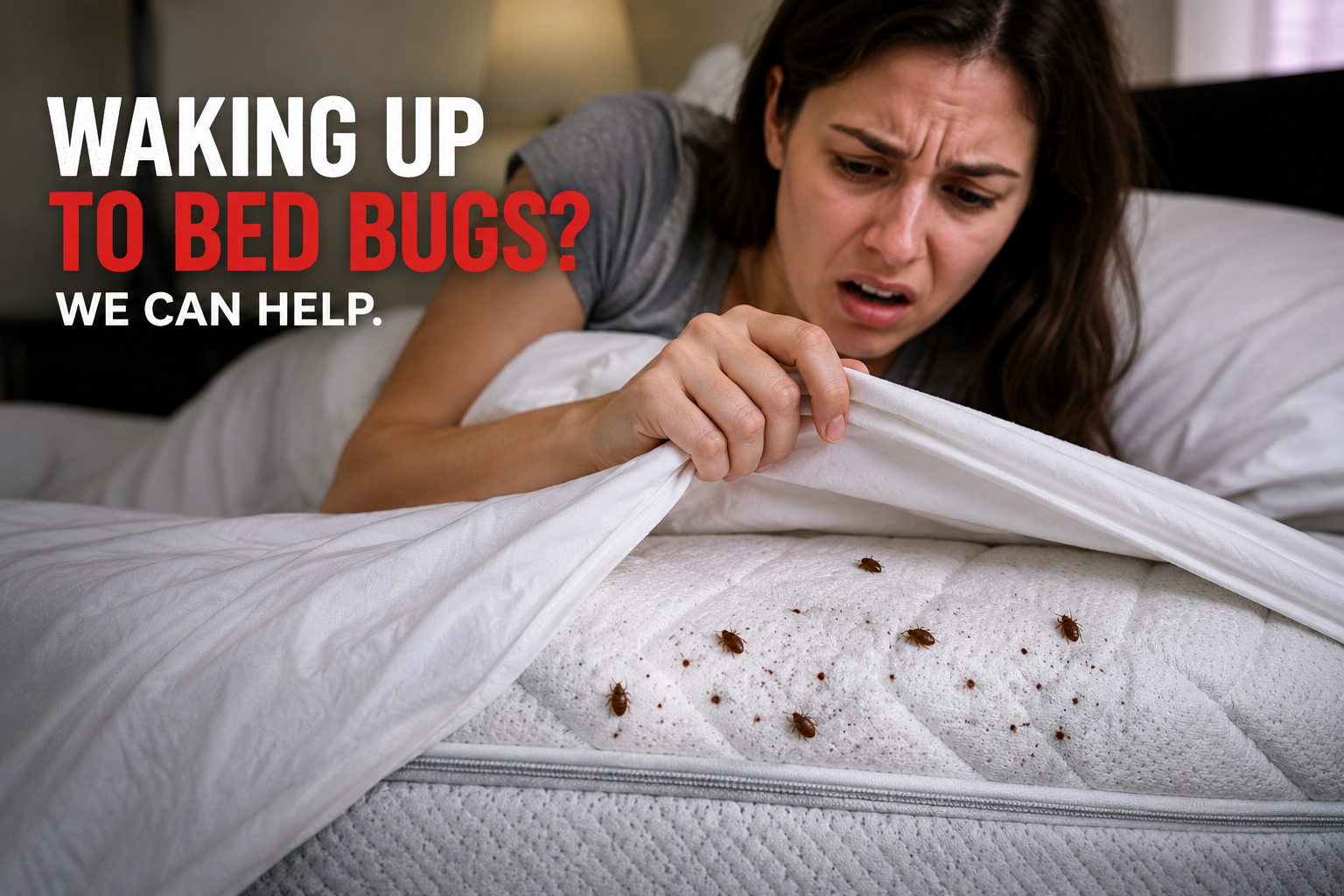
# Why Bed Bugs Wreck Your Sleep (And Your Sanity)
If you've ever lain awake at 2 AM, straining to hear or feel the faintest movement on your skin, you already know that bed bugs do more than bite. They get into your head — and once they're there, it can feel impossible to get a full night's rest again, even after the bugs themselves are gone.
This isn't a character flaw or an overreaction. It's a well-documented psychological response, and understanding it is the first step toward actually getting your sleep — and your peace of mind — back.
## It's Not "Just Bugs." It's a Threat to the One Place You're Supposed to Feel Safe
Your bedroom is supposed to be the safest room in your house. It's where you're most vulnerable — asleep, unaware, unable to react. When bed bugs invade that space, they don't just bite you physically; they compromise your sense of safety in your own home.
That's why so many people who deal with bed bugs describe symptoms that sound a lot like they're describing a threat, not a pest:
- Lying awake scanning the mattress, sheets, and walls before allowing themselves to fall asleep
- Waking at the slightest itch or sensation, even long after treatment is complete
- Feeling phantom crawling or biting sensations on the skin (a documented phenomenon sometimes called "delusory parasitosis" when it persists, though most cases are a normal stress response rather than anything clinical)
- Avoiding the bedroom entirely — sleeping on a couch, in a chair, or even in a car
- A racing mind the moment the lights go off, replaying every place the bugs might be hiding
None of this means something is wrong with you. It means your nervous system is doing exactly what it's designed to do: stay alert to a perceived threat in your environment. The problem is that this hypervigilance, while protective in the short term, is exhausting — and it doesn't always turn off right away, even once the infestation is fully eliminated.
## The Sleep-Anxiety Loop
Bed bugs create a uniquely difficult cycle. Lack of sleep increases anxiety. Increased anxiety makes it harder to fall asleep. Harder sleep means more nighttime hours spent hyperaware of every sensation — which, again, fuels the anxiety.
Add to that the physical reality of itchy bites disrupting sleep directly, and you've got a situation where the bugs are working against your rest from two directions at once: psychologically and physically.
This is part of why people often report that the hardest part of a bed bug infestation isn't actually the bites — it's the exhaustion that builds over days or weeks of fragmented, anxious sleep.
## Why This Lingers Even After Treatment
One of the most frustrating parts of this experience is that the anxiety frequently outlasts the infestation. You can have a completely successful, professional treatment — bugs gone, problem solved — and still find yourself checking the mattress seams every night out of habit.
This happens because your brain learned, over however many nights you dealt with this, that the bedroom equals danger. Unlearning that takes a little time, even after the actual threat is removed. Some things that tend to help:
- **Getting confirmation the problem is actually resolved.** This is one of the most overlooked parts of recovery — uncertainty fuels anxiety far more than a confirmed "all clear" does. A follow-up inspection or simply trusting the warranty behind your treatment can provide real psychological relief, not just physical reassurance.
- **Washing and treating bedding even after professional treatment**, so the smell and feel of "before" doesn't linger and trigger anxiety.
- **Giving yourself permission to feel relieved.** It sounds simple, but many people keep bracing for the problem to come back even when it hasn't. That bracing is exhausting on its own.
- **Talking to a doctor or therapist if the anxiety or insomnia persists for more than a few weeks after treatment.** This isn't an overreaction — sleep disruption and anxiety following an infestation are recognized stress responses, and there's no shame in getting support if they're not easing up on their own.
## The Bottom Line
If bed bugs have hijacked your sleep, you're not imagining it and you're not alone — this is one of the most common, least talked-about parts of dealing with an infestation. The good news is that once the infestation is genuinely, completely resolved, most people do find their sleep returning to normal over time.
The fastest path back to a normal night's sleep is making sure the problem is actually gone the first time — not patched over with a treatment that lets bugs come back in a few weeks and restart the whole cycle.
---
*If bed bugs are keeping you up at night, Hi-Tech Pest Control provides same-day inspections and one-visit elimination throughout Metro Detroit, backed by Michigan's only 6-month warranty — so you can stop bracing for round two and actually get some rest. Call 248-569-8001.*