
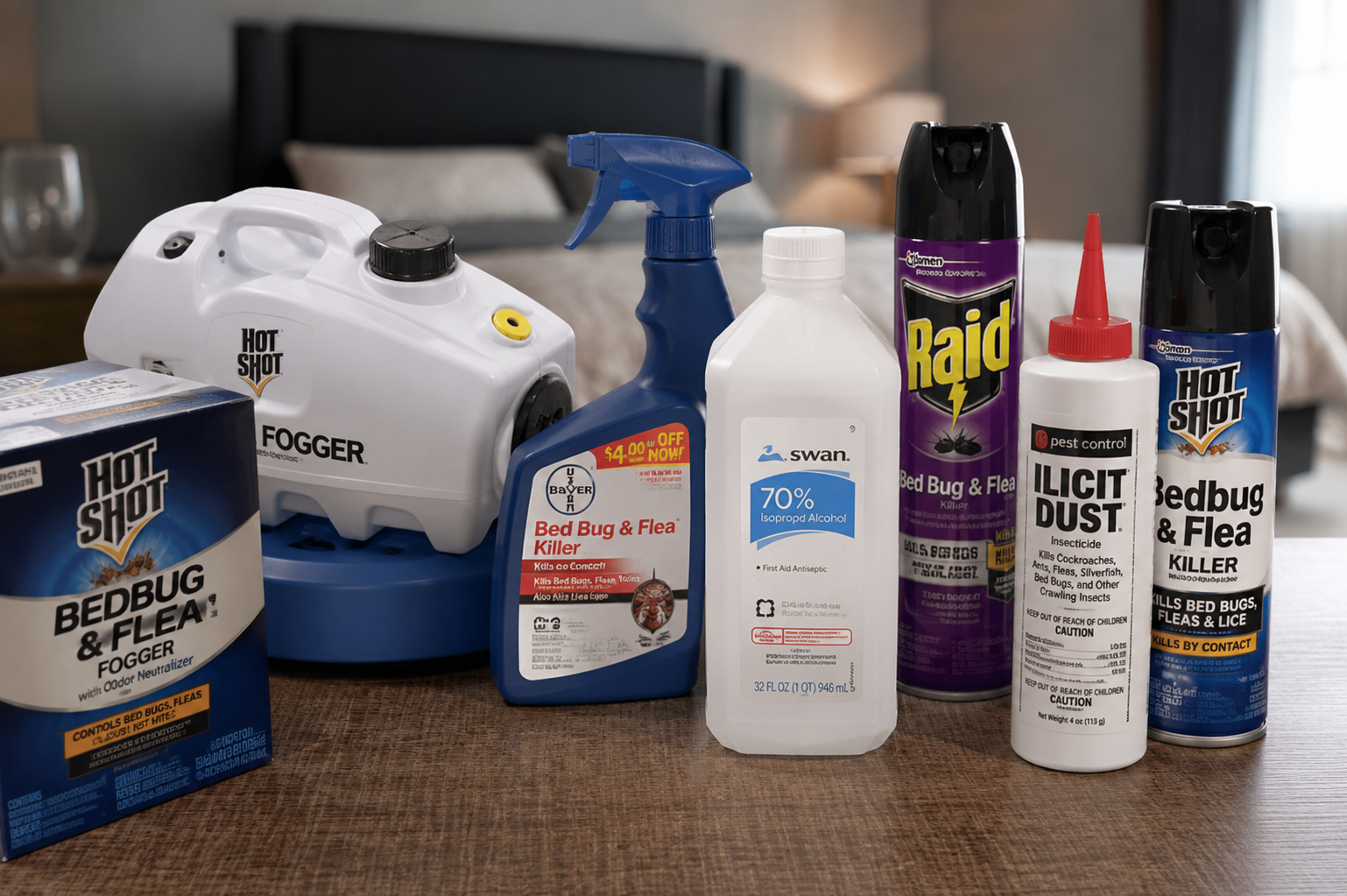
Do Bed Bug Foggers Work? Why Foggers & DIY Sprays Fail
The short version from 40 years in the field: a fogger will kill a fly buzzing around the room. It will not kill the bed bugs living inside your mattress seams, box spring, and wall voids.
No — bed bug foggers do not work. There is a reason you will never see a professional exterminator rely on fogging to eliminate an infestation. Foggers release insecticide into the open air, where it drifts, settles, and dissipates. Bed bugs don't live in open air. They live pressed deep inside cracks, seams, screw holes, and fabric folds — exactly where the fog never reaches.
Why Foggers & Bug Bombs Don't Kill Bed Bugs
Nearly every bed bug fogger on the shelf is built the same way, using the same class of active ingredients — pyrethrins, piperonyl butoxide, cyano-based compounds, or cypermethrin. Cypermethrin is one of the longer-lasting active ingredients of the group, and even it falls short when it's delivered as a fog.
The failure isn't really about the chemical. It's about the delivery method. When you set off a fogger, the insecticide becomes airborne and drifts through the open room. It will knock down an exposed insect — a fly in flight, an earwig crossing the floor. But it does not travel underneath, inside, and into the tight cracks and fabric folds where bed bugs actually nest. The bugs simply stay put in their harborage while the fog passes overhead.
Then comes the second problem: once the fog dissipates, there is virtually no residual left behind. A real treatment leaves protection working in the cracks and voids for weeks. A fogger leaves almost nothing. And there's a hidden cost — the disturbance can actually scatter surviving bugs deeper into walls and adjacent rooms, spreading a contained problem into a larger one.
The Other DIY Methods — And Why They Fail Too
Foggers aren't the only thing homeowners reach for before calling a professional. Here's what we see most often, and the honest field verdict on each.
Diatomaceous Earth
Doesn't EliminateDiatomaceous earth almost always gets applied to surfaces — dusted across furniture and floors — and homeowners routinely use far too much of it. The problem is twofold. First, that excess becomes airborne, and residents end up inhaling it every day, which is the last thing you want in the room where you sleep. Second, a surface dusting does not reach the bed bugs. The desiccant effect only works on direct, sustained contact, and it never reaches all the tucked-away nesting areas where the infestation actually lives.
Rubbing Alcohol
Doesn't EliminateAlcohol was never engineered to be an insecticide, and it doesn't behave like one. What it mostly does is scare bed bugs and scatter them — you'll drive them out of one harborage and send them running onto walls, curtains, and into new hiding spots. You may kill a few on direct contact, but you spread the rest. It's also a genuine fire hazard to spray around a bedroom. Net effect: the infestation relocates instead of ending.
Essential Oils
Doesn't EliminateEssential oils are genuinely disturbing to bed bugs — but "disturbing" is not "eliminating." Like alcohol, they mostly chase the bugs around. They can do a decent job of temporarily keeping bed bugs off of you and slowing the feeding, which is why people think they're working. But slowing the bite is not stopping the infestation. The colony keeps reproducing in the walls and the bed frame, and essential oils will not eradicate it.
Foggers / Bug Bombs
Doesn't EliminateCovered in full above — the delivery method can't reach the harborage, there's no residual once it clears, and the disturbance can push survivors deeper into walls and neighboring rooms. Of all the DIY options, this is the one most likely to make the problem bigger.
DIY vs. Professional Treatment: The Honest Comparison
| Factor | DIY Foggers & Sprays | Professional Treatment |
|---|---|---|
| Reaches cracks, seams & voids | ✕ No — treats open air only | ✓ Yes — targeted to harborage |
| Residual protection after | ✕ Virtually none | ✓ Weeks of active protection |
| Effect on surviving bugs | ✕ Scatters them deeper / wider | ✓ Eliminates at the source |
| Reaches eggs & all life stages | ✕ No | ✓ Yes |
| Warranty / guarantee | ✕ None | ✓ 6-month warranty (bed bugs) |
| Time to results | ✕ Weeks of trial & error, often worse | ✓ One-visit elimination |
Stop Wasting Money on Products That Don't Work
Every week you spend fogging and spraying is a week the infestation keeps growing. Get a free inspection and one-visit elimination from the team that's handled Southeast Michigan bed bugs since 1986.
Call 248-569-8001