Yellow Jacket Infestation Inside Wall
Yellow Jacket Infestation Inside Wall Click Here to CallSchedule Appointment

Yellow Jacket Infestation Inside Wall Some yellow jacket infestations stay outside.
Others don’t.
This case was one of the more dangerous situations we’ve encountered, where a nest had grown so large that the insects were forcing their way into the home from inside the walls.
The Call: Referred by Another Company
The homeowner contacted us after being told something unusual:
Another pest control company—one that normally handles stinging insect problems—told them:
“You need to call Hi-Tech Pest Control for this.”
That alone told us this was not a typical nest.
By the time we arrived, the homeowner had already been dealing with:
- loud, constant noises inside the wall
- increasing yellow jacket activity
- concern that the problem was getting worse
The Noise Inside the Wall
The homeowner described the sound as:
“like paper crumbling… but louder… constant… and disturbing.”
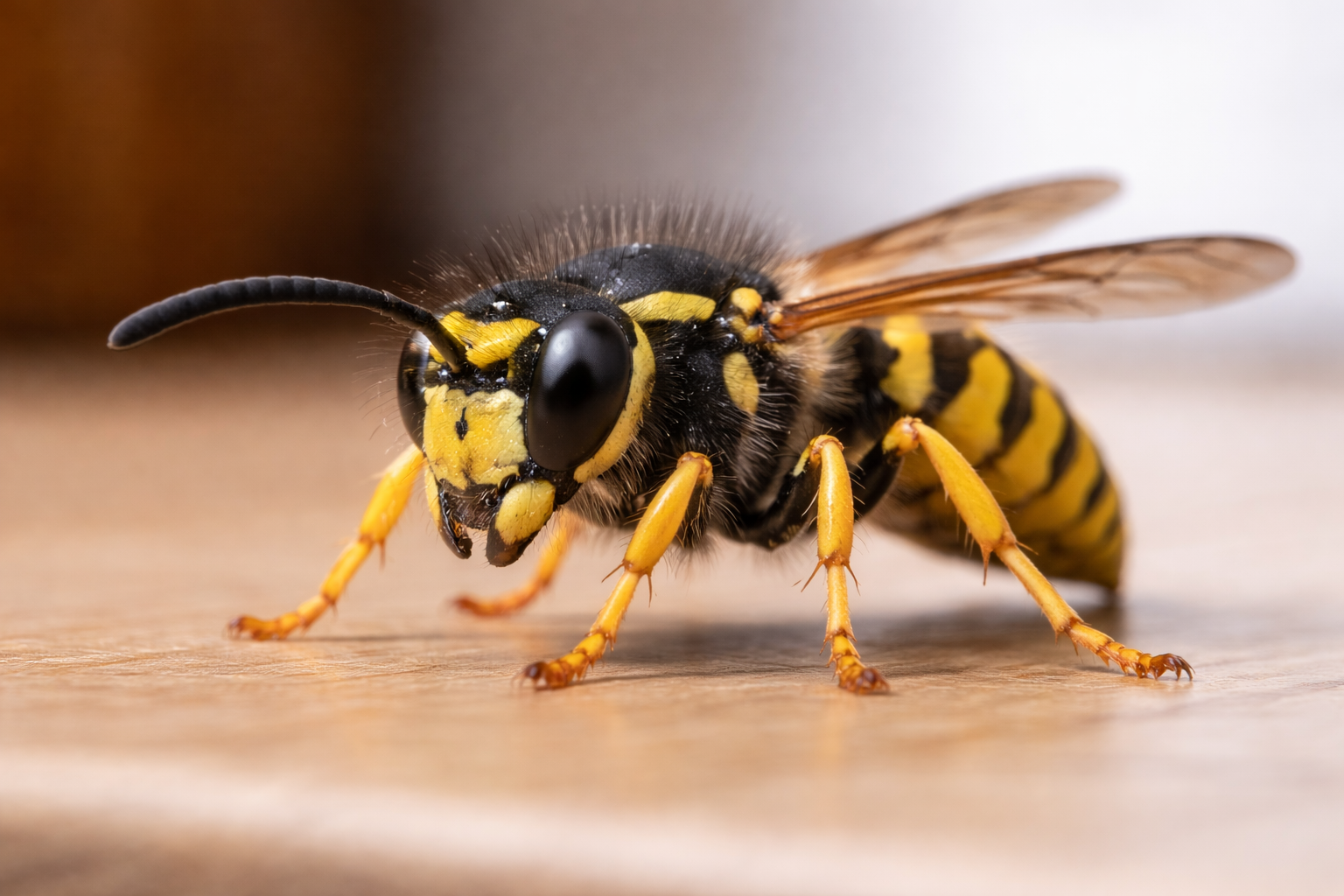
This is a key indicator of a large, active yellow jacket colony inside a structure.
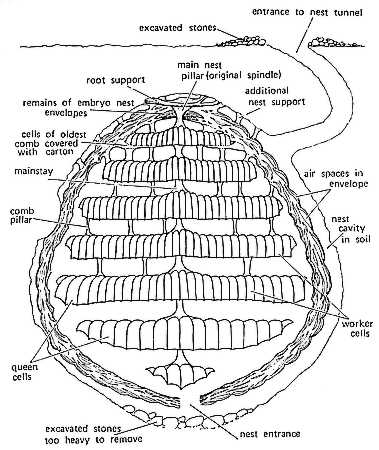
Yellow jackets build paper-like nests by chewing wood fibers and mixing them with saliva.
When colonies grow large, the sound of thousands of insects moving, chewing, and expanding the nest becomes noticeable inside walls.
The Nest Location
The nest had been built inside the outer south-facing wall of the home.
This location created ideal conditions:
- warmth from sun exposure
- protection from weather
- enclosed wall cavity for expansion
Over time, the colony had grown so large that it began to run out of space.
What Happens When Yellow Jackets Run Out of Space
When a yellow jacket colony reaches capacity inside a wall, they begin to:
- expand aggressively
- chew through surrounding materials
- push into new areas
In this case, they had begun chewing through the interior plaster board.
The wall surface began to change appearance.
What once looked normal now appeared:
- soft
- discolored
- similar to a moisture or water-damaged area
The Breakthrough Moment
While explaining the situation to the homeowner, I pointed out that:
👉 The colony had likely chewed through most of the wall material from the inside
The homeowner, curious about the damaged area, touched the wall.
That was the moment everything changed.
Yellow Jackets Enter the Home
As soon as pressure was applied to the wall, it gave way.
Yellow jackets immediately began spilling into the living space.
They came out rapidly and aggressively, moving past the homeowner and into the room.
This is one of the most dangerous situations with wall void nests: Learn more about Yellow Jacket Removal.
👉 Once the barrier is broken, the insects treat the interior of the home as a threat.
Immediate Attack
Before I could react, one of the yellow jackets stung me on the neck.
The speed was instant—there was no warning and no time to react.
Yellow jackets are extremely defensive when their nest is disturbed, and in this case:
- the colony was large
- the nest was compromised
- the insects were already agitated
Reaction and Emergency Response
Shortly after the sting, I began to feel an abnormal reaction.
This is always taken seriously in the field.
I immediately returned to the truck and used the necessary medication.
Within approximately 15 minutes, symptoms began to stabilize.
At that point, I was able to avoid a trip to the emergency room and continue managing the situation safely.
Why This Situation Was So Dangerous
This was not a typical yellow jacket nest.
This situation involved:
- a large colony inside a structural wall
- expansion pressure from overcrowding
- structural damage to interior materials
- sudden exposure of the nest into living space
- aggressive defensive behavior
When nests reach this stage, they become:
👉 unpredictable and extremely dangerous
Proper Treatment of Wall Void Yellow Jacket Nests
Treating a nest like this requires:
- identifying the full extent of the colony
- treating the nest at its core
- preventing further structural damage
- controlling insect movement inside the home
Surface spraying alone is not effective.
The colony must be targeted inside the wall void, where the insects are nesting.
Key Signs of a Hidden Yellow Jacket Nest
Homeowners should watch for:
- scratching or crackling sounds in walls
- increased yellow jacket activity near siding or rooflines
- insects entering small openings repeatedly
- soft or damaged wall areas
- sudden indoor appearances of yellow jackets
If any of these signs are present, the nest may already be inside the structure.
Why You Should Never Disturb a Wall Nest
This case clearly shows what can happen when a nest is accidentally opened.
Disturbing a wall void nest can cause:
- rapid insect release into the home
- aggressive stinging behavior
- multiple stings in seconds
- dangerous allergic reactions
Professional treatment should always be used before attempting any interaction with the affected area.
Final Outcome
Once the situation was stabilized, the infestation could be properly addressed.
The key was:
-
controlling the active insects
-
treating the nest internally
-
preventing further break-through into the home
Cases like this require experience, proper equipment, and controlled treatment methods.
Call for Yellow Jacket Removal
If you hear noises inside your walls or see increased yellow jacket activity, do not wait.
The problem may already be inside your home.
📞 248-569-8001
Hi-Tech Pest Control provides professional yellow jacket removal for:
- homes
- wall infestations
- structural nests
- high-risk situations
Serving:
- Royal Oak Yellow Jackets
- Livonia Pest Control
- Westland Pest Control
- Redford Pest Control
- Canton Pest Control
- and surrounding Michigan areas


