
How Fast Do Bed Bugs Spread in a Home? (Room-by-Room Guide)
Click Here to CallBed bugs are one of the most stressful pest problems homeowners face because the infestation often begins quietly and spreads before anyone realizes what is happening. Many people first notice bites or insects in one room and assume the problem is isolated. Unfortunately, bed bugs rarely stay confined to a single area.
Understanding how fast bed bugs spread through a home can help homeowners recognize the problem early and act before the infestation becomes severe.
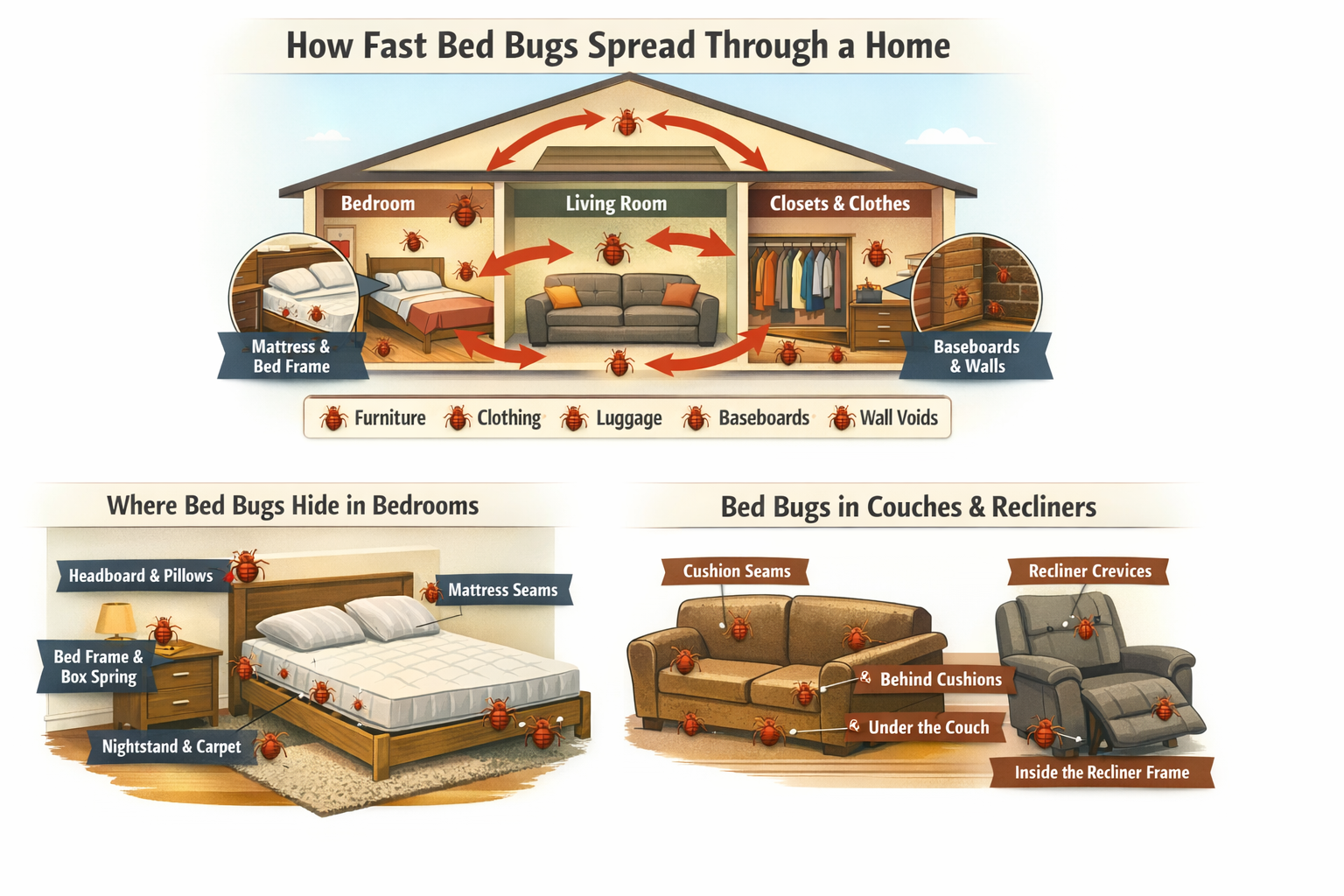
Why Bed Bugs Spread So Quickly
Bed bugs are highly adaptable insects whose primary goal is to stay close to their food source: humans. Once they enter a home, they begin feeding and reproducing almost immediately.
Several factors contribute to their rapid spread:
• They hide in extremely small cracks and seams
• They travel easily through furniture and belongings
• They reproduce quickly
• They can move through walls and floor voids
A single female bed bug can lay hundreds of eggs during her lifetime, allowing infestations to grow rapidly if not treated.
How Bed Bugs Multiply
Understanding the reproduction cycle helps explain how infestations expand.
A typical cycle looks like this:
• Female lays eggs in hidden cracks
• Eggs hatch in about 7–10 days
• Young bed bugs begin feeding immediately
• Nymphs mature into adults in about 4–6 weeks
Under favorable conditions, a small infestation can become hundreds or even thousands of insects within a few months.
How Bed Bugs Spread Room by Room
Bed bugs often begin in one piece of furniture or one room, but as their population grows they begin moving to new locations.
Below is the typical progression.
Bedroom (Where Infestations Begin)
Most infestations start near the bed because this is where people remain stationary for long periods.
Common hiding places include:
• mattress seams
• box springs
• headboards
• bed frames
• nightstands
Once the population increases, bed bugs begin exploring nearby areas.
Living Room
The next common location is the living room, especially couches and recliners where people sit for long periods.
Bed bugs often hide in:
• couch seams
• recliner cushions
• under furniture
• inside fabric folds
Many homeowners first discover bed bugs here after they begin receiving bites while watching television.
Closets and Clothing
As infestations grow, bed bugs may spread into:
• clothing piles
• closets
• laundry baskets
This allows them to hitchhike to new areas of the home.
Baseboards and Walls
When populations become large, bed bugs may begin hiding in structural areas such as:
• baseboards
• floor moldings
• electrical outlets
• wall voids
This stage of infestation usually indicates the insects have been present for a significant amount of time.
Signs Bed Bugs Have Spread
There are several warning signs that an infestation may have spread beyond the original room.
Common signs include:
• bites appearing in different areas of the home
• insects appearing in couches or chairs
• dark spotting on bedding or furniture
• bed bugs found along baseboards or walls
If bed bugs begin appearing in multiple rooms, the infestation likely requires professional treatment. Inspections Westland Pest Control
How Bed Bugs Enter Homes
Bed bugs do not appear spontaneously. They must be introduced from an outside source.
Common ways infestations begin include:
• used furniture
• luggage from travel
• guests bringing them unknowingly
• apartment-to-apartment spread
• used mattresses
Once inside a home, the insects begin reproducing and expanding their territory. Livonia Bed Bug Exterminator
When a Small Infestation Becomes a Whole-Home Problem
Early infestations often involve only one bed or one piece of furniture. However, if the insects are allowed to reproduce without treatment, the infestation may spread throughout the structure.
At this stage, bed bugs may be found in:
• multiple bedrooms
• couches and chairs
• closets
• walls and outlets
Whole-home infestations require a comprehensive pest control approach.
Why DIY Bed Bug Treatments Often Fail
Many homeowners attempt to solve bed bug problems themselves using sprays or powders. Unfortunately, these products rarely reach the areas where bed bugs hide.
Bed bugs can survive in:
• mattress seams
• tiny furniture cracks
• wall voids
• floor moldings
Without treating these hidden areas, the infestation continues to grow.
Professional Bed Bug Treatment
Professional pest control treatments are designed to eliminate bed bugs in all hiding locations, not just visible areas.
A professional inspection identifies:
• where bed bugs are nesting
• how far the infestation has spread
• which treatment approach is required
Proper treatment can eliminate infestations and prevent them from returning. Learn more: ProfessionalBed Bug Exterminator
If you suspect bed bugs in your home, early action is critical.
Call Hi-Tech Pest Control at 248-569-8001 for a professional inspection.