🚨 WARNING: High volume of wall-nest emergencies reported in Metro Detroit. Book immediate dispatch below.
Yellow Jackets in Siding & Drywall: The Hidden Danger in Livonia Homes
If you have noticed yellow jackets constantly buzzing around a tiny gap in your home's exterior vinyl, aluminum, or brick veneer siding here in **Livonia** or the surrounding Metro Detroit area, you aren't looking at a simple outdoor bug problem. You are looking at the entry point to a dangerous, hidden structural infestation.
Homeowners often assume the insects are nesting right behind the hole. Unfortunately, yellow jacket queens navigate deep into wall cavities to build their colonies. The actual nest could be several feet away from the entrance—hidden far up an interior wall or ceiling joist where consumer bug sprays can't possibly reach.
They Mold Their Paper Nests to Fit Your Southeast Michigan Home
Just like the large, grey paper nests yellow jackets build in local bushes or trees, a colony inside a structure builds a paper shelter out of chewed wood pulp. Instead of a round ball, **the nest dynamically expands to conform to the exact shape of your interior wall void.** As the reproductives generate thousands of new workers through the hot summer months, the colony rapidly runs out of space.
⚠️ Do You Hear a "Crumbling Paper" Sound?
When the colony fills the wall cavity, the workers must make room to expand. To do this, they begin actively **chewing away your home's plasterboard and interior drywall**. If you sit quietly in the room, it will sound exactly like someone is rhythmically wrinkling, scratching, or crumbling paper right inside the wall.
The Dangerous "Dark Spot" Illusion
If left untreated, the wasps will chew completely through the structural plasterboard, leaving only the thin layer of interior latex paint untouched. From your living room, this looks like a small, mysterious damp or dark spot on the wall.
Never touch, poke, or press on this dark spot.
Because the physical drywall is entirely gone, the slightest pressure will rupture the paint. If broken, hundreds to thousands of highly aggressive yellow jackets will instantly spill into your room, attacking anyone and anything nearby.
Yellow jackets are fiercely protective of their queens and will sting aggressively. Unlike honeybees, they do not lose their stingers and can strike a victim multiple times, pumping painful venom with every contact.
Critical Medical Notice for Southeast Michigan Residents: Stings localized from the neck up—including the face, throat, and scalp—carry a drastically elevated medical risk. Neck-up stings can cause rapid localized swelling that threatens respiratory airways, causing severe breathing difficulties or life-threatening anaphylactic shock, even in individuals with no history of bee allergies.
Why Professional Elimination is Required
Attempting to DIY this issue by sealing or caulking the outside siding hole is a critical mistake. If you trap them, their only escape route is forward—forcing them to rapidly chew through your drywall and enter your living space all at once.
Our licensed technicians utilize specialized thermal imaging to map the exact boundaries of the nest inside your walls, applying targeted, professional-grade treatments that completely eradicate the colony safely without damaging your home.
📍 Providing Rapid Response Throughout a 30-Mile Radius of Livonia:
●Same-Day Bed Bug Service●Free Inspection●One-Visit Elimination●Michigan's Only 6-Month Bed Bug Warranty●Serving Wayne, Oakland & Macomb Since 1986●5.0 Star Rated
Do Bed Bug Foggers Work? Why Foggers & DIY Sprays Fail
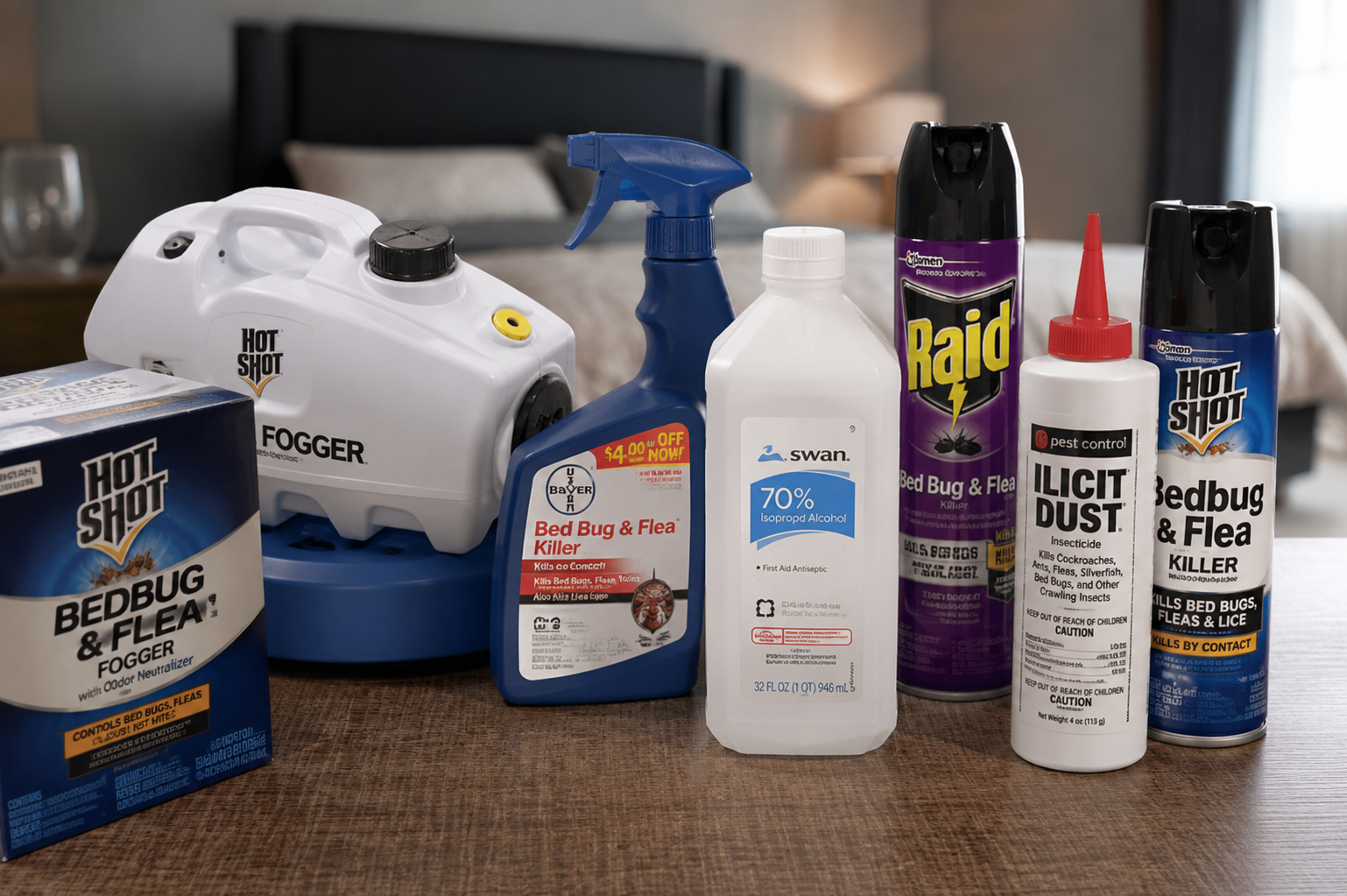
The short version from 40 years in the field: a fogger will kill a fly buzzing around the room. It will not kill the bed bugs living inside your mattress seams, box spring, and wall voids.
Written from first-hand field experience by the team at Hi-Tech Pest Control, treating Southeast Michigan bed bug infestations since 1986.
The Direct Answer
No — bed bug foggers do not work. There is a reason you will never see a professional exterminator rely on fogging to eliminate an infestation. Foggers release insecticide into the open air, where it drifts, settles, and dissipates. Bed bugs don't live in open air. They live pressed deep inside cracks, seams, screw holes, and fabric folds — exactly where the fog never reaches.
Why Foggers & Bug Bombs Don't Kill Bed Bugs
Nearly every bed bug fogger on the shelf is built the same way, using the same class of active ingredients — pyrethrins, piperonyl butoxide, cyano-based compounds, or cypermethrin. Cypermethrin is one of the longer-lasting active ingredients of the group, and even it falls short when it's delivered as a fog.
The failure isn't really about the chemical. It's about the delivery method. When you set off a fogger, the insecticide becomes airborne and drifts through the open room. It will knock down an exposed insect — a fly in flight, an earwig crossing the floor. But it does not travel underneath, inside, and into the tight cracks and fabric folds where bed bugs actually nest. The bugs simply stay put in their harborage while the fog passes overhead.
Then comes the second problem: once the fog dissipates, there is virtually no residual left behind. A real treatment leaves protection working in the cracks and voids for weeks. A fogger leaves almost nothing. And there's a hidden cost — the disturbance can actually scatter surviving bugs deeper into walls and adjacent rooms, spreading a contained problem into a larger one.
Field note: A fogger's chemical settles on flat, open surfaces facing the ceiling. Bed bugs harbor on the undersides and insides of things — the underside of a slat, the inside of a seam, the back of a headboard against the wall. Gravity and geometry are both working against the fog.
The Other DIY Methods — And Why They Fail Too
Foggers aren't the only thing homeowners reach for before calling a professional. Here's what we see most often, and the honest field verdict on each.
1
Diatomaceous Earth
Doesn't Eliminate
Diatomaceous earth almost always gets applied to surfaces — dusted across furniture and floors — and homeowners routinely use far too much of it. The problem is twofold. First, that excess becomes airborne, and residents end up inhaling it every day, which is the last thing you want in the room where you sleep. Second, a surface dusting does not reach the bed bugs. The desiccant effect only works on direct, sustained contact, and it never reaches all the tucked-away nesting areas where the infestation actually lives.
2
Rubbing Alcohol
Doesn't Eliminate
Alcohol was never engineered to be an insecticide, and it doesn't behave like one. What it mostly does is scare bed bugs and scatter them — you'll drive them out of one harborage and send them running onto walls, curtains, and into new hiding spots. You may kill a few on direct contact, but you spread the rest. It's also a genuine fire hazard to spray around a bedroom. Net effect: the infestation relocates instead of ending.
3
Essential Oils
Doesn't Eliminate
Essential oils are genuinely disturbing to bed bugs — but "disturbing" is not "eliminating." Like alcohol, they mostly chase the bugs around. They can do a decent job of temporarily keeping bed bugs off of you and slowing the feeding, which is why people think they're working. But slowing the bite is not stopping the infestation. The colony keeps reproducing in the walls and the bed frame, and essential oils will not eradicate it.
4
Foggers / Bug Bombs
Doesn't Eliminate
Covered in full above — the delivery method can't reach the harborage, there's no residual once it clears, and the disturbance can push survivors deeper into walls and neighboring rooms. Of all the DIY options, this is the one most likely to make the problem bigger.
DIY vs. Professional Treatment: The Honest Comparison
Factor
DIY Foggers & Sprays
Professional Treatment
Reaches cracks, seams & voids
✕ No — treats open air only
✓ Yes — targeted to harborage
Residual protection after
✕ Virtually none
✓ Weeks of active protection
Effect on surviving bugs
✕ Scatters them deeper / wider
✓ Eliminates at the source
Reaches eggs & all life stages
✕ No
✓ Yes
Warranty / guarantee
✕ None
✓ 6-month warranty (bed bugs)
Time to results
✕ Weeks of trial & error, often worse
✓ One-visit elimination
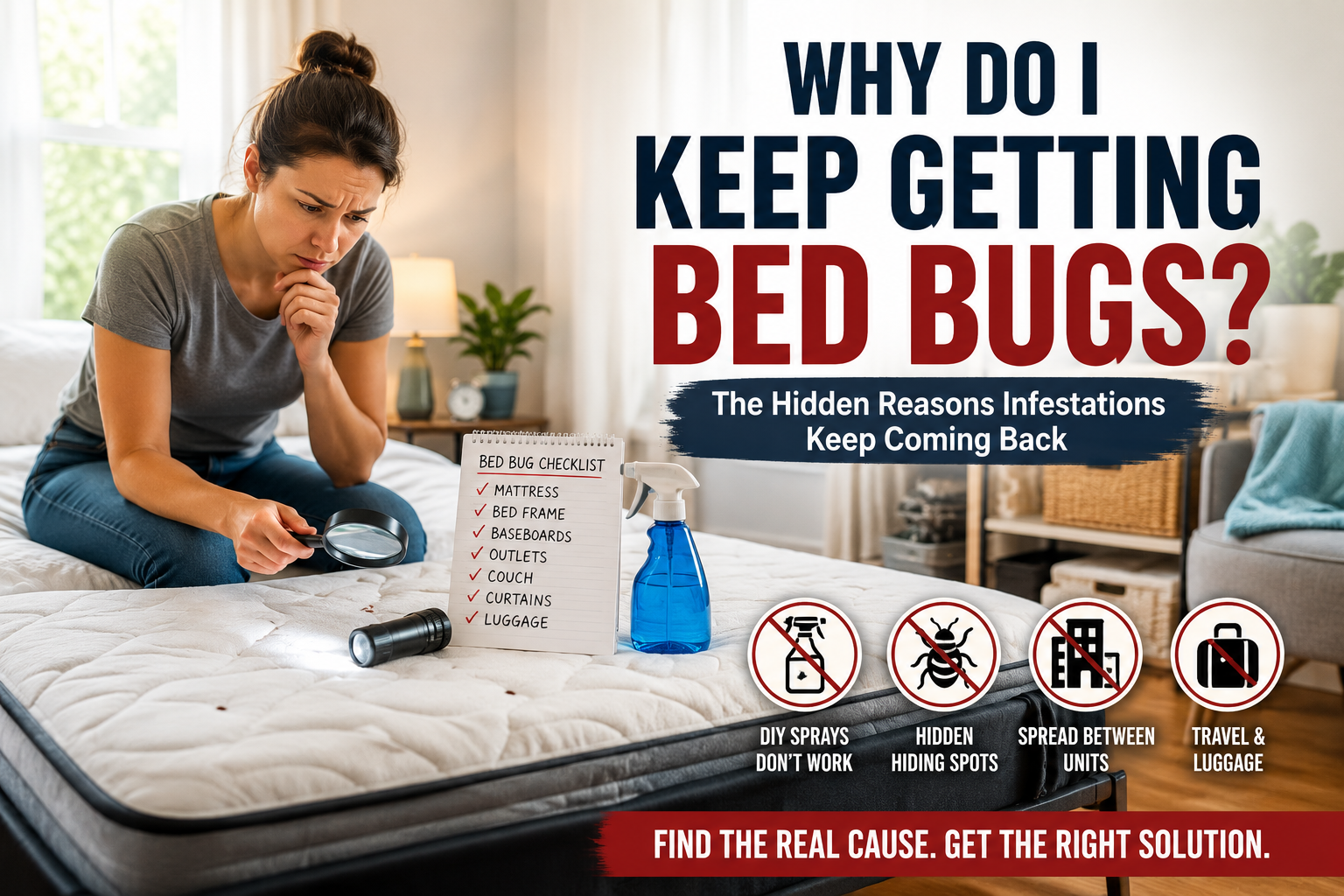
The pattern to notice: every DIY method fails for the same underlying reason. Bed bugs don't live out in the open where sprays and fogs land. They live in the tightest, most protected spaces in the room. Any method that only treats surfaces is treating the wrong 5% of your bedroom.
1986Serving SE Michigan Since
1Visit Elimination
6Month Warranty
5Star Rated
Stop Wasting Money on Products That Don't Work
Every week you spend fogging and spraying is a week the infestation keeps growing. Get a free inspection and one-visit elimination from the team that's handled Southeast Michigan bed bugs since 1986.
Same-day service • 7 days a week, 8:30 AM–10 PM • Free inspection
Frequently Asked Questions
Will a bug bomb or fogger kill bed bugs at all?
It may kill a small number of bed bugs that happen to be fully exposed on an open surface when it goes off. But it does not reach the ones inside mattress seams, box springs, cracks, and wall voids — which is where the vast majority live. Because the fog leaves virtually no residual and can scatter survivors deeper into the structure, foggers routinely leave the core infestation intact.
Why do professional exterminators never use foggers?
Because the delivery method is wrong for the pest. Professionals target the actual harborage — the cracks, seams, and voids where bed bugs nest — with treatments that leave lasting residual protection. Fogging just puts chemical into open air that bed bugs aren't occupying. You won't find a reputable pro relying on a fogger to eliminate an infestation.
Does diatomaceous earth work on bed bugs?
Not as a standalone fix. It only kills on direct, prolonged contact, and homeowners typically apply it to open surfaces — where the bugs aren't — while using so much of it that it becomes airborne and gets inhaled daily. It never reaches all the hidden nesting areas, so the infestation continues.
Can rubbing alcohol or essential oils get rid of bed bugs?
No. Both mostly disturb and scatter bed bugs rather than eliminate them. Alcohol drives them onto walls and curtains (and is a fire risk indoors); essential oils can temporarily keep bugs off you and slow feeding, which fools people into thinking they're working. Neither stops the colony from reproducing, so neither eradicates the infestation.
What actually gets rid of bed bugs?
A professional treatment that targets the harborage directly, reaches all life stages including eggs, and leaves residual protection behind. At Hi-Tech Pest Control we offer same-day service, a free inspection, one-visit elimination, and Michigan's only 6-month bed bug warranty. Call 248-569-8001.
Same-Day Bed Bug ServiceFree InspectionOne-Visit EliminationMichigan's Only 6-Month WarrantyServing Metro Detroit Since 1986Call 248-569-8001Same-Day Bed Bug ServiceFree InspectionOne-Visit EliminationMichigan's Only 6-Month WarrantyServing Metro Detroit Since 1986Call 248-569-8001
Bed Bug Evidence Guide
The first physical evidence of bed bugs isn't a stain, a shed skin, or a black spot near an outlet. It's a bite — and it's the one piece of evidence almost everyone ignores.
After 40 years of bed bug inspections across Metro Detroit, we see the same pattern in home after home. By the time most families call us, they've spent months chasing the wrong evidence — the fecal spots, stains, and blood smears the internet tells them to hunt for. Here's the problem: those are late-stage signs. The real first sign showed up on their skin months earlier, and it was dismissed as a mosquito, a spider, or "just a rash."
This guide walks you through the actual evidence timeline — what shows up first, what shows up last, and what each stage means for your home.
The Real Bed Bug Evidence Timeline
Physical evidence doesn't appear all at once. It arrives in a predictable order, and understanding that order tells you how far along an infestation really is.
1
Months 1–2 — The Bites Everyone Ignores
Bites are the first physical evidence — and the most ignored. Unlike other insect bites, bed bug bites carry a disturbing, persistent itch that sets them apart from a mosquito or flea bite. They typically start on the upper body and exposed skin — arms, shoulders, neck, face — the areas closest to a feeding bug while you sleep. Most people blame the dog, the yard, or laundry detergent and move on.
2
Months 2–3 — The Doctor Visit That Settles Nothing
When the bites keep coming, many people see a doctor or dermatologist — and here's what most don't realize: bed bug bites can't be positively identified by looking at them. Bite reactions vary too much from person to person. If the bites don't get identified in 2 to 3 months, the evidence that finally settles it usually isn't medical at all. It's a sighting.
3
Months 3–4 — The First Sighting
Around the 3-to-4-month mark, most homeowners see their first bed bug — and in most cases they immediately know exactly what it is. It happens at night: an oval-shaped, reddish-brown bug, caught while it was feeding or escaping across your pillow or bedclothes, where it's highly visible against the fabric. That single sighting is your first positive identification — not a stain, not a spot, not a trap.
The fecal spots, stains, and blood smears everyone treats as "first signs" are actually the final stage of evidence — they appear after the population has been feeding and reproducing for months. If you're finding evidence around electrical outlets or floor moldings, the infestation has spread well beyond the bed, it's past the reproduction stage, and you're likely carrying bed bugs to other locations — work, cars, family members' homes.
If you're seeing spots and stains, you're not catching it early — you're catching it late. At that stage, every day matters. Same-day service is available.
What the Internet Gets Backwards
Search "signs of bed bugs" and nearly every article leads with fecal spotting, shed skins, and eggs. That advice isn't wrong about what the evidence is — it's wrong about when it appears.
✖ Don't start your search here
Fecal spots & stains — final-stage evidence, months into an infestation
Blood smears on sheets — a sign of an established, feeding population
Outlets & floor moldings — if they're there, they've spread far from the bed
✔ Start your search here
Bites with a disturbing itch, unlike any other insect bite
Upper body and exposed skin — arms, shoulders, neck, face
The obvious places near you — mattress seams, pillow area, headboard, box spring, the couch or recliner where someone sleeps
Night checks of pillows and bedclothes, where a feeding bug is highly visible
Bed bugs stay close to their food source: you. When you're trying to identify them, look in the obvious places nearby where they can feed on humans — not in the carpet, and not across the room. Curious where they go once established? Read our full guide on where bed bugs hide.
Why Most Bed Bug Traps Fail (And the $2 Fix That Works Better)
Trapping bed bugs is difficult when you don't know where they are — and the honest truth from four decades in the field is that trapping usually doesn't work. Most consumer traps simply aren't engineered around how bed bugs actually behave.
Trap Type
Verdict
Why
CO₂ (carbon dioxide) traps
✖ Ineffective
In real-world use, they fail to outcompete the biggest CO₂ source in the room — the sleeping human a few feet away.
Moats / bed leg interceptors
✖ Ineffective
They're built on a false premise. Bed bugs don't live in the carpet like fleas, and they don't roam the floors. The bugs are already on or near the bed — they aren't crossing the room to climb a bed leg.
Two-sided tape (the kind from the school-supply aisle)
✔ Your best bet
Cheap, simple, and placed where the bugs actually travel — directly between them and their host.
How to place two-sided tape correctly
1
Identify the host. Place tape near the person who gets the most bites and gives off the most body heat — that's who the bugs are traveling to.
2
Cut off the routes. Apply strips between you and the bed bugs — along the mattress edge, headboard paths, and bedding routes they'd cross to feed.
3
Check it nightly. A bug on the tape is a positive identification — the confirmation traps, doctors, and stain-hunting couldn't give you.
One important note: tape confirms bed bugs — it doesn't eliminate them. If you catch one, you have a breeding population nearby, and DIY treatment at that point almost always spreads them further into walls and furniture. That's the moment to call 248-569-8001 for a free inspection.
0
Years Fighting Bed Bugs
0
Visit to Eliminate
0
Month Warranty — Michigan's Only
0
Star Rating
Bed Bug Evidence: Quick Answers
Bites. They're the first physical evidence and the most commonly ignored. Bed bug bites have a disturbing itch unlike other insect bites and usually start on the upper body and exposed skin. Fecal spots, stains, and blood smears come months later — they're final-stage evidence, not first signs.
Usually not with certainty — bite reactions look too similar to other insect bites and skin conditions to be diagnostic on their own. In most homes, the first positive identification is a sighting, which typically happens 2 to 4 months after the bites begin.
Oval-shaped and reddish-brown, most often spotted at night while it's feeding or escaping across your pillow or bedclothes, where it's highly visible. Most homeowners recognize it instantly.
In our field experience, no. CO₂ traps can't compete with the sleeping human nearby, and interceptors assume bed bugs live on the floor and climb bed legs — they don't. Bed bugs don't live in carpet like fleas. Inexpensive two-sided tape, placed between the bugs and the person getting bitten most, is more likely to confirm them.
That's late-stage evidence. It means the population is past the reproduction stage, has spread beyond the bed, and you may be carrying bed bugs to other locations. At this point, professional one-visit treatment is the fastest way to stop it. Same-day service is available — call 248-569-8001.
Stop Guessing. Get a Positive Identification Today.
Whether you're at the "mystery bites" stage or finding stains at the outlets, Hi-Tech Pest Control eliminates bed bugs in one visit — backed by Michigan's only 6-month bed bug warranty. Free inspection. Same-day service across Metro Detroit.
One of the biggest reasons bed bug infestations get worse before they get better isn't the bugs themselves — it's shame. People wait days, sometimes weeks, before calling for help because they're embarrassed, worried about what neighbors or family will think, or convinced that having bed bugs says something about how clean they are.
It doesn't. And the sooner that myth gets put to rest, the sooner people stop hiding the problem and start solving it.
Where This Myth Even Comes From
Bed bugs got unfairly lumped in with pests like cockroaches and rodents, which genuinely are associated with food, garbage, and sanitation issues. But bed bugs aren't drawn to dirt, clutter, or mess at all — they're drawn to something every single human home has: warmth, carbon dioxide, and blood.
That single distinction is the whole story. A bed bug doesn't care if your home is spotless or chaotic. It cares whether a person sleeps there.
Myth vs. Fact
❌ MYTH
Bed bugs are a sign of a dirty home or poor housekeeping.
✅ FACT
Bed bugs infest five-star hotels, luxury homes, and spotless apartments just as often as anywhere else. Cleanliness has nothing to do with it.
❌ MYTH
Only low-income housing gets bed bugs.
✅ FACT
Bed bugs travel via luggage, used furniture, and visiting guests — they show up in every income bracket and every type of housing.
❌ MYTH
If I have bed bugs, it means I did something wrong.
✅ FACT
Bed bugs are introduced from the outside — through travel, secondhand items, or proximity to other infested units. It's an introduction problem, not a hygiene problem.
Why the Shame Makes the Problem Worse
This is the part that matters most for actually solving an infestation: shame causes delay, and delay is the one thing that consistently makes bed bug problems harder and more expensive to fix.
"A bed bug population roughly doubles every two weeks without treatment. Every week spent hesitating to call out of embarrassment is a week the infestation keeps growing."
People avoid telling roommates or family, which means the infestation spreads to shared spaces before anyone realizes it
Renters avoid telling landlords, delaying treatment that often legally needs to happen anyway
Homeowners avoid having guests or contractors over, which can mean putting off other needed home maintenance
Business owners, especially in hospitality, sometimes try to handle it quietly themselves rather than calling a professional — which usually extends the problem rather than solving it
What Actually Helps
The single most useful mindset shift is this: a bed bug infestation is a logistics problem, not a character flaw. The people who solve it fastest are the ones who treat it like any other home maintenance issue — a pipe that's leaking, a roof that needs repair — and call for help right away instead of trying to manage it silently.
Reputable pest control companies see this constantly, across every type of home and every part of town. There's no judgment on the other end of that phone call — just a team that's seen this exact situation many times before and knows how to fix it.
The Bottom Line
Bed bugs don't know your zip code, your income, or how often you vacuum. They only care about finding a warm place to feed. The fastest way to get rid of them — and get your peace of mind back — is to treat the situation like the practical problem it is, not something to hide.
Hi-Tech Pest Control treats every call with complete discretion and zero judgment — same-day inspections, one-visit elimination, and Michigan's only 6-month warranty, no matter where you live.
🛑 Stop guessing where they're hidingOne-visit elimination — every hiding spot, every life stageMichigan's ONLY 6-month bed bug warranty📞 248-569-8001Free same-day inspection — no hidden feesServing Wayne, Oakland & Macomb Counties40+ years finding what others miss🛑 Stop guessing where they're hidingOne-visit elimination — every hiding spot, every life stageMichigan's ONLY 6-month bed bug warranty📞 248-569-8001Free same-day inspection — no hidden feesServing Wayne, Oakland & Macomb Counties40+ years finding what others miss
Bed Bug Behavior · Southeast Michigan
Do Bed Bugs Hide in Wood and Carpet? Why Most People Search the Wrong Spots First
Bed bugs don't actually want to live in your carpet or your hardwood floor — but if you keep fighting them the wrong way, that's exactly where they'll end up. Here's how they really behave, and why the search habits of most homeowners make the problem worse.
📍 Southeast Michigan ✍️ Hi-Tech Pest Control 📅 June 2026 ⏱ 9 min read
If you've been bitten for more than a few nights, you've probably already started searching — flipping the mattress, checking the sheets, maybe pulling the bed away from the wall. That instinct makes sense. It's also usually the wrong place to look first, and it's the reason so many Southeast Michigan homeowners go weeks without finding what's actually feeding on them.
⚠️ Already finding evidence on walls, moldings, or carpet edges? That's not an early sign — it usually means the infestation has been established for months. Same-day inspections are available throughout Southeast Michigan. Call 248-569-8001.
Why People Look in the Wrong Places First
Bed bug sufferers almost always start their search in tertiary areas — spots that feel logical but aren't where the colony actually lives day to day. People check the top of the mattress, the visible sheets, sometimes the carpet itself, before ever getting to the handful of spots that actually matter. By the time most people find real evidence, the infestation has already had weeks — sometimes months — to settle in.
The reason this happens is simple: bed bugs aren't designed to be found easily, and the places they actually prefer aren't the places most people think to check first.
How Bed Bugs Actually Feed and Rest
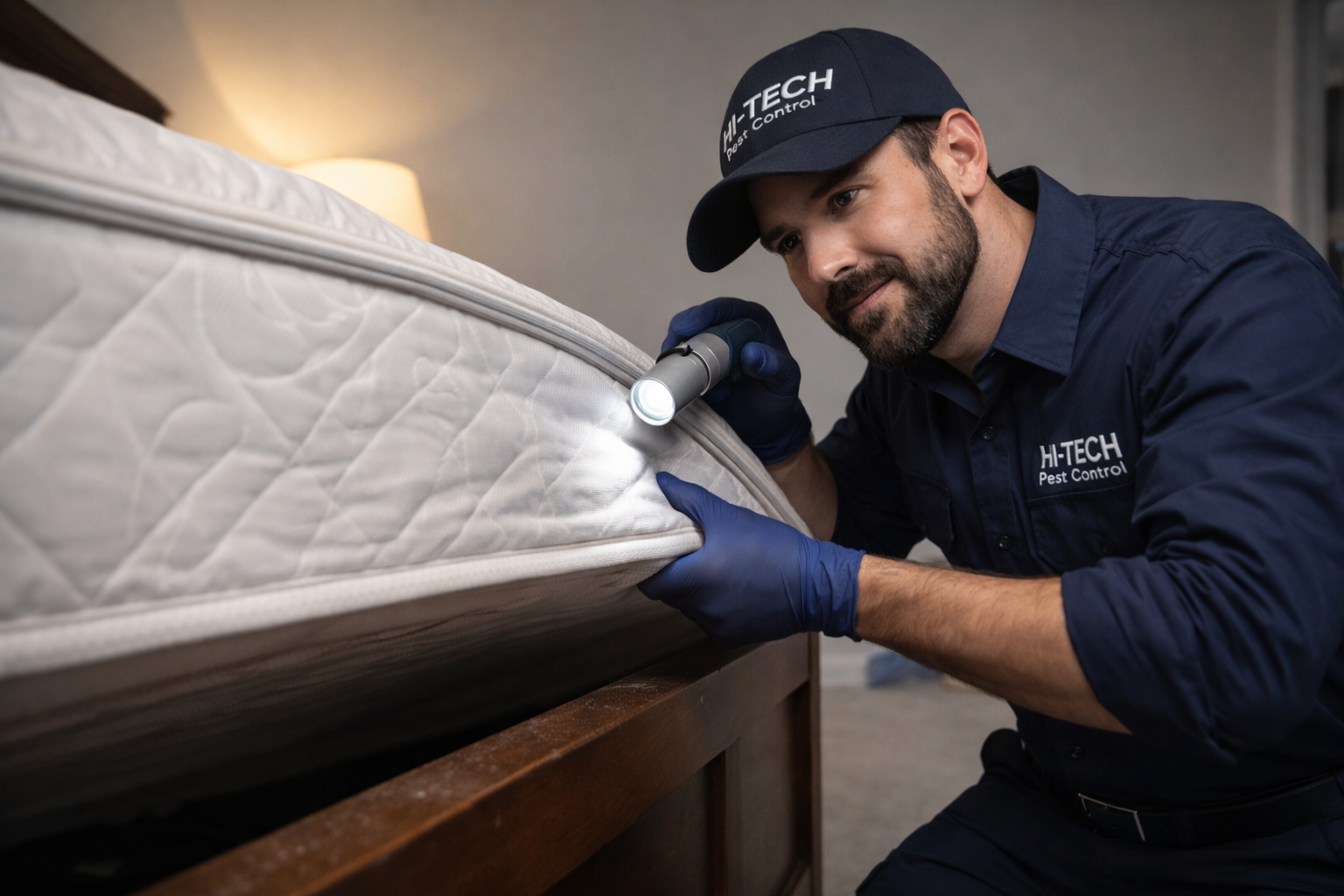
Bed bugs feed, then retreat to rest nearby — they don't wander far from a meal. What they're looking for when they rest is very specific: a spot where something is touching both the front and the back of their body at the same time. Folds in fabric, the joints in a wood frame, the piping or rope-stitching on upholstery, the seam where a leather or vinyl headboard meets its frame — anywhere a bed bug's flat body can be pressed from both sides at once.
This is the same basic harborage preference you'd recognize from German cockroaches: tight, enclosed, pressure-on-both-sides spaces feel safe to the insect. It's not about wood, fabric, or any one material specifically — it's about geometry. A bed bug doesn't care what the surface is made of. It cares whether the gap fits its body.
🛏️ Mattress and box spring seams
🪵 Wood bed frame joints and screw holes
🧵 Fabric folds and piping/rope stitching
🛋️ Leather or vinyl headboard seams
When Feeding Turns Into Nesting
Bed bugs don't start laying eggs right away. After roughly five or six feeding cycles, egg-laying begins in earnest — and that's the point where a few wandering bugs becomes an actual colony. Once egg-laying starts, bed bugs begin forming real nests, most often underneath the box spring or inside the structure of the mattress itself, where the eggs and the next generation of nymphs are protected.
5–6
Feedings before a bed bug typically begins laying eggs in earnest — the point where a handful of bugs starts becoming an established colony underneath the box spring or mattress.
The Spray Mistake That Pushes Them Deeper
Here's where most infestations actually get harder to solve. Once the bites start and people are suffering, the instinct is to reach for something — rubbing alcohol, a general-use insecticide from the hardware store — even without a positive identification of what's actually causing the bites. The problem isn't the impulse to act. The problem is what that spray actually does.
Bed bugs don't stay and die when they're sprayed with most general-use products. They sense it and move — deeper into the frame, deeper into the headboard, deeper into the mattress itself. What started as a contained problem in one accessible spot becomes a problem spread across several inaccessible ones.
To be clear — we're not saying don't spray. Just like washing your bedding, spraying something to create a barrier between you and the bugs will slow down feeding, and that matters while you're arranging treatment. The mistake isn't the spray itself. It's expecting the spray to solve a problem it's only capable of slowing down — and not realizing it's also driving the colony deeper into the structure.
So Do Bed Bugs Actually Hide in Wood and Carpet?
Not by preference. Bed bugs have no natural reason to live in carpet fibers the way fleas do, and they have no particular attraction to wood as a material the way termites or carpenter ants do. Left alone, bed bugs don't choose carpet or bare wood floors as a home.
But here's the catch: most beds are made of wood, and you sleep on that bed every night. Bed bugs nest in the wood frame not because they prefer wood, but because the wood is structurally part of the thing they need to be near — you. The material is incidental. The proximity to a reliable food source is the entire reason.
And if an infestation is continually disturbed — sprayed, fought, never fully treated — that's exactly when bed bugs start showing up in places they wouldn't choose under normal circumstances: floors, floor moldings, ceiling moldings, walls, electrical outlets, actual carpet fibers, nightstands, dressers. They'll nest on or in essentially anything if it keeps them close to a human host. Wood and carpet aren't the preferred habitat — they're the fallback habitat once the easier option keeps getting interrupted.
If You're Seeing Nests or Black Spots on Walls, You're Already Past "Early"
If you can visibly see nests, or you're finding black fecal spotting on walls, moldings, or outlet covers — understand what that actually means. You are not catching this early. You are a million miles past the point where this is a minor, easily-handled issue. Realistically, if it's spread this far, you already knew on some level that something was wrong for months, possibly longer, before you started looking seriously.
That's not said to make anyone feel bad about it — it's said because it changes what the right next step looks like. At this stage, a single store-bought product or a partial DIY effort isn't going to catch up to where the infestation actually is.
The Laundry Mistake Almost Nobody Thinks About
Of everything covered here, this might be the single biggest mistake people make once they realize they have a problem: not washing bed clothes and pillowcases immediately. Bed bugs are living in those textiles constantly — and the average person washes their bed clothes only about once every three months. During an active infestation, that's an enormous window of uninterrupted opportunity.
✅ Do This
Wash bed clothes, pillowcases, and sheets far more often than every 3 months — every few days during an active problem
Use hot water and a full high-heat dry cycle
Treat a spray as a way to slow feeding, not as the solution
Get a professional positive identification before deciding on treatment
❌ Don't Do This
Wait the "usual" 3 months between washing bed linens
Assume a spray without identification will solve the actual problem
Expect bed bugs to stay put after being sprayed — they relocate deeper instead
Ignore black spotting on walls or moldings as "probably nothing"
Early Action vs. Letting It Spread
The difference between calling early and continuing to fight it alone isn't just comfort — it's the difference between a one-room job and a whole-structure job.
Factor
Call at First Signs
Keep Fighting It Yourself
Where They're Found
Mattress & box spring seams only
Walls, moldings, outlets, carpet, furniture
Treatment Scope
One room, one visit
Whole-structure, multiple areas
Colony Stage
Pre-egg-laying or early nesting
Established nests, multiple generations
Cost Trend
Lower, contained
Higher, spread across more areas
Warranty Fit
Backed by 6-month warranty
Still eligible — but more to treat
One Visit. Every Hiding Spot — Wood, Frame, or Floor.
Hi-Tech Pest Control has been finding bed bugs in Southeast Michigan homes since 1986 — including the ones that have already spread past the mattress into frames, moldings, and floors. One visit, every life stage, backed by Michigan's only 6-month warranty.
Open 7 days · 8:30 AM – 10 PM · Free inspection · No hidden fees · Wayne, Oakland & Macomb Counties
Frequently Asked Questions
Not by preference. Bed bugs don't have the same relationship to carpet fiber that fleas do. They'll only end up living in carpet — typically along edges, moldings, or baseboards — if an infestation has been disturbed repeatedly without full treatment and has been forced to spread beyond the bed.
Yes, frequently — but not because they're drawn to wood as a material. They nest in wood bed frames because the frame is structurally part of where you sleep, and the joints, screw holes, and seams in wood furniture provide exactly the tight, two-sided contact space bed bugs prefer to rest in.
General-use sprays and alcohol typically don't kill bed bugs outright when applied without a full professional treatment — they irritate the bugs and cause them to relocate deeper into frames, headboards, walls, and adjacent areas. This is one of the most common reasons a contained infestation becomes a whole-home problem.
Visible nests or black fecal spotting on walls, moldings, electrical outlets, or carpet edges are signs of an established, advanced infestation — not an early-stage one. At that point, professional treatment that addresses the whole structure is necessary, not a single-room or single-product approach.
Far more often than the average household's roughly every-three-months schedule. During a suspected or active infestation, bed clothes and pillowcases should be washed in hot water with a full high-heat dry cycle every few days to reduce the population living in the fabric.
Not necessarily. A spray can slow down feeding similarly to how frequent laundering helps — it creates a temporary barrier. The mistake is relying on spray alone as the solution, since it tends to push bed bugs deeper into furniture and structure rather than eliminating them.
Hi-Tech Pest Control provides free same-day bed bug inspections throughout Wayne, Oakland, and Macomb Counties, with one-visit elimination and Michigan's only 6-month warranty. Call 248-569-8001 or request an inspection online.